There are moments in history when a conflict ceases to be merely a contest of power and becomes a test of collective wisdom. The unfolding crisis in the Gulf appears to be crossing precisely that threshold.
Some statements attributed to US President Donald Trump injected a new and dangerous clarity into the crisis. While the exact phrasing varies across reports, the strategic intent is unmistakable: control over energy lifelines has become both the instrument and the objective of coercion. This rhetoric is unfolding alongside a rapidly intensifying cycle of military action.
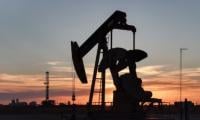
A tragic irony emerges. The very resources that nature bestowed as a shared inheritance of humanity – oil and gas – are being transformed into instruments of war. What should have been the foundation of collective prosperity has instead become the architecture of confrontation.
This is no longer simply a regional conflict. It marks a transformation in the grammar of war itself – from missile warfare to energy warfare, from battlefield engagements to systemic disruption. And it raises a profound and urgent question: has the crisis degenerated into an escalation trap from which rational exit is becoming structurally impossible? The early phases of the present confrontation followed a familiar pattern of controlled hostility: covert sabotage, cyber intrusions, targeted assassinations and proxy engagements. These methods enabled adversaries to compete below the threshold of open war while preserving plausible deniability.
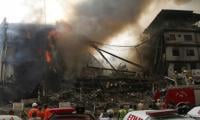
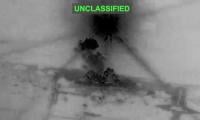
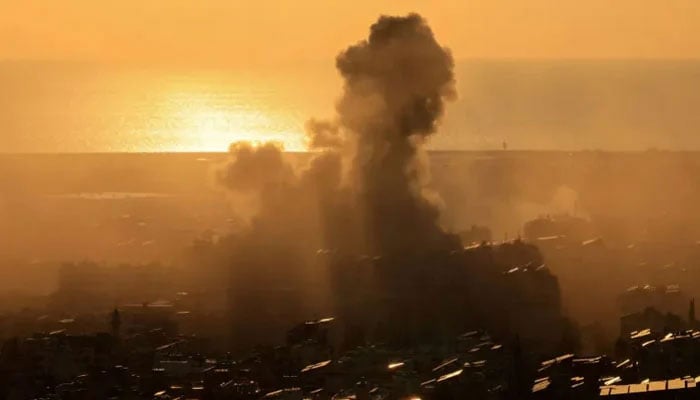
This phase gradually transitioned into overt military confrontation. Precision missile strikes and drone warfare targeted military infrastructure, command nodes and strategic installations. Even then, a degree of restraint persisted. The logic of deterrence remained bounded.
However, the current phase represents a decisive rupture. The conflict has thus migrated from territorial contestation to functional disruption: energy systems, maritime chokepoints and global supply chains. This transformation dramatically increases both the stakes and the unpredictability of outcomes. Unlike military targets, which can be calibrated, energy systems are deeply interconnected. Their disruption produces cascading effects far beyond the immediate theatre of conflict.
Essentially, there is a classic paradox of strategic interaction: the escalation trap. Each actor believes that calibrated escalation will restore deterrence, impose costs, and compel the adversary to retreat. Yet each escalation triggers a counter-escalation, locking all parties into a cycle that becomes progressively harder to control.
Once energy infrastructure becomes a legitimate target, the threshold for escalation lowers dramatically. Strategic calculation begins to erode, giving way to retaliatory compulsion. Decision-making becomes reactive rather than deliberative. In such conditions, rational actors can generate profoundly irrational outcomes.
What distinguishes the current phase of the conflict is not merely its intensity but its qualitative transformation. Oil and gas are not conventional assets. They are the accumulated inheritance of geological time – resources formed over millions of years and shared, in effect, by humanity as a whole. Their extraction has powered industrialisation, enabled global trade and lifted societies out of poverty. To weaponise these resources – by targeting their production, processing, and distribution – is to transform a shared global good into an instrument of coercion.
This represents a deeper moral and strategic failure. It signals the erosion of one of the implicit norms of modern conflict: that certain forms of infrastructure, particularly those underpinning global economic stability, remain outside the scope of deliberate destruction.
By crossing this threshold, the conflict does not merely escalate; it redefines itself. The battlefield is no longer confined to geography. It extends into the very systems that sustain global life.
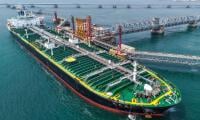
The Gulf is the central artery of the global energy system. A substantial proportion of the world’s oil and liquefied natural gas flows through this region. Disruptions, whether real or perceived, have immediate and far-reaching consequences. In the short term, markets react through price volatility, speculative pressure, and supply uncertainty. But sustained disruption would trigger deeper structural effects: industrial slowdown in energy-dependent economies; inflationary spirals across global markets; financial instability linked to commodity shocks; and social unrest driven by rising energy and food prices.
For countries like Pakistan, the implications are immediate and severe. Rising energy costs translate into higher import bills, pressure on foreign exchange reserves, currency instability and inflation. Thus, what appears as a geopolitical contest in the Gulf quickly becomes a domestic economic crisis in distant societies.
At the apex of the escalation ladder lies the Strait of Hormuz – the most critical maritime chokepoint in the world. Iran’s strategic doctrine has long emphasised its ability to disrupt this passage through naval operations, missile deployments, and maritime mining.
In the current context, even limited interference carries disproportionate consequences. Markets respond not only to actual disruption but to perceived risk. The mere possibility of obstruction can trigger global price spikes and panic over supply. A prolonged disruption – even if partial – would constitute a systemic shock, potentially exceeding previous global energy crises in scale.
The crisis also exposes a structural contradiction in Gulf security architecture. For decades, GCC states have relied on external security guarantees – primarily from the US – to ensure stability and deterrence. Yet these same arrangements have now rendered them strategically exposed. Military bases intended to provide protection have become focal points for retaliation. In hosting these assets, Gulf states have been drawn into the operational geometry of a conflict not entirely of their own making. This raises fundamental questions: can external guarantees still ensure stability? Or do they amplify risk by entangling host states in broader conflicts? The answers to these questions will shape the future of regional security.
Despite the severity of the crisis, the trajectory is not yet irreversible. Interrupting the escalation cycle requires urgent and coordinated action. First, an immediate de-escalation framework must be established, specifically one that excludes energy infrastructure from targeting. Second, maritime security must be ensured through internationally monitored mechanisms guaranteeing safe passage through the Strait of Hormuz. Third, major energy producers and consumers must coordinate to stabilise markets and manage supply disruptions. Fourth, diplomacy must be urgently revived.
The systematic elimination of interlocutors and the erosion of diplomatic channels have deprived the conflict of mechanisms for communication and crisis management. Without dialogue, escalation becomes self-sustaining.
At a deeper level, the Gulf crisis reflects a broader transformation in international relations. The erosion of norms, particularly those protecting civilian and economic infrastructure, signals a drift towards a more anarchic global order. This trajectory echoes Thomas Hobbes’ warning of a world where insecurity becomes self-perpetuating.
Yet history also teaches that such conditions ultimately undermine all actors. The Quranic injunction – “And if they incline to peace, then incline to it” – is not merely moral guidance. It is a strategic principle grounded in the recognition that unchecked conflict erodes the foundations of order itself.
The trajectory of the Gulf crisis is now unmistakable: from missiles to energy infrastructure to systemic risk. The next phase, if unchecked, could be even more dangerous.
The structural asymmetry between the principal actors intensifies this risk. Israel, lacking both geographical and demographic strategic depth, operates under a compressed strategic horizon. Its tolerance for prolonged conflict is limited, increasing the temptation to seek rapid and decisive outcomes – even through extreme measures.
Iran, by contrast, possesses geographic vastness, demographic resilience, and a historically demonstrated capacity to endure prolonged hardship – as seen during the Iran–Iraq War. This asymmetry creates a deeply destabilising dynamic: one actor seeks immediacy; the other can endure duration. It is within this imbalance that the greatest danger resides.
The crisis remains, at its core, a product of policy choices. The window for de-escalation is still open, but narrowing rapidly. The choice before the world is no longer simply between war and peace. It is between a managed crisis and an uncontrolled catastrophe. And history will judge whether, at this critical juncture, wisdom prevailed over impulse or whether escalation became destiny.
The writer is a former ambassador.