Pakistan is set to tap China’s domestic bond market for the first time with a yuan-denominated “Panda bond” issuance expected next week, Finance Minister Muhammad Aurangzeb said on Saturday, as the country looks to bolster foreign exchange reserves and broaden its funding base.
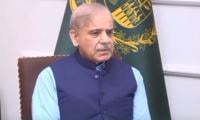
“God willing, next week you will hear good news that for the first time, we will be accessing Chinese capital markets through Panda bond,” said Aurangzeb, addressing a press conference alongside Minister for Petroleum Ali Pervaiz Malik.
The planned $250 million issue — part of a broader $1 billion programme — will be backed by the Asian Development Bank (ADB) and the Asian Infrastructure Investment Bank (AIIB).
Pakistan has increasingly turned to friendly nations and multilateral lenders to stabilise its economy after a prolonged balance-of-payments crisis pushed the country to the brink of default in 2023.
Reuters has previously reported that Islamabad has been seeking new external financing avenues, including Chinese and Gulf markets, while remaining under an International Monetary Fund (IMF) programme aimed at economic reforms and fiscal discipline.
Aurangzeb said the economy was showing signs of recovery, citing improving exports and remittances, despite regional tensions linked to the Iran war and disruption around the Strait of Hormuz, a key global oil shipping route.
He said the country’s large-scale manufacturing (LSM) sector recorded 11% year-on-year growth in April, while cumulative growth during the first nine months of the current fiscal year stood at 6.5%.
The government expected the GDP growth rate to remain close to 4% during the current fiscal year, compared to 3.1% last year, according to Aurangzeb.
"Exports have grown by 9% month-on-month and 14% year-on-year, driven by value-added textiles, IT and other sectors, he said, adding that the export growth was broad-based," he added.
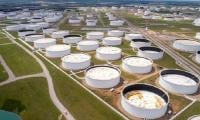
Pakistan imports much of its fuel and liquefied natural gas requirements, making it vulnerable to external supply shocks and higher energy prices.
His remarks came after the IMF released about $1.32 billion in fresh funding to Pakistan under two ongoing lending programmes, providing a boost to the country’s foreign exchange reserves.
The finance minister also said Pakistan was considering Eurobonds, commercial borrowing and support from allied countries to replace a $3.5 billion facility from the United Arab Emirates and manage reserve pressures until additional Saudi financial assistance materialises.
Aurangzeb said remittances stood at $3.5 billion in April after reaching $3.8 billion in March during Ramazan, calling the sustained inflows a strong sign of confidence from overseas Pakistanis.
He said the consistent flow of funds showed continued support from the diaspora despite global economic uncertainty.
The finance minister added that inflows through the Roshan Digital Account (RDA) rose sharply to $320 million in April, the highest monthly level since the scheme began.
“This is an investment-led discussion. Overseas Pakistanis are investing in New Pakistan Certificates, real estate and the stock market,” he said.