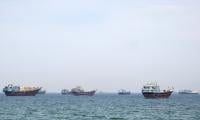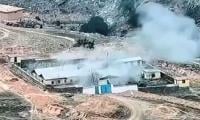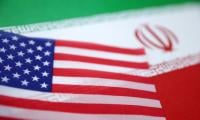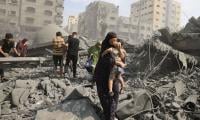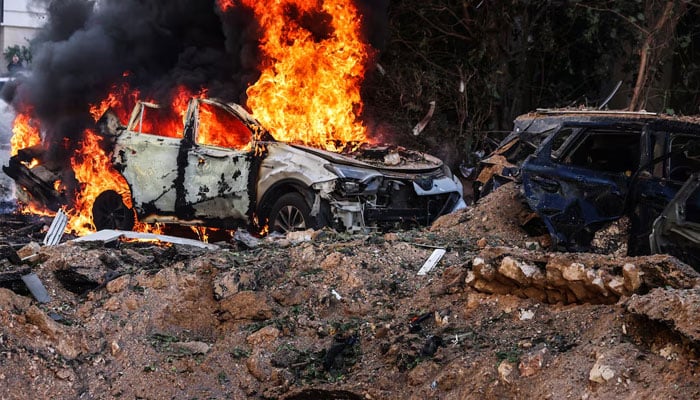
The rapidly escalating confrontation involving the US, Israel and Iran has pushed the Middle East – and indeed the wider world – into an atmosphere of deep uncertainty. As reports of delayed strikes, continued attacks on energy infrastructure and widening aerial campaigns surface almost daily, it is becoming increasingly clear that this conflict is no longer a regional flashpoint but a global crisis with economic, political and humanitarian ramifications. According to recent developments, US President Donald Trump announced a five-day postponement of strikes on Iranian power plants, only for reports to emerge soon after that Israeli-US strikes had in fact targeted gas facilities and pipelines. Such contradictory signals have added to an already volatile situation and deepened mistrust among regional actors. The world, as observers note, is reeling from a war that threatens everything from global energy stability to economic recovery, while Gulf states – due to their proximity – face the most immediate security pressures.
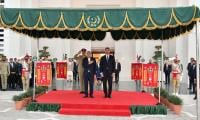
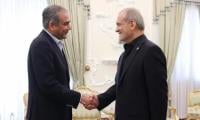
In this tense environment, Pakistan’s reported diplomatic outreach has placed it at the centre of international attention. Prime Minister Shehbaz Sharif’s engagement with Iranian President Masoud Pezeshkian and the country’s willingness to facilitate dialogue is a recognition that backchannel diplomacy may be the only viable path to de-escalation. International reports suggest that Pakistan, working in coordination with Turkiye and Egypt, has relayed messages between Washington and Tehran to prevent further conflict and stabilise the region. Yet mediation efforts face a fundamental obstacle: trust – or the lack thereof. The Iranian leadership’s scepticism towards US intentions has deepened in the wake of the unprovoked US/Israel attacks carried out despite ongoing negotiations. In such a context, proposals reportedly conveyed through intermediaries – including demands related to nuclear capabilities, defence limitations and geopolitical recognition – risk appearing detached from the immediate realities on the ground. As some analysts argue, the more pressing requirement may be credible guarantees against future military action rather than sweeping concessions from a state that is under existential threat. The broader danger lies in the possibility of prolonged confrontation. If the conflict continues to expand, Arab states could be drawn in directly, transforming an already dangerous standoff into a full-scale regional war. Such an outcome would not only devastate the Middle East but also trigger cascading consequences across global markets, migration patterns and international security arrangements.
Pakistan’s emerging diplomatic role, therefore, is both an opportunity and a burden. Acting as a trusted friend to Iran while maintaining channels with Washington requires delicate balancing. Even if talks materialise, no mediator can guarantee outcomes in an environment shaped by unpredictable leadership decisions and shifting strategic calculations. Ultimately, the decision to trust or not trust any proposed settlement will rest with Tehran. At a deeper level, the crisis also raises uncomfortable questions about global public opinion and the politics of empathy. Historically, military interventions by major powers have sparked significant protest movements within Western societies. The relative absence of visible dissent in this instance has prompted debate about the role of media narratives and geopolitical alignments in shaping public responses to war. For now, the priority must remain de-escalation. Diplomatic initiatives – however uncertain – offer a far more sustainable path than the cycle of retaliation that threatens to engulf the region. Pakistan’s willingness to facilitate dialogue should be viewed not merely as a strategic manoeuvre but as a necessary contribution to preventing further destabilisation. In an increasingly polarised international order, even modest openings for negotiation may prove decisive in averting a wider catastrophe.