ISLAMABAD: A new study by the Pakistan Institute of Development Economics (PIDE), a Planning Commission’s affiliate, warns of Pakistan’s economic vulnerability to a potential disruption in the Strait of Hormuz, one of the world’s most critical energy chokepoints.
The research highlights that even a mild global oil supply shock could quickly translate into higher fuel prices, rising inflation and mounting pressure on Pakistan’s external sector.
Titled “Pakistan’s Exposure to a Strait of Hormuz Shock: Fuel Pricing, Inflation, and External Vulnerability,” the study by Ahsanul Haq Satti and Shahzada M. Naeem Nawaz provides a comprehensive, scenario-based assessment of how global energy disruptions ripple through Pakistan’s economy.
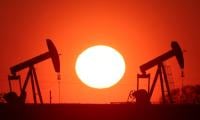
It states that nearly 20% of the world’s petroleum supply, around 20 million barrels per day, passes through the Strait of Hormuz, making it a critical artery for global energy flows. Any disruption, whether geopolitical or logistical, can trigger immediate oil price spikes.
For Pakistan, an energy-importing economy where over 22% of imports consist of energy products, the implications are profound. The study emphasizes that oil shocks affect not just crude prices but also freight costs, exchange rates, taxes and domestic pricing structures, ultimately amplifying the impact felt by consumers.
The research challenges the common perception that crude oil prices alone determine domestic fuel costs, highlighting a more complex transmission mechanism. Freight and shipping costs surge during crises, war-risk insurance premiums increase, exchange rate depreciation amplifies import costs and taxes and margins compound final retail prices.
Consequently, global oil shocks translate into multi-layered domestic price shocks, significantly intensifying inflationary pressures. Using a nonlinear scenario framework, the study models three possible outcomes — mild, stress and severe shocks — with striking findings.
“A mild shock could push inflation to nearly 8.8% within six months, a stress scenario could see inflation cross 10.4% and become macro-critical, while a severe shock could drive inflation above 12%, fueled by strong second-round effects. Even under conservative assumptions, disinflation trends could be quickly reversed, with diesel-driven transport and food costs amplifying the shock across the economy,” it added.
The study also reveals that a Hormuz disruption could destabilise Pakistan’s external balance. Monthly petroleum imports could rise by up to US$384 million, the current account could shift from surplus to deficit within months, and the annual external impact could exceed US$4.6 billion in severe scenarios.
This creates a dangerous feedback loop of higher imports leading to a weaker rupee, higher fuel costs and more inflation.
A key insight from the study is the outsized role of high-speed diesel (HSD) in transmitting inflation, given its deep embedding in Pakistan’s transport and logistics systems, agricultural production and food supply chains. Diesel thus acts as a core driver of second-round inflation effects, particularly in food prices.
In response, the study calls for urgent and coordinated policy action to mitigate these risks. Recommended measures include adopting a transparent, rules-based fuel pricing mechanism to reduce uncertainty, prioritising diesel monitoring, strengthening coordination between the State Bank of Pakistan, Ministry of Finance, and Petroleum Division, providing targeted support to essential supply chains and public transport, and planning fuel financing proactively to protect the external account. In the longer term, structural reforms are needed to reduce diesel dependence and improve energy resilience.
PIDE’s message is clear: Pakistan’s exposure to global energy shocks is deeper and more complex than commonly understood.
A disruption in the Strait of Hormuz is not just an external event, it is a domestic macroeconomic shock in waiting. Fuel pricing, inflation and external stability are tightly interconnected and must be managed together.