ISLAMABAD: The foreign ministers of Pakistan and several Arab and Islamic nations this week urged Iran to halt its attacks on neighbouring Gulf countries in the region, warning Tehran that the future of relations between these countries and Iran depends on its respect for sovereignty and non-interference in the internal affairs of others, the Arab News reported.
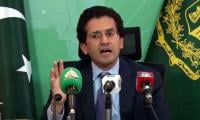
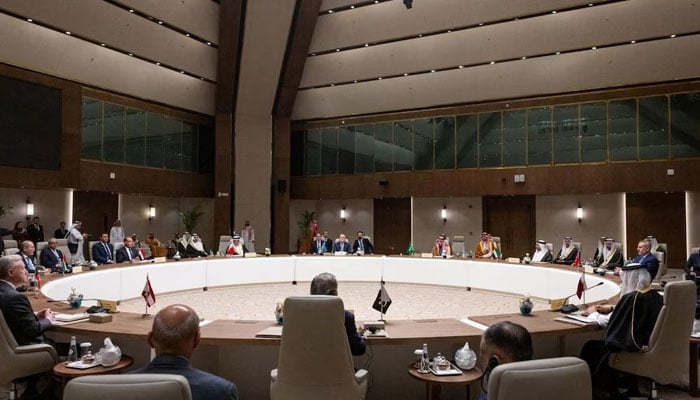
Pakistan’s Deputy Prime Minister and Foreign Minister (DPM/FM) Ishaq Dar attended a consultative meeting of the foreign ministers of several Arab and Islamic nations meeting in Riyadh on Wednesday. The meeting took place as the conflict in the Middle East continues to intensify, with Iran attacking US interests in neighboring Gulf states with missiles and drones.
Iran says its onslaught is in response to joint US-Israel air strikes against Tehran that triggered a deadly conflict in the Middle East since Feb 28.
The meeting brought together foreign ministers from Azerbaijan, Bahrain, Egypt, Jordan, Kuwait, Lebanon, Pakistan, Qatar, Saudi Arabia, Syria, Türkiye and the UAE.
“The ministers called on Iran to immediately cease its attacks, respect international law and international humanitarian law, and adhere to the principles of good neighbourliness as a first step toward de-escalation, enhancing regional security and stability and advancing diplomatic solutions,” a copy of the joint statement, shared by the UAE’s official WAM news agency, stated on Wednesday.
“They stressed that the future of relations with Iran depends on respecting state sovereignty, non-interference in internal affairs, refraining from aggression against territories, and not using military capabilities to threaten regional countries.”
The foreign ministers said Iran’s attacks “cannot be justified under any pretext,” affirming the right of affected states to defend themselves in line with Article 51 of the United Nations Charter.
The statement also urged Iran to stop supporting, financing and arming affiliated militias in Arab states. The foreign ministers urged Iran to refrain from actions that could obstruct international navigation in the Strait of Hormuz or threaten maritime security in the Strait of Mandeb, another strategic waterway between Yemen on the Arabian Peninsula and Djibouti and Eritrea in the Horn of Africa.
The group also condemned Israel’s aggression against Lebanon and its “expansionist policies” in the region.
Separately, Pakistan’s Foreign Office said in a statement that Dar informed participants of the meeting about Islamabad’s efforts to resolve the diplomatic crisis.
Underscoring the importance of preserving the unity of Muslim Ummah, the DPM/FM called for a swift end to the ongoing conflict and reiterated Pakistan’s call for dialogue and diplomacy.
“The DPM/FM stressed the need to address the root causes of the ongoing crisis affecting the wider region and, in this regard, condemned in the strongest possible terms Israel’s continued aggression and provocations against regional countries,” the statement said.
He also condemned the “unwarranted attacks” on civilians, energy and critical infrastructure in the region, calling for an end to all such attacks. “He urged refraining from any actions that may undermine the energy security of the region and beyond, thereby exacerbating global economic challenge,” it said.
Meanwhile, Iran’s foreign minister called for vigilance and regional coordination in separate calls with counterparts in Turkey, Egypt and Pakistan as the military warned of a tougher response to any further attacks on its energy infrastructure, the Iranian state media reported on Thursday. After its energy facilities in South Pars gas field and Asaluyeh were targeted on Wednesday, Iran retaliated against what it said were US-linked energy sites in Gulf countries, including Ras Laffan Industrial City in Qatar, the world’s largest LNG complex.
“In the calls to foreign counterparts, Araqchi assessed the US and Zionist regime’s (Israel) attack on Iranian infrastructure as an act aimed at escalating tensions and destabilising the region, and urged for vigilance and coordination among regional countries in response to these threats,” it reported.
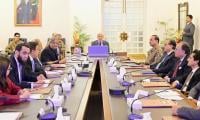
Meanwhile, Prime Minister Shehbaz Sharif chaired a meeting to review the implementation of fuel saving and austerity measures in view of the rapidly deteriorating situation in the region.
The meeting was briefed on the country’s current reserves, consumption and cargoes.
The meeting was informed that there was adequate stock of petroleum products to meet the country’s needs and more was being arranged. It was told that arrangements could be made regarding fuel reserves with the timely practical steps and instructions of the prime minister.
In view of the unstable situation in the Middle East and the region, which may severely affect fuel supply, further saving measures will have to be taken in the coming days to deal with the situation. The meeting was briefed on the progress of implementing austerity and saving measures.
The prime minister directed that a comprehensive action plan should be formulated in collaboration with the provinces to deal with the emergency. He said as a result of adopting a policy of austerity and savings, it was possible to provide relief to the people. He stressed that all relevant departments should be ready for emergency measures until the situation improves.
The participants were told that the implementation of the instructions issued by the prime minister was being ensured, and the Intelligence Bureau was also monitoring the situation. The meeting members also urged that the elite should come forward and set an example of saving and thrift by adopting the spirit of sacrifice.
The government also appealed to the people to adopt measures to save petrol and diesel so that the risk of disruption of the availability of petroleum products in the coming days could be avoided. It was announced that “we will have to be ready to deal with every possible situation and adapt our behaviour according to the changing circumstances. Carpooling should be adopted to save petrol, and movement should be done collectively. Unnecessary travel should be avoided and movement should be limited to save oil. “The entire situation is being monitored, and records of petroleum products are being kept, so that any irregularities can be immediately identified and steps can be taken to remedy the situation,” the meeting was told.
Chief of Army Staff and Chief of Defence Forces Field Marshal Syed Asim Munir, National Security Adviser Lieutenant General Muhammad Asim Malik, Federal Minister for Economic Affairs Ahad Khan Cheema, Law Minister Azam Nazir Tarar, Federal Minister for Finance and Revenue Muhammad Aurangzeb, Minister for Petroleum Ali Pervaiz Malik, Federal Minister for Information and Broadcasting Attaullah Tarar, Federal Minister for Climate Change Dr Musadik Malik, Federal Minister for Information Technology and Telecom Shaza Fatima, Minister of State for Finance and Railways Bilal Azhar Kayani and relevant senior government officials attended the meeting.
Also on Thursday, Foreign Office Spokesperson Tahir Andrabi said that Pakistan firmly rejects baseless characterisation of the ongoing humanitarian catastrophe in Gaza.
Responding to media queries regarding a video clip of the Israeli ambassador to India circulating on social media, the spokesperson stated, “The real record of aggression and rogue conduct is evident in the illegal occupation, the ongoing humanitarian catastrophe in Gaza, and the indictment of Israeli leadership in international courts. Responsible states uphold international law — not deflect from it.”
Meanwhile, Prime Minister Shehbaz Sharif said he reaffirmed Pakistan’s steadfast solidarity with Turkiye as well as with other brotherly Gulf countries, and conveyed readiness to support efforts aimed at de-escalation and dialogue. In a post on X, he said, “Spoke with my dear brother, President Recep Tayyip Erdogan of the Republic of Türkiye, this evening and conveyed warm Eid-ul-Fitr greetings to him, his family, and the brotherly people of Türkiye.
“During our most cordial exchange, we discussed the rapidly evolving situation in the Middle East. I strongly condemned the attacks on our brotherly country Turkiye as well as other brotherly countries in the region. We urged maximum restraint and stressed upon the need for resolving differences through dialogue and diplomacy,” he added.
The prime minister said, “We also exchanged views on the situation in Afghanistan and I acknowledged Türkiye’s constructive role in supporting peace efforts, between Pakistan and Afghanistan, particularly its contribution towards the recent temporary ceasefire during Eid days.
“We also expressed satisfaction on the positive momentum in our bilateral cooperation across all spheres of mutual interest,” he added.
Separately, the prime minister held a telephonic conversation with King Abdullah II ibn Al Hussein of the Hashemite Kingdom of Jordan on the occasion of Eidul Fitr.
During their warm conversation, the prime minister extended Eid greetings and felicitations to the king, the royal family and brotherly people of the Jordan. King Abdullah II reciprocated these sentiments.
Both the leaders also called for peace and harmony in the ranks of Ummah. They discussed the evolving situation in the Middle East. The prime minister expressed deep concern over the ongoing hostilities in the region.
While expressing his strong condemnation of the attacks on Jordan during the ongoing regional escalation, the prime minister expressed solidarity with the people of Jordan in these difficult times. He emphasised upon the need for restraint, de-escalation and diplomatic resolution of tensions. The prime minister fondly recalled the king’s visit to Pakistan last November. He reaffirmed Pakistan’s strong commitment to further strengthening its close and brotherly relations with Jordan in all areas of shared interest, particularly in trade, investment and defence. Both the leaders agreed to remain in close contact on bilateral and regional matters.
Meanwhile, COAS & CDF Field Marshal Syed Asim Munir, while calling for promoting unity, tolerance and national cohesion, maintained that violence in Pakistan, on the basis of incidents occurring in another country, would not be tolerated. Field Marshal Asim Munir interacted with Ulema of Ahl-e-Tasheeh community here.
Matters of national security and role of Ulema in societal harmony came under discussion, the Inter-Services Public Relations (ISPR) in a statement said.
The Field Marshal underscored the vital role of Ulema in promoting unity, tolerance and national cohesion, particularly in countering misinformation, sectarian narratives and externally sponsored destabilisation efforts.
Referring to Operation ‘Ghazab Lil Haq’, he emphasised that Pakistan will not tolerate use of Afghan soil for conduct of terrorism against our people and reiterated the resolve to eliminate terrorists and their infrastructure operating against Pakistan wherever they may be, through precise, intelligence-based operations. He emphasised that Afghan Taliban must prevent use of Afghan soil for terrorism against Pakistan.
The Field Marshal highlighted to the participants, Pakistan’s efforts and pro-active diplomacy in seeking regional de-escalation. He emphasised the critical role of Ulema to strengthen unity and counter extremism, reiterating that religious sentiments must not be exploited to incite violence in the country.
The participating Ulema expressed their desire for peace and stability, and condemned violence in the name of religion in strongest terms. They expressed wholehearted support to law enforcement agencies in bringing about peace and stability in the country.