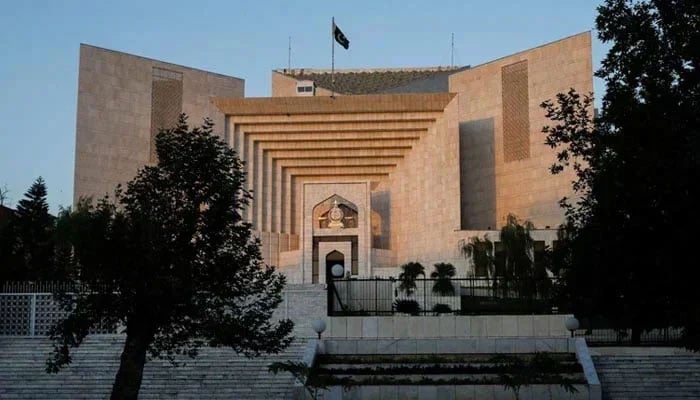
The Supreme Court (SC) has granted the Muttahida Qaumi Movement-Pakistan’s (MQM-P) application for becoming an intervener in the appeals of MQM-P convicts against their conviction in the Baldia factory fire case to expunge the Sindh High Court’s (SHC) remarks against the party while deciding the case.
The MQM had challenged the SHC’s judgment in the Baldia fire case submitting that certain stricture and adverse observations had been passed against the political party, which was unwarranted.
It said that while deciding the convicts’ appeal in the Baldia factory fire case, the SHC made certain remarks with regard to the party’s involvement in violent activities. The party’s counsel, Farogh Naseem, argued that the observation in the SHC’s judgment was irrelevant because the MQM-P was not a party in the case and personal deed of any political worker could not be attributed to the political party.
He submitted that observations passed in the impugned judgment against the political party had tarnished the image and disparage its credit. An additional advocate general and additional prosecutor general conceded no objections if the applicant was allowed to become an intervener in the appeals.
A three-member SC bench headed by Justice Mohammad Ali Mazhar observed that the aggrieved convicts had also filed leave to appeals against the judgment, which were pending at the principal seat of the SC.
The apex court directed the office to fix the application along with appeals of the MQM convicts and other relevant petitions at principal seat Islamabad according to roster. It is pertinent to mention here that the SHC had dismissed two MQM activists’ appeals against their death sentences in the Baldia factory fire case. An anti-terrorism court had awarded Abdul Rehman, alias Bhola, and Zubair, alias Charya, the death sentence on arson, extortion and terrorism charges for causing 264 factory workers’ deaths.
The SHC, however, set aside the life sentences of factory employees and gatekeepers Shahrukh, Fazal Ahmed, Arshad Mehmood and Ali Mohammad, saying that the prosecution could not produce any evidence against them for committing the offences they had been charged with.
According to the prosecution, MQM leaders and activists torched the factory over the non-payment of Rs250 million in extortion. The main accused, Rehman, had admitted in a confessional statement that the Ali Enterprises garment factory in Baldia Town had been torched on former MQM Karachi Tanzeemi Committee (KTC) incharge Hammad Siddiqui’s instructions.
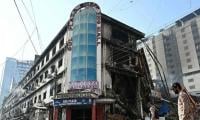
More than 260 factory workers had been burnt alive and many others suffered injuries on September 11, 2012, when the factory had been set on fire. The judges had observed in the judgment that though the MQM was a legitimate political party with parliamentary seats and a large support bank in urban Sindh, certain elements within it, as most Karachi residents knew, had had a propensity for violence since the party’s inception when so ordered by the party high command.
The judges said that one of the party’s fundraising methods was extortion, while target killing was also not off the table, as MQM activist Saulat Khan was found involved in the murder of the former head of then Karachi Electric Supply Company, and others in founding party leader Dr Imran Farooq’s murder in London, showing that the party’s militant elements had a long reach.
The SHC said that these two cases were well-documented and needed no further elaboration, along with MQM supporters’ widespread disorder in Saddar after party founder Altaf Hussain’s provocative telephonic speech on August 22, 2016.
The high court reprimanded police for its abject failure in thoroughly investigating the KTC’s other members who often met as a body at the MQM headquarters Nine Zero. Validating the prosecution witnesses’ belated statements, the bench said that the reason why the statements had been given so late was because of the MQM’s involvement in the incident.