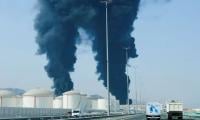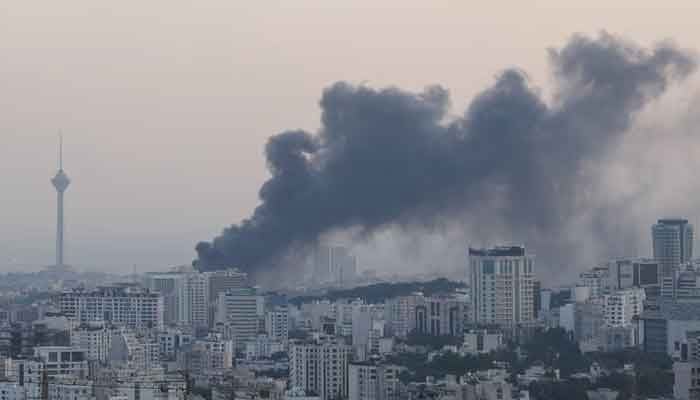
Wars often expose weaknesses that peacetime doctrines conceal. Pakistan’s confrontation with India in May 2025 and the recent US-Israel strikes on Iran have revealed that the character of war is undergoing a structural transformation.
The central lesson is not simply that new technologies are emerging but that the architecture of modern armed forces is changing. Militaries designed around platforms – fighter aircraft, armoured formations and artillery – are giving way to forces organised around networks of sensors, algorithms, autonomous systems and precision strike capabilities.
Pakistan’s armed forces were largely structured for the industrial wars of the twentieth century. The emerging battlefield is very different. It is defined by speed, data and automation. Future conflicts will be decided less by the number of platforms deployed and more by how effectively intelligence, targeting, electronic warfare and strike systems are integrated into a single digital architecture.
The May 2025 India–Pakistan crisis offered a preview of this shift. The exchanges between the two countries did not resemble the prolonged wars of 1965 or 1971. Instead, they unfolded through rapid bursts of activity involving drones, precision munitions, electronic warfare and cyber operations. The operational tempo was measured in minutes and hours rather than days. Targets deep inside national territory became immediately vulnerable.
The US-Israel strikes on Iran reinforced the same lesson at a higher technological level. The effectiveness of those attacks was not simply the result of advanced weapons but of tightly integrated systems in which intelligence, cyber operations, surveillance assets and precision strike platforms operated as a single network.
For Pakistan, this development carries profound implications. The country faces a structural asymmetry with India, whose defence budget and economy are many times larger. Competing platform-for-platform is neither feasible nor strategically sound. The only viable path is technological asymmetry.
The most visible manifestation of this transformation is the rise of unmanned systems. In conflicts from Ukraine to the Middle East, inexpensive drones have begun to reshape battlefield economics. Systems costing a few thousand dollars can destroy equipment worth millions. Drone swarms can saturate air-defence systems designed to intercept only a handful of high-value targets. Ukraine has taken this logic further by deploying interceptor drones designed specifically to hunt and destroy enemy unmanned aircraft. The result is the emergence of a new layer of air defence built not around missiles but around autonomous aerial interceptors.
The real revolution, however, lies not in the drone itself but in the ecosystem behind it: artificial intelligence for targeting, sensors for detection, software for swarm coordination and electronic warfare systems for disruption. Future wars will see not just reconnaissance and strike drones, but also interceptor drones, loitering munitions, autonomous swarms and AI-assisted command systems.
This transformation demands a fundamental rethink of military structure. Traditional forces organised around divisions, squadrons and fleets will increasingly be supplemented – or in some cases replaced – by units designed around data networks and autonomous systems. Another major trend is the ‘missileisation’ of warfare. Modern conflicts increasingly rely on rapid waves of precision strikes rather than extended air campaigns. Strategic targets can now be hit within minutes using cruise missiles, guided rockets or loitering munitions. This compresses decision-making time and places enormous pressure on command systems and air-defence networks.
For Pakistan, this means the traditional emphasis on offensive platforms must be complemented by robust defensive architecture. Hardened airbases, dispersed logistics infrastructure and layered air and missile defences will become essential. The survivability of military assets will depend on redundancy, concealment and electronic countermeasures as much as on firepower.
Yet the most important lesson from recent conflicts lies beyond the battlefield. Modern wars are sustained by industrial ecosystems capable of designing and manufacturing advanced technologies at scale. Countries that dominate drone production, microelectronics, sensors and software hold decisive advantages.
Pakistan already possesses a surprisingly broad defence production base built over decades of sanctions and strategic necessity. Facilities in Wah, Taxila, Kamra and Karachi produce aircraft, armoured vehicles, naval platforms and munitions. Yet the scale of defence exports remains modest.
The problem is therefore not technological absence but industrial depth. Without a wider ecosystem of suppliers, research institutions and private technology firms, innovation remains slow and scaling production difficult. Much of the defence industry still operates within state-owned enterprises that remain relatively isolated from Pakistan’s emerging technology sector.
Recent geopolitical developments suggest that this weakness may also represent an opportunity. Pakistan’s military equipment – from aircraft and drones to training systems – has attracted renewed attention from several countries following recent conflicts. Relatively affordable platforms such as the JF-17 fighter have demonstrated that Pakistan can compete in segments of the global defence market where cost and reliability matter more than cutting-edge prestige.
If supported by the right industrial strategy, Pakistan could potentially expand its defence exports severalfold within the next decade. Achieving that scale would require a transformation in how the defence sector interacts with the wider economy.
Countries such as Turkiye, South Korea and Israel have built defence industries that function as engines of technological innovation. Their success rests on dense networks linking universities, private technology firms, venture capital and military procurement agencies. Innovation flows rapidly between civilian and military sectors, accelerating both industrial growth and defence capability.
Pakistan has yet to build such an ecosystem. Much of its defence industry remains concentrated in large state institutions whose procurement and development processes are slow and inward-looking. The transformation required is therefore institutional as much as technological. The armed forces must begin to see themselves not only as consumers of defence equipment but as catalysts for national technological development. Procurement policies should encourage partnerships with universities, engineering firms and startups working in robotics, artificial intelligence, software and advanced materials.
Such an approach would strengthen national security while also stimulating economic modernisation. Drone manufacturing, avionics, robotics and precision electronics are industries with strong civilian applications ranging from agriculture and logistics to telecommunications and autonomous transport.
The strategic window for such a transformation is narrowing. Military revolutions rarely unfold gradually. They occur when technological breakthroughs intersect with geopolitical competition. The convergence of artificial intelligence, autonomous systems and network-centric warfare suggests that the current decade may represent one of those turning points.
For Pakistan, the lesson from recent conflicts is therefore deeper than the need for new weapons: it is the need to redesign the architecture of its armed forces for a different era of warfare.
Future battles will be fought by networks of sensors, autonomous systems and algorithms operating at machine speed. Militaries that adapt their structures to this reality will shape the strategic balance of the coming decades. Pakistan’s challenge is to ensure that its armed forces – and the industrial ecosystem that sustains them – are built for that future rather than for the wars of the past.
The writer is former head of Citigroup’s emerging markets investments and author of ‘The Gathering Storm’.