Empires have always cloaked their wars in the language of virtue. Yet, few justifications have proven as destructive as the claim that they are divinely ordained.
Across centuries, crusading armies marched across continents to the battle cry ‘Deus vult’ – God wills it. Conquest wore the mask of faith and annihilation was cloaked in the mantle of sanctimony.
Religion has inspired humanity’s most profound moral visions. Yet, the powerful have repeatedly reshaped it into a weapon that anoints death and dominion. Roman Emperor Constantine embraced Christianity in the 4th century. Gradually, the once-persecuted faith, rooted in humility and compassion, fused with imperial authority. Scripture was no longer a moral restraint upon violence; it became its justification.
Various Inquisition periods saw the institutionalising of this profane union of theology and terror. Religion ceased to guide conscience and became an instrument of power. Jew and Muslim converts suspected of secretly practising their old faith, dissenters, alleged witches, thinkers and intellectuals were executed. A grim pattern through time; whenever rulers claim divine sanction, unspeakable horrors follow.
Modern wars have not escaped this logic. During the Gulf War, American bombs bore inscriptions from Isaiah chapters 13-14. These passages describe the destruction of Babylon (present day Iraq) as divine judgment.
After the 9/11 attacks, President Bush described himself as guided by God in decisions leading to the invasions of Afghanistan and Iraq. Events in the Middle East were framed through the lens of apocalyptic confrontation and biblical prophecy.
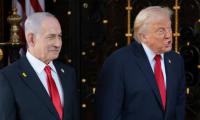
Today, the same framework unfolds from Gaza to Iran. In Gaza, Netanyahu repeatedly invokes religious imagery to justify his genocide. He refers to the ancient biblical adversary Amalek, a people that the Hebrew Bible commands to be completely destroyed. When texts speak of destroying Amalek, they are referring to eradicating evil and injustice, not a literal people like those of Gaza or for that matter, Israel.
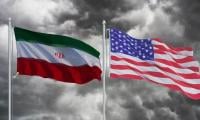
Officials and commentators now invoke biblical prophecy to justify the strikes on Iran. The Military Religious Freedom Foundation has received hundreds of complaints from different units across all US military branches. They speak of military commanders framing strikes on Iran as “part of God’s divine plan.”
They also highlight them instructing subordinates that President Trump is “anointed by Jesus to light the signal fire in Iran to cause Armageddon”. Hubristic designs are being cast as sacred destiny. War has ceased to be a choice; it has been branded as an inevitability.
Israel is presented as the world’s timepiece and God’s prophetic clock. Christian Zionists argue it is the centerpiece of an unfolding divine drama. They also assert that restoring Israel to its biblical borders will trigger the second coming of Christ and the apocalyptic battle of Armageddon.
This extremely dangerous and inflammable rhetoric extends beyond Israel. In the US, influential figures have increasingly framed Middle Eastern conflicts through the lens of religious prophecy. US Secretary of Defense Pete Hegseth has spoken about rebuilding the Third Jewish Temple on Jerusalem’s Temple Mount, a site currently home to Al-Aqsa Mosque.
In his book ‘American Crusade’, Hegseth compares the modern era to the medieval Crusades. Calling for an American one, he frames what are essentially geopolitical interests as a civilisational battle. His personal symbolism has drawn widespread scrutiny. Tattoos on his body include the Jerusalem Cross associated with Crusader iconography and the phrase ‘Deus Vult’, the rallying cry of the Crusaders. Beneath this, ‘kafir’, a word weaponised to mock and vilify Muslims, has been tattooed in Arabic.
For an individual, such symbolism could be dismissed as personal eccentricity. When carried by one overseeing the most powerful military apparatus on earth, it becomes a portent of imminent doom. The French political thinker Alexis de Tocqueville observed in 1840 that “various forms of religious madness are quite common in the US”. His remark was less an indictment of faith than a warning about the explosive fusion of such religious fervor with political authority.
Mike Huckabee, US ambassador to Israel, has advocated for Greater Israel, a vision rooted in biblical promise. Both Huckabee and Hegseth represent the ideological strain of Christian Zionism that believes biblical prophecy should guide American policy in the Middle East.
Figures such as Pastor John Hagee, founder of Christians United for Israel, and former leaders like Mike Pence and Mike Pompeo, have promoted this worldview for decades. Within it, war is not a failure of humanity but the preordained realisation of prophecy.
Amid this incendiary dogma, warnings have emerged from the Vatican. Earlier this month, The Vatican’s Secretary of State, Cardinal Pietro Parolin, cautioned that nations do not possess the right to launch preventive wars. He warned that if states start claiming this right based on their own criteria, the entire world could risk going up in flames.
This was followed by Pope Leo, the first American pope, urging an end to the “roar of bombs” and calling for dialogue and diplomacy. He warned that the conflict was unleashing a spiral of violence that could plunge the region into an irreparable abyss. He also highlighted the daily civilian suffering in the Middle East, particularly in Gaza and condemned attacks on humanitarian facilities as grave violations of human dignity.
Yet, the Pope’s plea shall be ignored because geopolitical ambitions have commandeered the weaponising of religion. A brazen theological heist, this perversion casts war as divine destiny. What was meant to guide the soul has been twisted into a blueprint for carnage.
When rulers crown themselves with halos and claim divine mandate, power masquerades as sanctity. Their armies unleash devastation and the innocent are pulverised in the inferno of unholy wars.
The writer is a freelance contributor.
He can be reached at: [email protected]