Donald Trump got misled into the war with Iran by Benjamin Netanyahu, based on a false assessment of the ground situation.
In doing so, Trump and his closest advisors got seven things wrong. And now they are stuck in a conflict with unclear objectives and no exit ramp, which allows for a credible declaration of victory before ending the war. So, what did they get wrong?
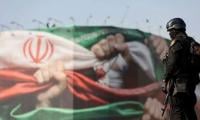
One, the reaction of the Iranian masses: The expectation that, because there have been huge protests against the regime in Iran recently, when the war starts, people will rise up against the regime was nothing more than a pipe dream. It shows a complete lack of understanding of how much hatred Muslims have for Israel. This feeling has been further strengthened by the genocide in Gaza. No matter how much opposition exists to the regime, the moment Israel attacks, it will bring the overwhelming part of the population to rally behind the flag.
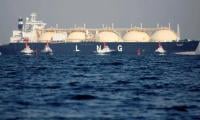
Two, the economics of war: The war has dealt a massive blow to the global economy, mainly due to the sharp spike in oil prices caused by the closure of the Strait of Hormuz, attacks on the energy infrastructure of Arab Gulf countries and the consequent curtailment of oil and gas production. With one-fifth of global oil consumption and one-third of global oil trade passing through the Strait of Hormuz, just two weeks into the war, oil prices are up by 40-50 per cent.
Ironically, Iran is a major beneficiary of this. Its oil exports are intact and, in fact, have marginally increased. With daily exports of two million barrels and oil prices up sharply, it will have a monthly windfall of about $2 billion.
Three, the asymmetric cost of war: There is absolutely no comparison between the resources of the US and Iran. However, with the huge asymmetry of the cost of war, the resource gap is largely neutralised. The US is sending state-of-the-art multi-million-dollar munitions to hit Iran. On the other hand, Iran, in addition to high-tech missiles, is using low-cost drones to strike back. Most are intercepted, but each interceptor costs millions of dollars. Perhaps most importantly, the arsenal needed to keep the Strait of Hormuz effectively shut is of very low cost. The sea mines, short-range artillery and missiles are not expensive at all.
Four, the topography of the region: The significance of Iran sitting on top of the narrow globally vital Strait of Hormuz is a massive miscalculation on the part of the US. With two weeks gone and a massive spike in energy prices globally and literally no response to reopen the straits by the US, other than verbal bluster from Trump and Hegseth, it is clear they had not anticipated the closure. The alternative route from the Red Sea also runs through the bottleneck in Bab al Mandab, which is exposed to the Houthis in Yemen, and can also come under attack.
Five, the nature of Iran’s regime: Iran is an ideological regime and not a personal dictatorship. It is not Saddam’s Iraq or Gaddafi’s Libya, in which you eliminate the leader and the regime collapses. Iran’s regime is much closer in nature to the communists in Vietnam or the Taliban in Afghanistan. Ideology requires neither territory nor power to survive. In both cases, despite committing boots on the ground for many years, the US ultimately withdrew without achieving its objectives.
Six, American domestic politics: At the very beginning of the war, the US public largely opposed the war. The likelihood is that as the US consumers see higher prices and the material & human costs of war rise, the opposition to war will increase. This becomes a huge problem given where we are in the US electoral cycle. With the midterms less than eight months away, the window of political opportunity for Trump to carry on this war will close much sooner than it would otherwise.
If he doesn’t back down as the midterms get closer, we will start to see Republican dissent in Congress and the Senate increase, weakening the ability to continue the war. Ironically, opposition to ‘forever wars”, as they are called amongst the US citizens, was championed by Donald Trump, and was one of the reasons he was elected.
Seven, lack of global support: China, Russia and the overwhelming majority of the Global South are opposed to the war. Perhaps equally important, the war is, without a doubt, hurting European interests. In addition to the high cost of energy hitting their economy, they are also strategically badly hurt by the war. Iran poses no strategic challenge to Europe and hence it serves no European interest for Iran to be attacked.
On the other hand, the biggest direct security threat to Europe comes from Russia. For the last four years, they have spent large sums of money and diplomatic clout to shore up Ukraine to defend itself against the Russian invasion. Russia is one of the world’s largest exporters of oil and gas. The war has resulted in a sharp rise in Russian export proceeds due to higher prices and the US’s loosening of sanctions. So, US policy has literally thrown the Europeans under the bus by strengthening their biggest threat. While the opposition from Europe will not come publicly, their interests will clearly be served by the war ending as soon as possible.
Clearly, by now it would be clear to US and European leaders how their interests have been badly hurt by this war, which has literally been initiated to serve the interests of only one country: Israel. Let’s see how soon Trump cuts his losses and finds an exit ramp out of this disastrous war.
The writer is a retired corporate CEO and former federal minister.