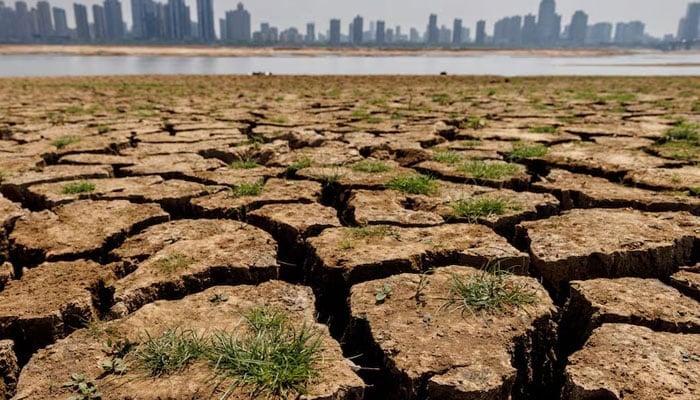
The environmental challenges of Pakistan are no longer episodic or symptomatic; they are not only intimidating for our existence but are also exposing and widening our vulnerabilities to the adverse effects of climate change.
Given the pressing nature of the challenges, our governance structure is working hard to address gaps in information, actionable analysis, administration, and citizen engagement. Though questionable given their hostage status to systemic problems, initiatives have been taken on all fronts, with limited or laudable progress. However, citizen engagement remains a deep concern.
Policies, action plans, analytical pieces and prioritisation processes all place citizens at the heart of climate change-induced problems as victims or key to the possible solutions. Right from the National Climate Change Policy and the National Adaptation Plan to the provincial-level project mode development initiatives, empowerment of citizens and community participation are common phrases that shoulder the policy weight for an environmentally secure future. However, despite these recurrences, one fails to see any emerging pathways to empowerment and participation.
Administrative structures have been improved at the federal and provincial levels, with expanded roles and responsibilities entering the official ambit, and information gaps have been plugged by provincial governments, but citizen engagement remains elusive to the policy and administrative regimes in Pakistan.
Manifestations of citizen engagement across the policy implementation spectrum are minimal by design and ineffective in their contributions. The National Adaptation Plan lays down fostering collaboration between government, private sector, civil society, and communities as a foundation for building systemic climate resilience. It further envisions enhancing community resilience by providing stable, sustainable income sources alongside sustainable infrastructure and services.
The plan assures us that acting locally is one of the guideline principles, and it involves contextualising and understanding the specific risks and opportunities each community faces from climate change, and tailoring adaptation strategies to their unique needs. Participation of local communities in increasing forest cover and consultations with communities to streamline adaptation measures are key principles of the National Climate Change Policy. One cannot help but appreciate the intent of policymakers for citizen engagement at the community level, but a decade of alive (applicable) intent is yet to be translated into actions.
The environmental governance system of Pakistan, or otherwise, is yet to design mechanisms centred on collaboration with the citizens and communities. Participation of local communities in increasing forest cover seems fine on paper, but what mechanism has been put in place on the ground to ensure the same? And what adaptation measures have ever been contextualised at the community level with sustainable practices and support by the government or by the CSOs?
Provision of sustainable services and green jobs has also been committed, but beyond the supply-side commitment, one hardly sees any effort to map needs, identify measures to introduce sustainable services, and assess the potential for green jobs at the community level. Likewise, the case is for sustainable infrastructure, whether publicly or privately funded, for which citizens’ requirements for building such infrastructure are completely absent from the public space.
The 2020 Guidelines for Regulation of Disclosure of Environmental Information and Citizen Engagement from Punjab are a good attempt at information disclosure and citizen engagement, as they reflect the provincial government’s focus on procedural clarity. However, the area of citizen engagement oscillates between non-participation and tokenism and remains outside citizen control.
The government’s proposed measures and plans are considered the most apt, requiring citizens to follow the given set of instructions in letter and spirit. Information being imparted is one-way communication, which merely legitimises the process of engagement but keeps citizens from actively giving feedback and becoming partners in the design and implementation of proposed interventions. Thus, a top-down governance model stays at the core of all plans and actions initiated by the government.
Legislative oversight could be a starting point for disrupting this model where public representatives at federal and provincial levels take it upon themselves to question and contribute towards responses to climate change. They can demand and ensure citizen engagement at community levels from the government, and thus, some mechanisms for active engagement are likely to be developed. Hence, the current internalised intervention formulation and subsequent outward communication of policy actions may be avoided, and the same may be co-produced with the citizens.
Compliance-centric citizen engagement, and that too in a deficient manner since it is not tracked against the desired outputs, may be replaced with inclusion in decision-making at formative stages. Token consultations may be exchanged for structured participation through inclusive governance structures to maximise participation. It ought to cover the planning, monitoring, and evaluation stages of all government interventions, clearly showing how citizens’ voices are incorporated at each stage. These must include the voices of the marginalised groups addressing diversities and prevailing inequalities. Public disclosure of measures of inclusivity and the results of citizen engagement must be ensured through proactive disclosure by public entities under the Punjab Transparency and Right to Information Act 2014.
Equally disturbing is the absence of effective local government systems in the country, as the provinces rely heavily on bureaucratic measures of citizen engagement and fall short of making sustained efforts to involve citizens meaningfully in fighting environmental challenges. The policy may be answered best when the governance footprint, i.e. both conventional and legislative, is closer to the citizens, and that too when the governance system carries the trust of people.
Governmental responses hinging on resource mobilisation and the need for revolutionary-like steps in the present system are one side of the picture and will take their due time, but low-hanging-fruit actions involving citizen engagement may be prioritised. After all, democratic participation in environmental governance comes at no additional cost to the exchequer, nor do we need international financing for such corrective measures.
Partnership for development with citizens is the ideal and practical way forward, making our national response to climate change more inclusive and effective.
The writer is a public policy analyst based in Lahore. He can be reached at: [email protected]