“In prayer we spend much of our time asking God to hear us, even though He already knows what lies in our hearts. Perhaps the deeper moment of faith begins when the heart becomes quiet enough for us to hear Him.”
More than fourteen centuries ago, Prophet Muhammad (pbuh) would withdraw from the noise of Makkah into solitude and contemplation. In the stillness of night, in the quiet darkness, he spent long hours in reflection, meditation and prayer. It was during one such night that the first verses of the Quran were revealed to him, an experience that would ultimately lay the foundation for a transformation of human history and religious thought unlike any that had come before.
That moment is commemorated by Muslims around the world as Laylatul Qadr.
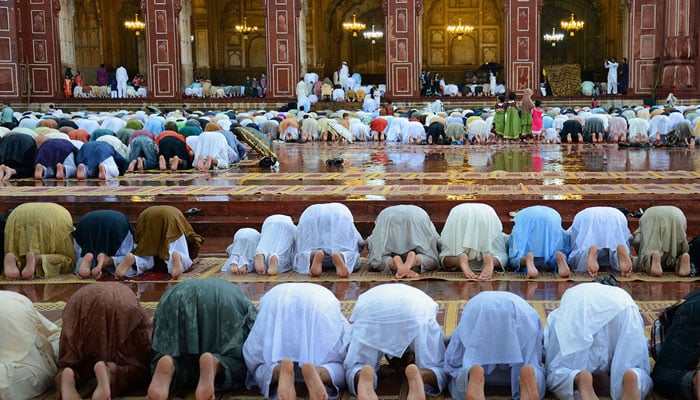
Each year, as Ramadan approaches its final nights, a quiet anticipation spreads across the Muslim world. Mosques remain lit deep into the night, homes soften into places of prayer and reflection, and millions search for this sacred moment. Yet in our eagerness to locate the night of the 27th perhaps or the 25th or the 23rd, there is sometimes a risk that something deeply spiritual is reduced to calculation, as if the sacred can be captured by the calendar.
Through reflection and my own experience over the years, I have often felt that Laylatul Qadr speaks to something far deeper than a particular date.
The Quran refers to this night in Surah Al-Qadr, describing it as a night “better than a thousand months”. Many understandably interpret this in terms of reward, but spiritually, it carries another message. Time in the inner life does not move evenly. We may pass through years unchanged, yet a single moment of genuine awakening can quietly alter the direction of our lives.
Laylatul Qadr reminds us of that possibility. It points to those rare moments when the heart becomes receptive in ways it rarely does in the rush of ordinary days, moments when humility replaces certainty, when reflection replaces distraction and when the human soul senses something greater than itself.
The Quran also speaks of angels descending on that night. For us believers, this is a majestic reminder of the unseen world. Yet spiritually it also points to something deeply personal. When the heart softens and the ego loosens its hold, clarity descends, mercy descends and a profound peace settles within.
Muslim scholars throughout the centuries have described this night as one filled with divine mercy, forgiveness and acceptance of sincere worship. The unseen does not suddenly appear before our eyes; rather, the heart becomes capable of perceiving what was always present.
The Quran reminds us that Allah is “closer to us than our jugular vein". Classical Islamic tradition also understands Laylatul Qadr as the blessed night in which, by the command of Allah, matters are decreed, a moment when divine mercy, guidance and destiny unfold in ways known fully only to Him.
There is wisdom too in the setting of this night. It unfolds in darkness, when the world becomes quiet and distractions recede. Throughout history, seekers of truth have turned to the stillness of night for contemplation and prayer. In that silence, the mind settles and the soul finds the space to listen.
Perhaps the most striking aspect of Laylatul Qadr is that its precise date remains unknown. Hadith places it somewhere within the final nights of Ramazan, yet its exact moment remains hidden. To me, this mystery carries its own wisdom. Encounters with the Divine cannot be scheduled or engineered. They arrive when the heart becomes ready.
The invitation of this night, therefore, is not simply to search for a date, but to cultivate a state of being: sincerity, humility and openness.
Over time, I have also come to appreciate a beautiful insight shared by many spiritual teachers in the Muslim tradition: that the deeper meaning of Laylatul Qadr extends beyond a single historical night. It also represents those inner moments when a person pauses, turns inward, and reconnects with the deeper reality of the soul.
In a world increasingly filled with noise – political, digital and emotional – the search for Laylatul Qadr gently calls us back to stillness. It reminds us that the most meaningful transformations often begin quietly, within the human heart.
For it is often in the quietest moments that the deepest truths are heard. And when the heart becomes still enough, it may discover that the Divine was never far away.
May our ibadat during this auspicious moment help us draw closer to the Divine as never before.
The writer is a former global corporate executive (Unilever, PepsiCo, Yum! Brands), a mental health advocate and a founding board member of Taskeen, a pioneering organisation focused on emotional well-being in Pakistan.