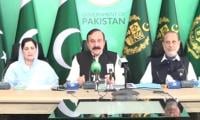
Pakistan’s armed forces carried out precision airstrikes on Afghan Taliban-linked targets in Kabul and Nangarhar, destroying key military and ammunition infrastructure, Information Minister Ataullah Tarar said on Monday, vowing operations will continue until “desired objectives are fully achieved.”
“Pakistan’s Armed Forces successfully carried out precision airstrikes on the night of 16 March as a part of Operation Ghazab Lil Haq, targeting Afghan Taliban regime terrorism sponsoring military installations in Kabul and Nangarhar,” Tarar said in a post on X.
“Technical support infrastructure and ammunition storage facilities at two locations in Kabul were effectively destroyed. The visible secondary detonations after the strikes clearly indicate the presence of large ammunition depots.”
“In Nangarhar, Pakistan Armed Forces also struck four Afghan Taliban regime terrorism sponsoring military sites, destroying associated logistics, ammunition, and technical infrastructure.”
“All targeting has been done with precision only at those infrastructures which are being used by the Afghan Taliban regime to support its multiple terror proxies, including Fitna Al Khawarij and Fitna Al Hindustan, as can be clearly seen in accompanying footage.
"False claims made by the propagandists of the Taliban regime cannot fool the Afghans and the World from their heinous actions supporting and sponsoring terrorism in the region.”
“Operations under Ghazab Lil-Haq to safeguard Pakistani citizens against terrorism waged by Master Terror Proxy will continue until the desired objectives are fully achieved.”
Earlier, security sources said that a drone assembly workshop, the “headquarters from where drones were sent”, and weapon stocks were also hit in operations carried out in Kabul and Nangarhar.
According to the sources, drones were being assembled at those sites using parts manufactured in India and Israel.
Providing updates around midnight, the sources said the Pakistan Air Force was still conducting operations in Kabul and Nangarhar.
They said six targets had been successfully struck in the two provinces, adding that initial reports suggested several terrorists had been killed.
In a prior statement, security sources said forces operating in the Kurram sector of Khyber Pakhtunkhwa had also targeted and destroyed what they described as key hideouts used by the Afghan Taliban and Fitna al-Khawarij.
“During these operations, several khawarij were killed while the rest managed to escape,” a security source said.
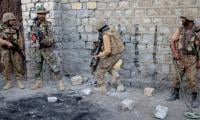
Security sources further said that Afghan Taliban posts across the Pakistan-Afghanistan border in the Bajaur sector of Khyber Pakhtunkhwa were also destroyed.
Those positions were targeted with “guided missiles”, according to the sources.
On Sunday morning, the sources said overnight strikes had also been carried out in Afghanistan’s Kandahar province, destroying “technical support infrastructure and an equipment storage facility”.
Information Minister Attaullah Tarar later confirmed the military action, saying that a tunnel used by terrorists had also been destroyed.
Later the same day, Tarar said four Pakistani civilians were killed and a child injured after the Afghan Taliban “deliberately targeted the civilian population through artillery/mortar fire from across the border” in Bajaur district.
Separately, the information ministry rejected a claim by an Afghan Taliban spokesperson that a drug rehabilitation hospital had been targeted in Kabul.
The “claim of this discredited so-called spokesperson of the Taliban regime is another misreporting of facts aimed at misleading public opinion”, the ministry said in a post on X.
It added: “On the night of March 16, Pakistan precisely targeted military installations and terrorist support infrastructure, including technical equipment storage and ammunition storage of Afghan Taliban and Fitna al Khawarij in Kabul and Nangarhar that were being used against innocent Pakistani civilians.
"Post-strike detonation of stored ammunition being used by the master terror proxy also fully contradicts the fake claim.
“Pakistan’s targeting is precise and carefully undertaken to ensure no collateral damage is inflicted.
"This misreporting of facts … seeks to stir sentiments, covering illegitimate support to cross-border terrorism. The statement is rejected as being false and misleading.”
Meanwhile, the Foreign Office (FO) on Monday dismissed reports that Pakistan had turned down China’s offer to hold talks with the Afghan Taliban, saying “any unnecessary speculation or fabrication of facts in this regard is unwarranted.”
“Pakistan and China remain trusted partners and close friends, and both maintain regular and close communication on all issues of mutual concern and shared interest. Therefore, any unnecessary speculation or fabrication of facts in this regard is unwarranted,” the FO spokesperson Tahir Andrabi said.
Earlier, China reiterated its offer to help ease border tensions between Pakistan and Afghanistan. Foreign Ministry spokesperson Lin Jian said, “The most urgent task is to avoid the expansion of the war and return the two countries to the negotiating table as soon as possible. China is willing to continue to make efforts to achieve reconciliation and ease relations between Afghanistan and Pakistan.”
The remarks followed Chinese Foreign Minister Wang Yi’s call with Afghan counterpart Amir Khan Muttaqi, in which he said disputes between Islamabad and Kabul should be resolved “through dialogue and consultation, not force.”
Since the Afghan Taliban returned to power in 2021, Pakistan has faced a surge in terrorism. Islamabad has repeatedly urged the Taliban to dismantle terrorist sanctuaries, particularly those linked to the banned Tehreek-e-Taliban Pakistan (TTP), but officials say these appeals have been ignored.