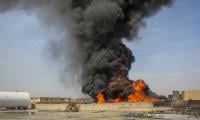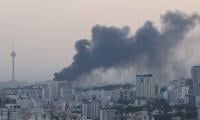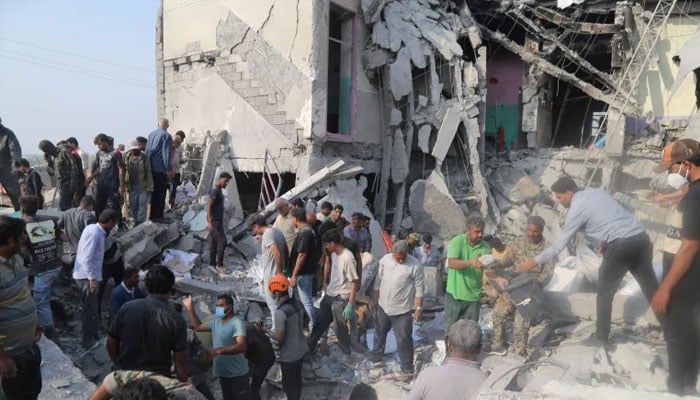
There is no doubt about the horrors we see in wars. In the latest case, one only needs to think about the families of the 165 school girls killed in the southern town of Minab in Iran at the beginning of the war as Israel and the US began airstrikes on the nation. There are, of course, multiple other deaths and multiple other stories. We are yet to see quite what the war raging on in Iran and the Gulf region means for the world as a whole.
But there is also other ugliness that comes with war. One of these is the racism that we see, notably from the US and in the past also from its allies. The US seems primarily to launch its immense military power on countries which are not white in skin colour. There is ample evidence of this. In the recent past, virtually the only time the US has directly engaged in a war with other European nations is during World War II when it, of course, took on Germany and its allies. Since then, only in 1999 did a similar event occur when Nato, led by the US, bombed the Kosovo region in former Yugoslavia as an action against Yugoslavian forces battling insurgents in Kosovo. In almost all other cases, the US has targeted non-white nations, including Vietnam, Iraq, Afghanistan, Venezuela, Cuba. This is one factor that seems to lead to a lack of outrage from the rest of the world.
Even now, in the case of Iran, European leaders have said very little or simply mumbled out inadequate responses to the attack by an unhinged US president and his Israeli ally. Spain has been the only country to openly speak out against the war. Only in the case of Greenland do we see any evidence of European outrage, with European leaders insisting that this is their ‘red line’ and that they will go to all lengths to defend Greenland.
This instance suggests that wars are, of course, essentially aimed at the use of power, but can also be openly racist in the manner in which they are planned and followed through on. Brown lives, it seems, matter far less than white ones, and Washington, as well as Tel Aviv, are well aware of this. Killing brown, or in other cases black, people means very little – and the world is willing to simply look on.
Decades after the colonial era came to an end, we still live in a world that is essentially imperialistic and also extremely racist. White nations stand at the top of this order and as the US has demonstrated multiple times, have no issues with bombing to the ground nations that are essentially brown or of a descent other than the primarily white people of America or its allies. There is a lesson somewhere in this.
The world order at the moment is still unipolar. This could, of course, change in the future once China plays a bigger role in world events. At present, while it is believed to play a quieter role, it is thought to hold the power to match the US and perhaps surpass it. But for the moment, in terms of economic might and military might, it is still unwilling to take on the US. This has an impact on the racial aspect of war and all that goes with it. We need nations other than the US to help shape the world we live in. At the moment, it is being moulded only by one force and one kind of leadership. This is unfortunate and has a terrible impact on people across various countries and regions.
We do not know who will be next, but whichever nation comes to grievance as a result of airstrikes and the use of military power, it is likely that its people will be of a descent that is not European or white.
The UN, of course, has no particular say in global events, but a force needs to be assembled that can bring some element of parity to the world. It seems that China will need to play a role in this. There are many other nations that could do so as well. It is welcome to see some Indian comments directed against the US for what it has been doing. But this is not sufficient, particularly given India’s past stance and the current government’s approach to global issues. India, too, could be a formidable non-white power. But under its present regime, we would not really wish for it to take a prominent place in global happenings.
We need a more harmonious and determined group of nations to do so. We have seen how dangerous unipolarity can be and what harm it can inflict on other nations. There needs to be more thinking on this aspect of war as well and a reflection on what it means for the globe as a whole.
The writer is a freelance columnist and former newspaper editor. She can be reached at: [email protected]