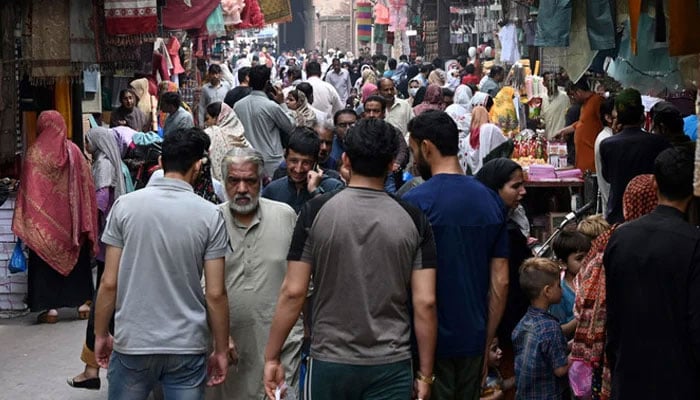
MINGORA: Speakers have called for a renewed commitment to strengthening collaboration between the media, government institutions, and development partners to accelerate progress toward Pakistan’s national goals on population and reproductive health.
They were speaking at the media coalition meeting which highlighted the critical role of responsible journalism in advancing Pakistan’s National Action Plan on Population.They called on provincial governments to take concrete steps to ensure effective implementation.
The meeting was organized by the Population Council in collaboration with the Information Service Academy (ISA) and the United Nations Population Fund (UNFPA) in Islamabad.Senior journalists, communication experts, and representatives of government institutions participated in the session to discuss how evidence-based reporting can strengthen accountability and raise public awareness about the challenges associated with Pakistan’s rapidly growing population.
Speaking at the opening session, Dr. Ali Mir, Senior Director at the Population Council, emphasized the importance of responsible journalism in shaping a national narrative that promotes balance between population growth and available resources.
He noted that meaningful progress on the National Action Plan on Population would only be possible if the media highlights gaps in implementation, barriers to service delivery, and the ground realities faced by communities.
Adnan Akram Bajwa, Director of the Information Service Academy, reaffirmed the institution’s commitment to equipping journalists with credible information and professional training.He stressed that the media was not merely a channel for disseminating messages but a key pillar in shaping national discourse.
According to him, responsible media engagement can help promote the concept of balancing family resources with family size, thereby contributing to sustainable national development.Ikram-ul-Ahad, Manager Communications at the Population Council, drew attention to the human dimension of Pakistan’s population and reproductive health challenges.
He noted that limited access to family planning services continues to affect women, particularly those in poor rural communities, contributing to high maternal mortality rates.According to estimates shared during the meeting, Pakistan witnessed nearly six million unintended pregnancies each year, around 3.8 million of which end in abortion, many of them performed under unsafe conditions.
“These figures reflect a crisis of access to services,” he said. “When women lack access to contraceptives, they lose control over their health, safety, and future.”Members of the media coalition, including Zafar Sultan and Daniyal Umar, presented a joint review assessing the progress made on the Council of Common Interests’ National Action Plan across Punjab, Sindh, Khyber Pakhtunkhwa, Balochistan, and Islamabad.
The review identified several persistent challenges, including disparities in healthcare access between urban and rural areas, shortages of Lady Health Workers, frequent disruptions in contraceptive supplies, uneven policy implementation, and limited outreach in remote districts.
Participants emphasized that sustained and responsible media reporting is essential to highlight systemic gaps and to ensure that commitments made at the federal and provincial levels translate into tangible outcomes. Journalists also stressed the need for stronger data-driven reporting on issues such as limited access to healthcare in rural communities, maternal health, and reproductive health services to enhance public awareness and policy accountability.
Dr. Jameel Ahmed Chaudhry, Programme Specialist at UNFPA, underscored the importance of collective action to safeguard the health and rights of women and girls.“Every maternal or newborn death that could have been prevented reminds us that urgent action is a shared responsibility,” he said.