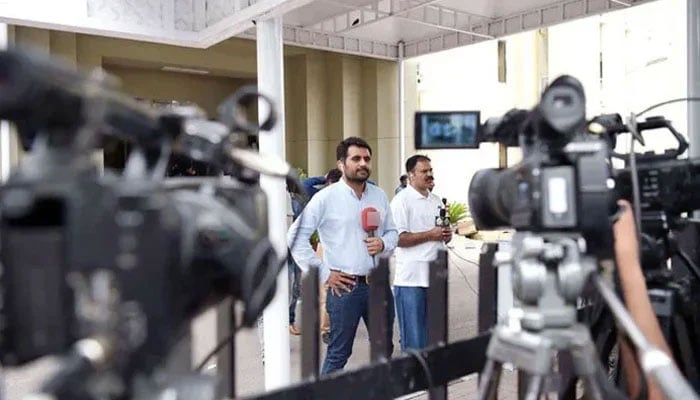
The recent remarks by Law Minister Azam Nazeer Tarar, warning journalists and commentators against crossing unspecified “red lines” while discussing foreign policy, have understandably triggered concern across Pakistan’s media landscape. The Committee to Protect Journalists (CPJ) has already expressed alarm, noting that vague threats of legal action risk creating a chilling effect on independent reporting and analysis. As the watchdog rightly pointed out, “independent analysis and reporting of international affairs is critical to the public’s understanding of how global events impact domestic developments”. It also urged Pakistani authorities to make clear they will not rely on broadly framed legal threats or political pressure to silence critical voices. The government’s caution came amid escalating tensions in the Middle East. The law minister stressed the need for restraint in shaping the ‘narrative’ across social media, electronic media and print, and warned that action would follow if undefined boundaries were crossed. He also reminded the public that Pakistan is a responsible nuclear state and that both the constitution and national interest should guide commentary on foreign policy.
Yet it is precisely this vagueness – the absence of clarity about what constitutes these so-called red lines – that has caused unease among journalists. Pakistani media has historically demonstrated responsibility when it comes to safeguarding national interests. At the same time, it has fulfilled its democratic obligation by raising difficult but necessary questions when foreign policy decisions appeared flawed or lacked transparency. There are precedents of this in almost every government’s tenure. Pakistan occupies a delicate geopolitical position: Iran is a neighbour; Pakistan hosts one of the world’s largest Shia populations; and longstanding alliances with Arab countries such as Saudi Arabia, the UAE and Qatar remain central to its diplomatic and economic calculus. In such circumstances, public debate is inevitable and some would say even necessary.
That said, it is also true and understandable that no state wants murkiness in times of global crisis. Nor would anyone defend commentary that incites violence or undermines national security. But commentary does not translate into inciteful behaviour normally. To be fair, for the most part, mainstream media has mostly commended Pakistan’s attempts to balance solidarity with friendly nations while maintaining a cautious stance on regional conflicts. This is why such warnings seem so strange and even risk making governments appear insecure. Some analysts argue that the real frustration lies with social media influencers and YouTubers operating from abroad, beyond the reach of domestic regulation. Unable to control those voices, the state may be tempted to tighten pressure on local media instead. While any frustration with such online actors would be understandable given the sort of rhetoric they employ, the strategy is largely counterproductive. Curtailing media freedom does not strengthen national narratives. In fact, it ultimately undermines the government’s own credibility. Foreign policy, perhaps more than any other domain, requires informed public debate because its consequences are borne by citizens. Perhaps, a better way can be found to take on the highly irresponsible side of social media that seems to thrive on castigating the country and its efforts to stay safe, relevant and helpful at such a defining moment in our history.