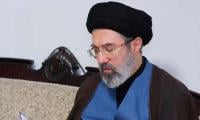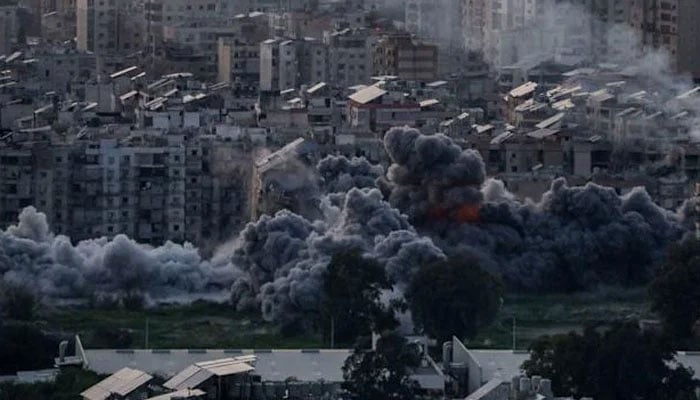
Iranian President Masoud Pezeshkian’s demand for “recognising Iran’s legitimate rights, payment of reparations and international security guarantees against future aggression as a precondition to end this war ignited by the Zionist regime and the US” has resonated far beyond Tehran. These are valid demands given that this war was not started by Iran but by the US and Israel exactly two weeks ago. The devastation that these two countries have wreaked across Iran increasingly shows that the only aim is to destroy Iran so comprehensively that it may take decades for the country to rebuild. What was initially framed as a decisive military operation has instead morphed into something far more familiar: another protracted and uncertain conflict. The failure to impose ‘regime change’ appears to have hardened positions on all sides, particularly as Iran’s political leadership has rallied around a new supreme figure following the martyrdom of Ayatollah Ali Khamenei.
The Trump administration, meanwhile, is continuing to issue contradictory statements that deepen global unease. From demanding Iran’s ‘unconditional surrender’ to claiming that the US military has effectively destroyed Iranian military infrastructure and declaring the conflict a win, Washington’s messaging has lacked coherence. At the same time, repeated suggestions that the option of boots on the ground remains on the table only reinforce the perception that the US has not achieved what it set out to do through this unjust war. The closure of the Strait of Hormuz by Iran has further complicated the situation and the consequences are not confined to the Middle East. Global energy markets are jittery, supply chains are under strain and economies already grappling with inflationary pressures now face an additional layer of uncertainty. Ironically, this is precisely the kind of entanglement Trump had campaigned against. His political rhetoric was built around ending America’s ‘forever wars’. Yet, here we are: with the US seemingly sliding back into the same pattern. The fact is that the only person who can decisively halt the escalation is Trump himself. However, his mixed signals are not easing any minds. Some allege confusion; others suspect calculated attempts to manipulate markets. The American public remains unconvinced as the justifications offered for the war have failed to generate broad support.
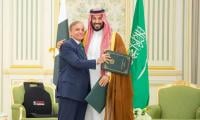
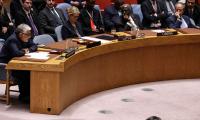
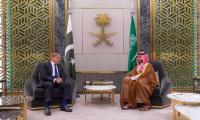
Beyond Washington and Tehran, the world is growing increasingly impatient. The repercussions of continued hostilities are grave and far-reaching. Islamabad has supported draft resolutions calling for restraint, cessation of military activities and a return to negotiations, while also attempting to play a mediatory role through backdoor diplomacy. Now, Prime Minister Shehbaz Sharif’s visit to Saudi Arabia is also likely part of the urgency with which regional actors are seeking to contain the fallout. Arab countries find themselves in a particularly difficult position. While hosting US bases intended to provide security guarantees, many now perceive that Washington’s actions are primarily geared towards protecting and aiding Israel, leaving traditional allies exposed to retaliation and uncertainty. The broader international response has been uneven. The hero here has been Spain whose decision to permanently withdraw its ambassador to Israel has been widely viewed as a bold and principled stance at a time when much of the world appears paralysed. What is clear, however, is that global frustration is also mounting, what with the UN having become completely irrelevant. In moments such as these, the need for political courage becomes paramount. The world requires more spine in the face of war crimes and collective punishment. The truth is that if this conflict continues on its current trajectory, it risks becoming yet another chapter in the long history of ‘forever wars’. For now, the choice lies largely in Washington. Whether the Trump administration opts for de-escalation or persists with a strategy that has already produced devastating consequences will shape not only the future of Iran and the Middle East but also the credibility of the international system itself.