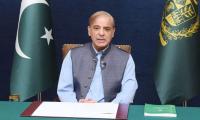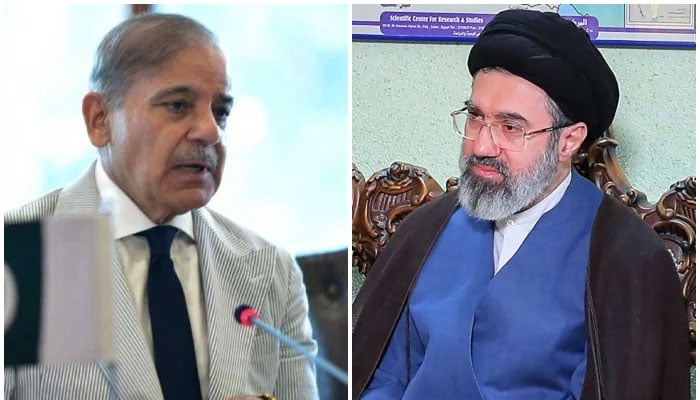
Prime Minister Shehbaz Sharif on Tuesday congratulated Ayatollah Mojtaba Khamenei on assuming the responsibilities of Supreme Leader of the Islamic Republic of Iran, while also conveying condolences to the Iranian leadership and people on the martyrdom of Ayatollah Ali Khamenei, saying the people of Pakistan stand in solidarity with the leadership and people of Iran. PM Shehbaz’s message of solidarity and congratulations to the new leader is in keeping with Pakistan’s foreign policy. The prime minister also held a telephonic conversation with Iranian President Masoud Pezeshkian, who warned of a severe threat to the global system and security and made it clear that Iran has no intention of getting into any conflict with other countries in the region. This assurance matters because the conflict has already begun to spiral beyond bilateral hostilities. As Iran continues to be pounded by the US and Israel, at least 19 people were killed in Israeli attacks across Lebanon yesterday.
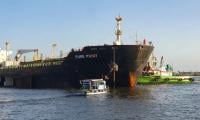
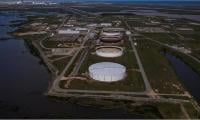
Mixed messaging from Washington has only deepened global anxiety, with contradictory explanations by President Trump – first touting the attacks as a major success and suggesting the war might soon be over, then telling lawmakers at another event that “we haven’t won enough” and that the US will move forward “more determined than ever to achieve ultimate victory that will end this long-running danger once and for all". And yet nobody knows what this ‘ultimate victory’ entails. The fog of war is thickened further by the fact that both the US and Israel have also taken significant hits. The GCC countries now find themselves in a dire situation, trapped between strategic alliances and geographic vulnerability. With US and Israeli attacks inside Iran and Iran’s retaliatory strikes on US bases in the region, the energy sector is in doldrums – particularly due to the closure of the Strait of Hormuz. The aviation industry is also in a bind because of widespread airspace closures. The longer this war continues, the clearer it becomes to the entire world what a disaster it is becoming. This obviously threatens not only the global economy but also the fragile stability of the Middle East and West Asia. Investment climates, tourism prospects and strategic partnerships all stand to suffer if the region becomes synonymous with open conflict once again.
Compounding the crisis is a dangerous narrative being pushed in some Western quarters: that this is an ‘Arab versus Persian war’. This framing is both misleading and inflammatory and ends up reducing a complex geopolitical confrontation into a simplistic civilisational rivalry, risking deeper sectarian and ethnic fault lines. In reality, most sane people would view the conflict as a Zionist war of expansionism carried out with the backing of the US. The Muslim world must therefore resist falling into what many describe as a trap – one that seeks to provoke infighting between Arab states and Iran. History offers ample lessons on how divide-and-rule strategies have shaped the region’s politics. At a time when economic diversification, technological advancement and social reform are central to Gulf visions for the future, sliding into a prolonged regional war would be catastrophic. What is urgently needed now is meaningful international intervention to prevent further escalation. Without this, the thirteenth day of war may soon give way to months of instability whose consequences will extend far beyond the Middle East.