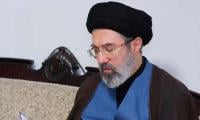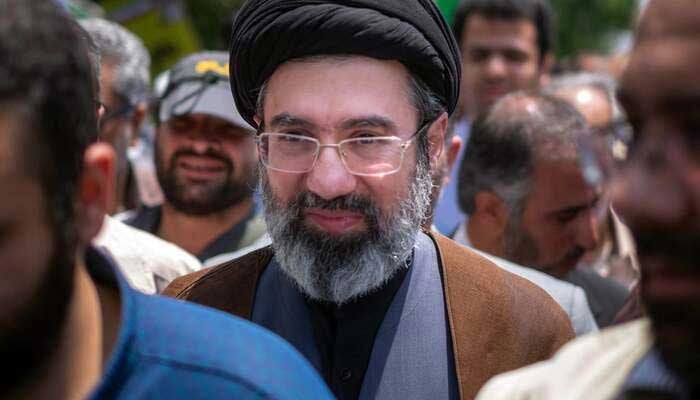
DUBAI/BEIRUT: Iran will fight on and keep the Strait of Hormuz shut as leverage against the United States and Israel, new Supreme Leader Mojtaba Khamenei said on Thursday in the first comments attributed to him since he succeeded his slain father. Khamenei did not appear in person and the remarks were read out by a state television presenter. No images have been released of him since an Israeli strike at the start of the war that killed much of his family, including his father and wife.
Thursday’s statement struck a defiant tone, with Khamenei calling on Iran’s neighbours to shut US bases on their territory and warning that Iran would continue to target them.
“I assure everyone that we will not neglect avenging the blood of your martyrs,” said the hardline cleric, who is close to Iran’s top military force.
“The popular demand is to continue our effective defence and make the enemy regret it. The lever of blocking the Strait of Hormuz must continue to be used,” Khamenei added, referring to the shipping route through which a fifth of global oil normally passes along Iran’s coast.
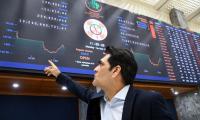
Oil prices soared above $100 and stock markets extended losses as Iran’s new supreme leader ordered the Strait of Hormuz to be kept closed.
Concerns about a long, drawn out conflict were not assuaged by US President Donald Trump saying that stopping the Islamic republic’s “evil empire” was more important than crude prices.
Global markets have been roiled since the United States and Israel launched attacks on Iran. Tehran’s retaliatory strikes on shipping and Gulf neighbours have nearly cut off maritime traffic through the Strait of Hormuz, through which pass around a fifth of the world’s oil and liquefied natural gas.
Energy Secretary Chris Wright acknowledged the US military was currently “not ready” to escort tankers through the critical Strait of Hormuz.
However, US Treasury Secretary Scott Bessent told Sky News in an interview on Thursday that the US Navy, perhaps with an international coalition, will escort vessels through the Strait of Hormuz when it is militarily possible. “My belief, that as soon as it is militarily possible, the US Navy, perhaps with an international coalition, will be escorting vessels through,” Bessent said.
The plan to escort ships would go ahead as soon as the US has “complete control of the skies and ... (Iran’s) rebuilding capabilities for the missiles completely degraded,” he said. “There are, in fact, tankers coming through now, Iranian tankers, I believe some Chinese flag tankers have come through. So we know that they have not mined the straits,” Bessent said.
Brent North Sea crude, the international benchmark contract peaked at $101.59 per barrel on Thursday. At $100 per barrel, Brent is up around 38 percent from the eve of the conflict.
After Iran’s new supreme leader called on Thursday for using “the lever of blocking the Strait of Hormuz”, the country’s Revolutionary Guards vowed to carry out. “In response to the order of the commander-in-chief, we will deliver the harshest blows to the aggressor enemy while maintaining the strategy of closing the Strait of Hormuz,” said Guards navy commander Alireza Tangsiri in a post on X. IRGC official says “if our energy infrastructures are attacked , we will ‘burn’ the region’s oil and gas infrastructure, state media reported.
Iran wants to ensure that a war will not be imposed on it again in the future, deputy foreign minister Majid Takht-Ravanchi told AFP. “We want to see that war is not going to be imposed again on Iran,” said Takht-Ravanchi in an interview with AFP in Tehran.
“When the war started last June, after 12 days there was so called cessation of hostilities... but after eight or nine months, they regrouped and they did it again,” he said, referring to the US and Israel.
“We do not want to be treated like this again in the future.” He said, “We are acting in self defence. We continue to act in self defence as long as necessary.”
He said Iran has allowed ships from some countries to cross the Strait of Hormuz. “Some countries have already talked to us about passing the strait and we have cooperated with them,” said Takht-Ravanchi. “As far as Iran is concerned we feel that those countries that joined the aggression should not benefit from safe passage through the Strait of Hormuz.”
He further said Iran is not laying mines in the Strait of Hormuz after US President Donald Trump said US forces had struck 28 Iranian mine-laying vessels in the waterway. “Not at all. This is not true,” said Takht-Ravanchi when asked about reports of Iran laying mines in the strategic waterway.
Iranian security chief Ali Larijani said that his country would not give up fighting until the United States came to regret the “grave miscalculation” of launching its war against the Islamic republic. US President Donald “Trump says he is looking for a speedy victory. While starting a war is easy, it cannot be won with a few tweets. We will not relent until making you sorry for this grave miscalculation,” Larijani said on X.
Larijani threatened to target power grids in the region if the United States attacked the Islamic republic’s electricity supplies. “If they do that, the whole region will go dark in less than half an hour and darkness provides ample opportunity to hunt down US servicemen running for safety,” said Larijani in a post on X. US President Donald Trump had said US forces could knock out Iran’s electricity supply “within one hour”—leaving the country with reconstruction that could take a generation.
While Iran’s powerful parliament speaker Mohammad Bagher Ghalibaf warned that Tehran will “abandon all restraint” if the United States and Israel attack any of its islands in the Gulf.
“Any aggression against soil of Iranian islands will shatter all restraint. We will abandon all restraint and make the Persian Gulf run with the blood of invaders,” said Ghalibaf in a post on X.
It was not immediately clear which islands he was referring to, but a recent Axios report cited US officials as saying that capturing Kharg was on the table as the war in the Middle East spirals.
Oil prices pared their gains after Iran’s deputy foreign minister said that Tehran had allowed ships from some countries to cross the Strait of Hormuz.
The International Energy Agency said the Mideast war “is creating the largest supply disruption in the history of the global oil market”, a day after its member countries agreed to unlock 400 million barrels of oil from their reserves—their largest release ever. Analyst David Morrison at Trade Nation said that if the announcements of the release of oil from strategic reserves “were supposed to cap prices, then they failed dismally”.
While the International Maritime Organization (IMO) said it will convene an “extraordinary session” next week to discuss threats to shipping in the Middle East and particularly in the Strait of Hormuz. The meeting, scheduled for March 18-19 at the IMO headquarters in London, was requested by six of IMO’s 40 members: Britain, Egypt, France, Morocco, Qatar and the United Arab Emirates.
Saudi Arabia intercepted three drones headed towards the Shaybah oil field on Thursday, as Iran targeted the facility again in its campaign to disrupt global energy markets. The Gulf kingdom’s defence ministry said an “unmanned aerial vehicle heading towards the Shaybah field... was intercepted and destroyed”.
Earlier the ministry said two drones heading towards the same field were similarly destroyed, announcing the interception in a separate post on X.
Israel renewed its strikes on Beirut on Thursday, as it threatened to expand operations and seize territory in Lebanon if Hezbollah did not stop its attacks. The Israeli military issued a call to evacuate ahead of the Beirut attack, after having also widened its evacuation warning for residents in southern Lebanon to include areas below the Zahrani river, around 40 kilometres north of Israel.
An Israeli strike on a campus of Lebanon’s public university killed two academics, Lebanese state media said on Thursday.
Israel’s military said that Hezbollah had fired around 200 rockets at Israel the night before, in what it described as the Lebanese armed group’s “biggest barrage” since the war began. “Last night, Hezbollah timed a simultaneous attack with Iran, firing rockets and drones at towns and communities across Israel,” military spokesman Lieutenant Colonel Nadav Shoshani told journalists in a briefing.
US President Trump said that stopping Iran from getting nuclear weapons was more important to him than controlling oil prices. “The United States is the largest Oil Producer in the World, by far, so when oil prices go up, we make a lot of money. BUT, of far greater interest and importance to me, as President, is stoping an evil Empire, Iran, from having Nuclear Weapons, and destroying the Middle East and, indeed, the World,” said Trump in a post on his Truth Social platform.
President Trump warned Iran’s football team their “life and safety” would be at risk if they took part in the upcoming World Cup in North America.
Trump’s comments came just two days after he told FIFA chief Gianni Infantino the Iranian players would be welcome despite the Middle East war.
“The Iran National Soccer Team is welcome to The World Cup, but I really don´t believe it is appropriate that they be there, for their own life and safety,” Trump said on his Truth Social platform.
The United States has struck around 6,000 targets since the start of the war against Iran late last month, the US military said on Thursday. Among the targets hit were more than 90 Iranian vessels—around 60 ships and 30 minelayers—US Central Command, which is responsible for American forces in the region, said.
Iranian authorities have arrested nearly 200 people nationwide on charges related to the US-Israeli war against the Islamic republic, a US-based rights group said on Thursday.
The charges relate to accusations including over activity on social media, sending content to foreign media outlets, espionage and disturbing public order, the US-based Human Rights Activists News Agency (HRANA) said, adding its count was based on official reports.
Two crew on the USS Gerald R. Ford—the world’s largest aircraft carrier currently deployed for the war against Iran—were injured Thursday in a laundry room fire, the US Navy said. “Two sailors are currently receiving medical treatment for non-life-threatening injuries and are in stable condition,” a statement from US Naval Forces Central Command said. The Navy said the fire, originating “in the ship’s main laundry,” was “not combat-related and is contained.”
Spain’s leftist government on Thursday said it would soon present a plan to contain the Middle East war’s impact on electricity and fuel prices in one of the most dynamic developed economies.
Spain explained its decision to permanently withdraw its ambassador to Israel, citing repeated “insults and slanders” by the country. Veteran diplomat Ana Maria Salomon Perez was officially relieved of her duties on Tuesday at the proposal of Spanish Foreign Minister Jose Manuel Albares.
European countries have stepped up domestic security since US-Israeli strikes on Iran sparked the Middle East war, with fears Tehran could be plotting “terrorist” attacks as part of its retaliation.
In Norway, three Norwegian brothers of Iraqi origin have been arrested on suspicion of a “terrorist bombing” over an explosion at the US embassy in Oslo on Sunday that caused minor damage, and police have said they are exploring the possibility they were following “an order from a government entity”. Iran’s ambassador in Oslo has denied any involvement.
Lufthansa said about half its flights were cancelled Thursday as pilots from the German airline kicked off a two-day strike over pensions. The pilots’ union called the second walkout in the space of a month after talks with management broke down.
UK Foreign Secretary Yvette Cooper arrived in Saudi Arabia on Thursday on the first ministerial visit to the region since the start of the Middle East war.
Cooper was expected to discuss cooperation with regional partners to “ensure continuity of oil supply in the face of strikes in the Strait of Hormuz”, a Foreign Office statement added.
Air strikes killed at least nine Iran-backed fighters in Iraq on Thursday near the Iraqi-Syrian border, two senior security officials told AFP.
Iraqi authorities denounced the “blatant attacks” on bases that belong to the Hashed al-Shaabi, a former paramilitary group now integrated into the regular army, which also encompasses brigades from Iran-backed armed groups.
Greece on Thursday became the latest European state to relocate its Iran embassy services from Tehran to Baku in Azerbaijan due to the Middle East war. Foreign ministry spokeswoman Lana Zochiou said the decision was taken owing to “deteriorating security conditions” in Tehran.
Belgian authorities said Thursday they were probing a video containing an apparent jihadist claim of responsibility for a blast that hit a synagogue in the city of Liege.
More than 50 crew members were rescued after an attack on two oil tankers in Iraq’s territorial waters, Farhan al-Fartousi of the port authorities told AFP. Fartousi, from Iraq’s General Company for Ports, said “all crew members of the two tankers were rescued,” adding that the 51 workers were in good condition. The attack killed at least one crew member, an Indian national. Iran’s Revolutionary Guards said Thursday they had struck a Marshall Islands-flagged ship, which they claimed was US-owned, in the north of the Gulf.
Poland’s National Centre for Nuclear Research has been hit by a cyberattack, likely from Iran, Minister of Digital Affairs Krzysztof Gawkowski said Thursday.
”The attack did not succeed on the scale that had been planned,” he said, adding that “a lot indicates that (it) took place from the territory of Iran”.
Israel’s military said that it had struck a site in Iran it claimed was being used by the Islamic republic to develop nuclear weapons. “The Israeli Air Force, acting on precise IDF intelligence, struck an additional Iranian nuclear programme site,” the military said, claiming the “Taleghan compound was utilised by the regime to advance critical capabilities for developing nuclear weapons”.
Iran’s foreign ministry spokesman accused the European Union on Thursday of “complicity” in the US-Israeli attacks on the Islamic republic. “The European Union’s indifference and acquiescence in the face of US and Israeli aggression, brutalities and atrocities amounts to nothing less than complicity,” Esmaeil Baqaei said in a post on X.
A series of powerful explosions hit the Iranian capital on Thursday, an AFP journalist said, with the war against Israel and the United States in its 13th day. Smoke was seen rising from western Tehran but it was not immediately clear what was targeted, the journalist said.
Bahrain told residents to stay home after an Iranian attack on fuel tanks on Thursday as Tehran carries out a campaign in the Gulf to disrupt global energy markets. “The blatant Iranian aggression targets fuel tanks at a facility in Muharraq Governorate,” Bahrain’s Ministry of Interior posted on X.
The ministry told residents in three parts of Muharraq to “remain in their homes, close windows and ventilation openings as precaution against potential effects of smokes from the fire currently being fought.”
The Israeli military said on Thursday that its aircraft struck Basij checkpoints in Tehran. “The IDF (Israel Defence forces) recently identified that soldiers of the Basij Unit had established roadblocks in several locations across Tehran. After identifying the deployment, over the past day, the Israeli Air Force, acting on IDF intelligence, has targeted the Basij roadblocks and operatives,” the military said.
Many ships can still pass through the Strait of Hormuz if they coordinate with the Iranian navy, Iran’s Foreign Ministry spokesperson Esmaeil Baghaei said in comments carried by Mehr news agency. “After the current events, generally we cannot return to conditions before February 28 (start of current Iran war)... as we have understood how important the safety of the Strait of Hormuz is, and so did the others,” the spokesperson added.
The Trump administration has organized nearly 50 flights to return US citizens from the Middle East since the U.S.-Israeli war with Iran began, a State Department official said on Thursday, and officials said demand for the flights has declined.
US Energy Secretary Chris Wright said on Thursday that oil prices are unlikely to reach $200 a barrel, with President Donald Trump touting US gains from higher prices as the war with Iran disrupted traffic through the Strait of Hormuz.
Indian Prime Minister Narendra Modi on Thursday spoke to Iranian President Masoud Pezeshkian, he said in a post on X. “The safety and security of Indian nationals, along with the need for unhindered transit of goods and energy, remain India’s top priorities,” he said in the post.
US intelligence indicates that Iran’s leadership is still largely intact and is not at risk of collapse any time soon after nearly two weeks of relentless U.S. and Israeli bombardment, according to three sources familiar with the matter. A “multitude” of intelligence reports provide “consistent analysis that the regime is not in danger” of collapse and “retains control of the Iranian public,” said one of the sources, all of whom were granted anonymity to discuss U.S. intelligence findings. The latest report was completed within the last few days, the source said. Bloomberg has told employees based in the Gulf, including at its Dubai regional headquarters, they can temporarily relocate and work from outside the region, a spokesperson told Reuters on Thursday, as Iran carries out repeated attacks on Gulf cities
TotalEnergies said on Thursday it had shut down 15 percent of its total oil and gas production due to the war in the Middle East. “Production has been shut down or is in the process of shutting down in Qatar, Iraq and UAE offshore, representing approximately 15 percent of our total output,” the French oil and gas major said.
Israeli Prime Minister Benjamin Netanyahu on Thursday issued a veiled threat to kill Iran’s new supreme leader as he sought to use his first press conference since the start of the war to defend his joint military assault with the U.S. against Iran.
Netanyahu said that Iran was “no longer the same” after nearly two weeks of US-Israeli air bombardment and that Tehran had suffered blows to its elite Revolutionary Guards Corps and Basij paramilitary force.
Netanyahu vowed to keep hitting Lebanon’s Hezbollah after the Iran-backed group opened fire on March 2 to avenge the killing of Iran’s supreme leader at the start of the war. Asked about what actions Israel might take against Iran’s new Ayatollah Mojtaba Khamenei and Hezbollah chief Naim Qassem, Netanyahu said: “I wouldn’t issue life insurance policies on any of the leaders of the terrorist organization ... I don’t intend to give an exact message here about what we are planning or what we are going to do.” The Israeli leader said that Iran and Hezbollah no longer pose the same threats that they once did. Netanyahu said he and US President Donald Trump speak daily and that their conversations are free and open in nature.