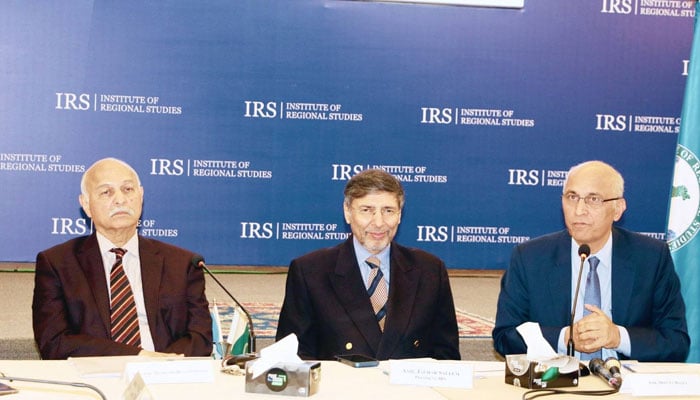
Islamabad:Former Senator Mushahid Hussain Sayed has described the current geopolitical situation as an “arc of conflict stretching from Israel to India.”
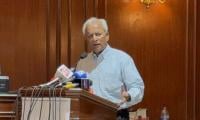
Mr Mushahid was speaking at a roundtable discussion on “Pakistan and China: shared perspectives on the contemporary regional security environment” hosted here by Institute of Regional Studies (IRS).
Drawing attention to what he termed ideological parallels between Zionism and Hindutva, Mr Mushahid remarked that “Modi and Netanyahu, Akhand Bharat and Eretz Israel, are two sides of the same coin,” arguing that both states acted as “flagrant violators of international law, the United Nations Charter, and human rights.” He suggested that the recent actions by the United States and Israel against Iran were based on miscalculations, warning that such actions often prolong conflicts rather than resolve them. He also noted that Iran demonstrated resilience despite mounting pressure, maintaining its political structure. Describing Iran and China as civilisational states with deep historical roots, he argued that such societies possess the endurance necessary for prolonged geopolitical competition. He also emphasised that developments across the Middle East, South Asia and Afghanistan should be viewed as interconnected theatres shaping the broader regional security environment and added that Pakistan and China share closely aligned perspectives on regional peace and consistently advocate diplomatic solutions to conflicts.
Former ambassador Moin ul Haque observed that the ongoing conflict carries implications far beyond geopolitics, affecting energy markets, trade routes, economic stability and the livelihoods of millions of people. Referring to broader regional dynamics and the close strategic alignment between Israel and India, he characterised them as “expansionist, revisionist and occupying powers” with serious implications for Pakistan’s security environment.