LAHORE:The Punjab Curriculum, Training and Assessment Authority (PECTAA) has successfully concluded the revived Grade 8 board-style examinations across the province.
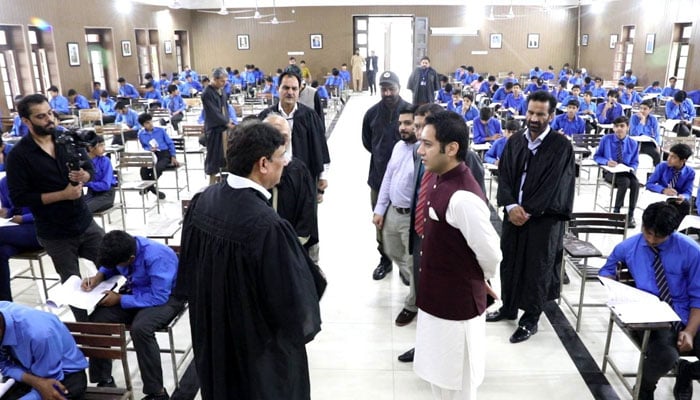
The large-scale exercise began on March 9 and ended on March 12, 2026, with nearly one million students taking part. The initiative, overseen by Punjab Minister for Education Rana Sikandar Hayat and led by PECTAA CEO M Musa Ali Bokhari, introduced a technology-driven and transparent system. For the first time, artificial intelligence (AI) was used for e-marking, QR-coded answer scripts ensured complete tracking, and a live digital monitoring dashboard provided real-time updates from examination centres.
Talking to The News, PECTAA CEO M Musa Ali Bokhari said "Across Punjab, 1,901 clusters and 5,714 centres were set up, involving 26,047 schools. A total of 6,104 superintendents and 21,735 invigilators were deployed. Joint monitoring teams inspected more than 1,500 centres daily to ensure smooth conduct." A total of 994,651 students appeared in the exams at 5,714 centres across Punjab, with 6,083 superintendents and 30,000 staff members managing the process. Alongside the Grade 8 exams, PECTAA also conducted school-based assessments for 6.8 million students, demonstrating its capacity to oversee evaluation processes for nearly eight million students at the same time. PECTAA Managing Director Academics Dr Zubda Zia supervised the academic planning, assessment design and overall quality assurance framework. The operational and technical implementation of the assessment was carried out by the PECTAA assessment and IT team, including Director IT Qamar Sajjad, M Tayyab, Ms Zobia Khan, M Usman, M Humayun, M Mohsin Umar, M Irfan and M Wahaj Ahmed, who played key roles in designing and executing the examination system.