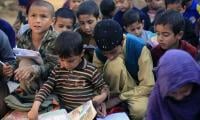
The 2025 Global Hunger Index ranks Pakistan 106th out of 123 countries, with a score of 26.0, indicating a serious hunger situation.
Nutrition International reports that around 37.5 million people in Pakistan are unable to meet basic nutritional needs. Thus, undernutrition, micronutrient deficiencies, and related health issues result in annual economic losses of about three per cent of GDP or $7.6 billion. Updated data from the Cost of Inaction Tool suggests that Pakistan could save at least $17 billion annually by investing in proven nutrition strategies to address stunting, anaemia, low birthweight and sub-optimal breastfeeding. This highlights the significant opportunity cost of postponing action.
In general, Pakistan’s nutrition landscape portrays a complicated and gloomy picture of the crisis with high rates of both chronic and acute malnutrition, widespread micronutrient deficiencies, and significant disparities between rural and urban populations and among different socioeconomic groups. Despite policy initiatives and ongoing programmes, progress is too slow to meet national and international nutrition goals. The simultaneous presence of undernutrition, micronutrient deficiencies, and food insecurity limits human development, workforce efficiency and long-term economic growth.
Sindh became the first province to pass a mandatory food fortification law on November 25, 2022, namely the Sindh Food Fortification Act, 2021. The act mandates fortification of wheat flour, ghee, edible oil and other staple foods to address micronutrient deficiencies.
Balochistan followed shortly after, passing the Balochistan Food Fortification Act, 2021, in late 2021, which extended similar fortification requirements province-wide. In Khyber Pakhtunkhwa, the Khyber Pakhtunkhwa Food Fortification Act, 2022, was approved by the provincial assembly, which came into force in mid-2022.
On the contrary, Punjab is yet to enact a dedicated mandatory food fortification law, despite high micronutrient deficiency rates; the provincial food authority currently relies on voluntary standards and food safety powers, and legislative efforts have not yet resulted in a specific fortification act.
At the federal level and in Islamabad Capital Territory (ICT), there is no national food fortification act in force. A Food Fortification Bill for ICT was introduced in the National Assembly in 2025 but remains under consideration and has not yet been enacted. Although stakeholders discussed drafting or tabling a federal food fortification law to establish nationwide standards, formal approval is still pending.
In Azad Jammu & Kashmir (AJK) and Gilgit-Baltistan, dedicated food fortification legislation has yet to be adopted; efforts to strengthen food safety frameworks continue, but mandatory fortification laws are still needed. So far, no fortification act has been gazetted in these regions.
In light of provincial food fortification legislation and bills tabled at the federal level, these legal frameworks are essential because they empower food authorities to enforce mandatory fortification standards across key industries, including wheat flour millers, edible oil millers, the salt sector, and other associated industries. Without such enacted legislation, provincial and federal food authorities lack the explicit legal mandate to require compliance or take action against non-compliant producers, making enforcement of fortification standards virtually impossible.
Once a food fortification bill is approved, the rules and regulations under those Acts are drafted or revised based on the Pakistan Standards & Quality Control Authority (PSQCA) national standards, as well as the technical committees concerned that develop specifications for fortified foods; these standards reflect internationally accepted micronutrient requirements and provide the technical basis for enforcement and quality control.
Multisectoral coordination structures such as the Pakistan National Nutrition Coordination Council (PNNCC) and the National Fortification Alliance (NFA) also play a strategic role in aligning nutrition policy, standards and monitoring across ministries and provincial authorities.
With legislation in place, enforcement can be effectively monitored through regular inspections, laboratory testing, and compliance checklists conducted by food safety inspectors; therefore, provincial food authorities should revise their inspection checklists and monitoring tools to ensure that fortification parameters are incorporated, inspected, recorded, and acted upon. This enables food authorities to systematically identify gaps, ensure compliance with fortification requirements, and ultimately track and assure the status of fortification at production and market points, which is central to their role in improving nutrition outcomes.
International partners play a vital supporting role in filling capacity and technical gaps to make these systems functional at scale. The World Food Program (WFP) advocates for the adoption of fortification policies, sources fortified foods for social assistance programmes and works with governments and millers to strengthen production and supply chains, including innovative models to reach small-scale millers in Pakistan.
The Global Alliance for Improved Nutrition (GAIN) works with governments, producers, civil society, and regulators to strengthen policies, legislation, governance, quality assurance systems and monitoring of fortified foods, helping ensure the production and market availability of quality fortified products. Nutrition International (NI) supports the development and operationalisation of fortification legislation, strengthens multi-stakeholder coordination platforms, builds regulatory and industry capacity for quality fortification and assists with monitoring and enforcement systems.
Other actors, including think tanks, research institutions, and academic partners, contribute evidence, policy analysis, advocacy, and capacity building, while coalitions such as the National Fortification Alliance and civil society advocates help align nutrition policy, generate demand for fortified foods, and ensure that fortification is integrated into broader nutrition and food- security strategies.
To maximise the impact, it is essential to strengthen regulatory frameworks, ensure mandatory compliance with fortification standards, and integrate fortification monitoring into routine food safety inspections across all provinces.
By embedding fortification oversight within existing inspection systems and quality control mechanisms, Pakistan can ensure consistent compliance, improve nutritional outcomes and generate long-term economic and public health gains.
Yahya Gulraiz is a senior business development executive (H&N) at SGS Pakistan. Dr Kashif Salik is a research fellow at the Sustainable Development Policy Institute (SDPI), Islamabad.