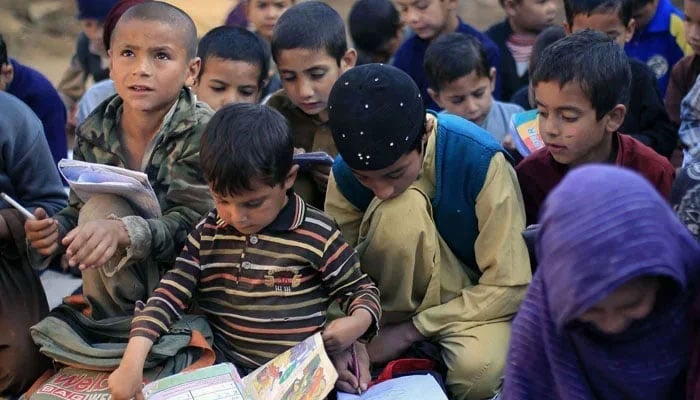
“Education is a matter of life and death for our nation”, warned Quaid-e-Azam Muhammad Ali Jinnah. Decades later, that warning remains only partially heeded.
Pakistan still has more than 20 million out-of-school children, among the highest in the globe, while literacy hovers around 60 per cent, marked by deep regional and gender disparities. Public spending on education remains close to 2.0 per cent of GDP, far below international benchmarks. Education is not a discretionary service but a fundamental right and ensuring universal access at least up to the high school level is a core obligation of the state.
This principle is neither new nor contested. From Plato and Aristotle to John Stuart Mill, political thought has consistently emphasised that education must serve the common good and remain under state stewardship. Even where private participation exists, the state’s responsibility to guarantee equity and quality is nonnegotiable. When that responsibility weakens, the consequences extend far beyond classrooms into the social and institutional fabric of society.
In Pakistan, however, this responsibility is increasingly diluted. Left to market forces, education risks becoming a privilege rather than a right. The rapid expansion of profit-driven private schooling has not complemented the public system; instead, it has deepened inequality and fragmented standards. What should have been a unifying national institution has instead become a marker of class division.
This fragmentation is most evident in the existence of three parallel education streams: the Matric system adopted by public schools and low-cost private institutions; the A-level stream, largely confined to elite private schools and some privileged semipublic institutions; and the religious madrassa system. These are not merely different curricula but distinct intellectual ecosystems. Students emerging from them often display markedly different analytical abilities, levels of exposure and worldviews. In effect, the system is producing citizens who think, aspire and interpret reality in fundamentally different ways.
This splitting mirrors socioeconomic divides. For lower- and lower-middle-income families, the Matric stream remains the primary pathway, feeding public universities, the civil services, the armed forces and professions such as doctors and engineers. The A-level stream, accessible mainly to affluent segments, typically leads to foreign universities or elite domestic private institutions and careers in multinational corporations or family enterprises. The madrassa system, meanwhile, operates largely outside the mainstream academic and economic framework.
The implications are serious. Students from the Matric stream continue to compete for critical national roles, often without the academic support, language skills or exposure available to their more privileged peers. At the same time, a significant portion of the country’s most resourced and globally exposed youth remains detached from public institutions. This is not just inequality; it is a question of national capacity. When talent is segmented along class lines, institutions inevitably weaken.
Despite this, public policy has done little to bridge these divides. Although the public sector educates the majority of Pakistan’s children, its ability to deliver quality learning remains severely constrained. Many students fail to acquire even basic literacy and numeracy, particularly in rural and underdeveloped regions, while millions remain out of school altogether. Enrolment figures often mask a deeper crisis of learning, retention and inclusion.
A comparison with India is instructive. Despite having multiple education boards and a large private sector, India has made efforts towards curricular standardisation and integration. Socio-economic disparities persist, but the system is less rigidly segmented. In Pakistan, by contrast, the divides are sharper and more consequential.
The state’s response to weaknesses in public education has been particularly concerning. In Punjab, chronic teacher shortages, especially at the primary, elementary and secondary levels, have left thousands of posts vacant. Most schools are understaffed or dysfunctional due to infrastructure deficiencies. Rather than addressing these shortcomings through recruitment, training and infrastructure investment, the government has turned to outsourcing public schools to NGOs and private operators, abolishing thousands of vacant teachers’ posts.
Compounding this problem is the decline in teacher morale. Reduced pension benefits in Punjab, especially in comparison to federal and other provinces, combined with the growing reliance on contract-based hiring to avoid pension liabilities, have eroded professional security. Internationally, pensions are viewed as a basic component of social protection, often supported through contributory systems. Denying educators this assurance weakens trust, dignity and ultimately the quality of education itself.
Outsourcing is often presented as pragmatic reform, but it risks becoming an abdication of responsibility. It does not resolve structural weaknesses but instead merely transfers them. Worse, it creates conditions for a parallel system where access to education becomes increasingly tied to the ability to pay, even if indirectly. For low-income families that depend on government schools, this is not reform but exclusion.
The consequences extend well beyond education. A poorly educated population constrains economic growth, fuels unemployment and weakens the national skill base. More critically, it creates fertile ground for frustration, alienation and exploitation by criminal or extremist elements. Education may seem costly, but ignorance is always the more expensive choice.
This dynamic is particularly visible in parts of Khyber Pakhtunkhwa and Balochistan, where terrorism and insurgency are rampant. In these areas, educational outcomes lag behind national averages, and cycles of instability persist. The relationship between weak education and socioeconomic unrest is neither accidental nor trivial. A society that fails to educate its youth risks both economic stagnation and social split.
Pakistan cannot afford to treat education as a secondary concern or a market commodity. Public investment remains insufficient for a country of its size and demographic pressures, and policy responses have yet to match the scale of the challenge. Providing free and equitable education up to the high school level must therefore be a national priority. Equally important is the development of a coherent, inclusive curriculum that narrows rather than widens social divides. A nation’s classroom should unite its citizens; in Pakistan, they increasingly divide them.
The choice before the state is clear. It can continue along the current path marked by fragmentation, outsourcing and deepening inequality or it can reaffirm its constitutional and moral obligation to provide quality education for all. The costs of inaction are already evident, while the costs of reform, though significant, are far less than the price of a divided and undereducated society.
Ultimately, meaningful progress will only occur when the public education system is strong enough to become the preferred choice across all social classes. This does not require eliminating private education, but it does demand effective regulation and a decisive improvement in public sector quality. As long as private schooling expands primarily due to the failure of public schools, inequality will remain entrenched.
Education is not merely a policy option; it is the foundation of Pakistan’s stability, cohesion and future progress.
The writer is a former inspector general of police (Punjab) and a former Punjab caretaker home minister.