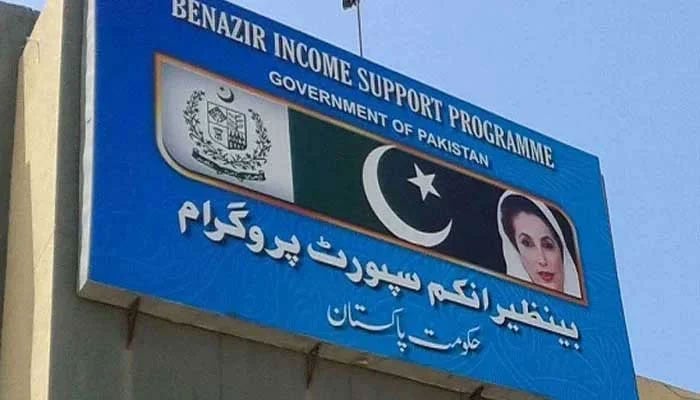
Beyond our traditional social welfare programmes, such as Pakistan Baitul Mal, the Zakat system and ad-hoc relief programmes by governments from time to time, in the last one and a half decades, we have witnessed greater commitment to social protection as distinct from welfare or charity.
Initiatives such as BISP, EHSAS and social protection authorities in Sindh and Punjab are major steps in this direction. While moving in the right direction, our overall social protection agenda is still fledgling, incoherent and unfortunately a patchwork.
To start with, the constitutional provision on the socio-economic welfare of citizens, as envisaged in Article 38, is merely aspirational, unlike Article 25-A, which makes education a fundamental right of citizens. Since social protection isn’t outlined as a fundamental right but is only aspirational, it has partly led successive ruling political parties to come up with all sorts of initiatives and engage in a war of political branding – be it BISP, Ehsaas or the Maryam Nawaz Ration Card – rather than institutionalising a nationwide social protection framework where benefits are constitutionally assured and available to all according to a defined socio-economic floor. For this, however, we need a constitutional amendment making social protection a court-enforceable fundamental right.
Interestingly, while social welfare and protection are technically provincial subjects post-18th Amendment, the largest programme, BISP, is run by the federal government. Similarly, we see social protection authorities in Punjab and Sindh, which should exist in all four provinces, as well as Gilgit-Baltistan and Azad Jammu and Kashmir, but there is no national social protection authority to set guiding principles and policies. The cluster of social protection initiatives at the federal and provincial levels is therefore incoherent, lacking transparency, susceptible to political branding and rebranding and devoid of constitutional guarantees as a fundamental right.
A constitutional amendment to make social protection a fundamental right should then lead to the passage of a National Social Protection Act (NSPA), providing the legal foundation to transform social protection from a collection of shifting political projects into a permanent state obligation with the relevant institutional infrastructure. This should also transform social services into state-embedded departments, such as electricity, water or education departments, removing the need for multiple programmes using nomenclature favouring one political party or another.
An important aspect of any social protection programme is its universality. The current set of programmes is only protective, as it is poverty-based and aims to keep the bottom 25 per cent just economically afloat. These programmes completely miss the preventive aspect of saving people from falling into poverty, as they exclude the middle class, many of whom are too ‘rich’ for BISP but too poor to survive a single major health shock or a month of unemployment. A universal social protection system is always equitably tiered, lifecycle-based and inclusive of all citizens.
Certainly, fiscal constraints will pose a challenge, as Pakistan is currently hardly able to spend around 6.0 percent of its GDP on various social safety nets. However, as seen in many other developing countries like Vietnam, which spends 2–5 per cent of its GDP on institutionalised social protection, we need a full-fledged tiered programme aligned with the ILO’s Social Protection Floor framework.
In such a programme, the bottom 25 per cent would be fully funded by state taxes; for the middle class, it would be a contributory social insurance system where the state matches contributions by around 20 per cent; and for the wealthy, there would be a voluntary top-up. Universal and tiered coverage removes the stigma of being on welfare. When everyone receives benefits according to their respective economic floor, it becomes a ‘citizen’s right’ rather than a poor man’s charity, making it harder to be reshaped by the whimsical agendas of political parties in power.
Nonetheless, having a rights-based universal system is not an easy proposition, given the tendency of our rulers to extend benefits from the state exchequer wrapped in their political branding on the one hand, and the deep-rooted trust deficit people have towards government entities on the other, which may deter them from participating in contributory social insurance programmes. However, these challenges are not unique to Pakistan; other developing countries have also faced and successfully overcome them.
As mentioned previously, amending Article 38 to make it a fundamental right, along with the passage of an NSPA, should create safeguards and institutions to gradually earn public trust in contributory social protection programmes. For instance, this should lead to the establishment of a much-needed National Social Protection Authority, with a board of directors comprising technocrats, civil society members, and representatives from all provinces.
Appointed by the board, the heads of national and provincial SPAs should have secure fixed terms to ensure they are not dismissed during changes in government. In line with the 18th Amendment, provinces must take the lead in service delivery. To address the trust deficit regarding contributions to various schemes, the Social Protection Act should declare all social protection funds as off-budget so that the government cannot use them for any other purpose.
Once a reliable and politically neutral social protection system is established, people – especially those who are above the bottom around 25 per cent but still economically vulnerable to job loss, illness or disability – would be more inclined to enrol in contributory social protection programmes for unemployment insurance, child education, health and other short- to medium-term lifecycle needs. The government’s current work on the National Health and Population Policy (2026–2035), aiming to transition the Health Card from a poverty-restricted scheme to a National Health Insurance Act, is a step in the right direction.
While digitisation is essential for modernising the overall system, it is also crucial for the operational success of any universal social protection framework. Enforcing cash-free economic transactions and linking them to CNICs holds the promise of creating a dynamic national socio-economic registry, eliminating the need for surveys that are susceptible to manipulation. This would ensure the inclusion of small traders and gig workers, who could participate in social or health insurance programmes by contributing a percentage of their income through mobile phone bills. After a minimum qualifying period, if NADRA/FBR data shows a citizen’s income has fallen below a threshold, benefits should be triggered automatically with minimal delay.
To build an inclusive and equitable system, Pakistan does not necessarily need new money but a new vision. The government could free up billions of rupees by eliminating untargeted subsidies on electricity and other utilities and redirecting those funds into a universal social insurance system.
Incorporating social protection outcomes as a criterion in the NFC Award could also incentivise provinces to improve performance by granting them additional resources from the divisible pool. Private sector insurance companies can also be encouraged, through appropriate tax incentives, to complement the state’s commitment to social security.
The writer is a sociologist with extensive work in social policy and development. He can be reached at: [email protected]