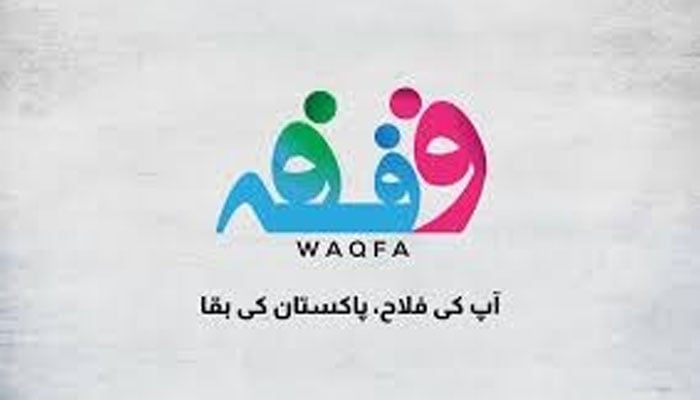
In public health communication, particularly on a subject as sensitive and socially embedded as family planning, in tuition is not enough. Campaigns must be anchored in evidence, culturally intelligent, and message-disciplined. It was precisely for this reason that the Mir Khalil-ur Rahman Foundation (MKRF) commissioned a nationwide pretesting study by Gallup Pakistan prior to the launch of WAQFA, its flagship social and behavioral change campaign on birth spacing and maternal health. The mandate to Gallup was clear: rigorously test the campaign’s core hypotheses, key messaging pathways, and the WAQFA identity itself, including its logo and framing, to ensure that the initiative is not only principled but persuasive. The findings of the pretest provide strong affirmation that WAQFA is both strategically sound and culturally resonant. An Evidence-Based Foundation The study, conducted through a nationally representative survey, examined awareness levels, household decision-making patterns, barriers to adoption, media habits, and reactions to the WAQFA concept and slogans. Awareness of family planning is already high at 74 percent, with especially strong recognition among women (80 percent). Respondents most commonly associate family planning with spacing children (45 percent) and protecting the mother’s health (43 per cent). This is programmatically significant. It means the public frame is already health-centred rather than coercive or purely fertility-limiting. WAQFA’s emphasis on maternal recovery, child well-being, and responsible planning therefore builds on existing cogni tive associations. The WAQFA Identity: Strong acceptance and cultural alignment A central concern going into the pretest was whether the word “Waqfa” and its visual identity would resonate in a context where religious and cultural sensitivities matter deeply. The results are encouraging. Respondents overwhelmingly interpreted “Waqfa” as “pause,” “break,” or “thoughtful reflection”— precisely the conceptual territory the campaign seeks to occupy. In the family planning messaging context, 86 percent found the term clear (64 percent “very clear”), and nearly seven in ten said it makes discussions easier within the household. In a society where 22 percent still find spousal discussion of family planning difficult, a term that lowers emotional temperature and provides a culturally acceptable entry point functions as a permission structure. WAQFA appears to do exactly that. The logo and identity testing similarly reflected strong acceptance. Respondents described it as visually creative and attractive, easy to understand and recall, religiously aligned yet neutral, and socially discussable. That combination—religious consonance without sectarian provocation—is particularly important in a national campaign. Messaging Pathways: Validated hypotheses Gallup was tasked with stress-testing several messaging pillars. The data show that the campaign’s strategic instincts were well placed. When asked to choose the message that would work best for families like theirs, respondents most frequently selected: • Religious reassurance–42% • Mother’s health as a national prior ity–31% Together these two pathways account for nearly three-quarters of preference in forced choice testing. This is decisive. It demonstrates that faith-linked reassurance and maternal health framing are not peripheral—they are central. WAQFA’s design, which integrates both tracks, is therefore empirically grounded. Even where hesitation exists—fear of side effects (63 percent), lack of accurate information (62 percent), and limited access (62 per cent)—the pathway forward is clarified. The barriers are informational and normative, not ideological. This means they can be addressed through reassurance, trusted voices, and service-linking. This underscores an important principle: communication must be paired with access cues. A persuasive message without clear guidance on where and how services can be obtained risks frustration. Effective campaigns therefore connect awareness with action, ensuring that information about birth spacing is accompanied by practical path ways to services. Household Dynamics: A fertile ground for dialogue One of the most encouraging findings relates to decision-making patterns within families. Seventy-five percent report joint decision-making between spouses. While some households still experience constrained dynamics, the dominant pattern is collaborative. This reinforces WAQFA’s couple-centred creative approach. Messaging that models respectful spousal dialogue and shared responsibility reflects prevailing norms in most households. At the same time, the data caution that rural women report greater difficulty discussing the issue. The campaign’s commitment to normalising conversation and offering culturally appropriate dialogue cues is therefore strategically sound. Trust Architecture: Who moves opinion If evidence-based communication is about credibility, the report offers clear direction. Doctors and health workers are by far the most trusted source for birth spacing guidance, with 61 percent ranking them as their first choice. Family elders and religious scholars emerge as strong secondary influencers, while media personalities and social influencers rank lower in direct trust. This validates WAQFA’s architecture: health professionals as primary validators, religious scholars as moral reassurance anchors, and community elders as normative bridges. Media Consumption: Television as anchor channel In an era often described as “digital-first,” the report offers a grounded reminder of Pakistan’s media reality. Seventy percent report exposure to television content (including mobile viewing of TV clips), and 71 percent engage with social media. However, when credibility on sensitive topics such as family planning and reproductive health is assessed, television emerges as the trusted anchor medium. The planning takeaway is clear: a TV-led strategy ensures household-level visibility and credibility, particularly among older and rural audiences, while digital platforms expand reach and reinforce recall. WAQFA’s decision to prioritize television while deploying digital cut-downs and share able content aligns closely with the research findings. A Campaign positioned for reception and recall Taken together, the Gallup pretest offers a coherent and optimistic picture. • Awareness is already high. • Health framing resonates. • Religious reassurance is desired. • The WAQFA identity is clear and culturally aligned. • Television is confirmed as the most credible anchor medium. • Trusted influencers are identifiable and available for mobilization. This does not eliminate the challenges of implementation. Fear of side effects, informational gaps, and normative hesitations remain real. But crucially, these barriers are navigable. They reflect uncertainty and the need for reassurance rather than rejection of the principle of birth spacing. Public health history shows that campaigns succeed not when they shout louder, but when they speak in the language people already understand. WAQFA’s emphasis on pause, prudence, maternal well-being, and shared decision-making aligns closely with audience cognition and values, as evidenced by the Gallup data. For MKRF, the pretest serves its intended function: validating message hierarchy, confirming channel choice, and affirming that the campaign’s identity resonates with the public. But more importantly, it signals that the conversation Pakistan needs on maternal health and responsible birth spacing can be conducted in a language that people recognise, trust, and are willing to engage with. If implemented with the discipline suggested by the research—anchored in television credibility, reinforced by digital amplification, and voiced by doctors and scholars—WAQFA has the potential not merely to inform, but to normalise a national conversation on maternal well-being, responsible parenthood, and the health of future generations.
The author is the Managing Director Jang Group/MKRF.