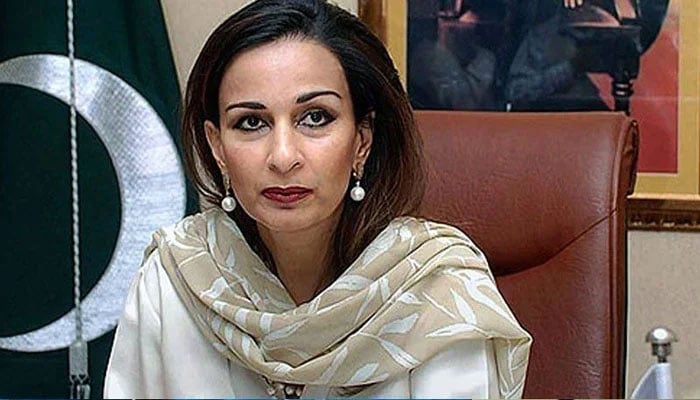
ISLAMABAD: PPP’s Parliamentary Leader in the Senate, Senator Sherry Rehman has stated that International Women’s Day serves as an important day of reckoning and reflection for women and men around the world.
“We not only pay tribute to all the women of the world but also to those living in conflict and catastrophe zones, whose suffering often goes unmarked year after year. Their numbers continue to grow in silence,” she said in a statement on the occasion of International Women’s Day.
Sherry Rehman highlighted a recent report by UN Women, stating that as of late 2025, a record 676 million women and girls live within 50 kilometres of active conflict zones, representing nearly 17% of the global female population and the highest number since the 1990s. “Conflict-related sexual violence has increased by 87% over the past two years, while the number of women killed in armed conflicts has doubled, with over 123 million people forcibly displaced,” she added.
She further stressed, “Even in the developed world, we see women failing to make the strides they deserve in terms of equal pay and opportunities with men, as well as a worrying rise in domestic violence, with one in three women having faced it during their lifetime.”
Reflecting on the legacy of Shaheed Mohtarma Benazir Bhutto, Senator Rehman noted that her leadership had laid the foundations for transformative progress in women’s empowerment and social protection. “Among her most impactful achievements is the Lady Health Worker Programme, which has transformed healthcare delivery in Pakistan.”
She said this was “Recognised by the World Bank as a ‘gold standard,’ for providing essential healthcare services to millions in remote and underserved communities.” She also noted that the programme not only strengthened public health systems but also created unprecedented opportunities for women’s economic empowerment. “By enabling women to serve as frontline health workers, it opened doors for women to participate meaningfully in the workforce while improving community health outcomes across the country,” she added. The Senator further stated that under the leadership of PPP Chairman Bilawal Bhutto Zardari, the party continues to advance Shaheed Benazir Bhutto’s vision of a progressive and inclusive Pakistan. “Chairman Bilawal reflects her values by consistently championing the rights of women, the marginalised, and minorities. He has stood firmly against extremism and injustice while offering a forward-looking, reform-oriented vision for Pakistan’s future,” she said.
Sherry Rehman called for a renewed national commitment to closing Pakistan’s deep gender gaps, stressing that despite women forming nearly half of the country’s population, their contributions remain largely unrecognised in economic and social policy frameworks. Highlighting the scale of the challenge, Senator Rehman noted that women constitute approximately 49.2% of Pakistan’s population, yet only 22.7% participate in the mainstream workforce. She emphasised that millions of women remain invisible in economic policies, often working for no wages or half wages, particularly in informal and unpaid sectors.
“From around 72% of women carrying household water, especially in rural areas, to women running the vast undocumented economy of care, women’s contributions remain unrecognised, even as they form the backbone of our society,” the Senator said.
Globally, she stated that no country has yet secured the full spectrum of legal rights necessary for women’s equal economic participation. “But for Pakistan, the findings are more than a global snapshot; they are an urgent domestic warning.” While economies worldwide score an average of 67 out of 100 for gender-equal laws on the books, Pakistan’s legal frameworks score just 46.68. “The global average drops from 67 to 53 when enforcement is assessed; Pakistan’s enforcement perceptions score is a troubling 27.35, barely half the global benchmark. Even its supportive frameworks score of 50.68, slightly above the global average of 47, reflects limited institutional backing rather than meaningful transformation.”
Drawing attention to the alarming gaps in education and health, she added, “Out of the 26 million children out of school in Pakistan, around 13 million are girls, reflecting persistent structural barriers that prevent girls from accessing education. These numbers represent lost potential for the country’s development and prosperity.”
Calling for stronger policy action, Senator Sherry Rehman emphasised that gender equality must move beyond rhetoric to concrete reforms in education, health, economic participation, and protection from violence. “International Women’s Day is not only a moment of recognition but a reminder that societies cannot progress when half their population remains excluded from opportunity, safety, and decision-making,” she said. “Empowering women is not just a moral imperative; it is essential for Pakistan’s sustainable development, economic resilience, and democratic future.”