Islamabad:Senator Zarqa Suharward Taimur has reflected on Pakistan's fragmented policy landscape observing that contradictory decisions often undermine progress in long-term carbon markets and climate adaptation initiatives.
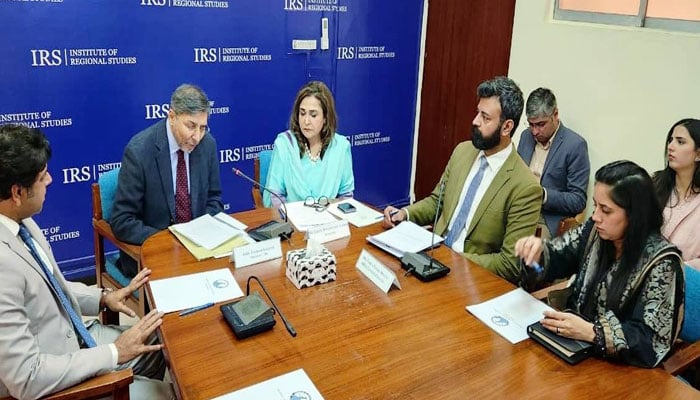
Dr Zarqa was giving a talk as an inaugural Pre-COP31 dialogue on "Strengthening climate governance in Pakistan" held here at Institute of Regional Studies (IRS). Dr Zarqa highlighted that although Pakistan actively participates in international climate negotiations and receives climate finance, structural weaknesses and limited empowerment of local governments continue to hinder effective implementation at the grassroots level.
She emphasised that meaningful climate justice cannot be achieved without robust district-level governance. Drawing on recent flood experiences, she underscored the consequences of unregulated urban expansion along riverbeds and its disproportionate impact on vulnerable communities, particularly women and persons with disabilities. She also stressed the urgency of rethinking agricultural and water-use practices in an increasingly water-stressed country. Talha Tufail Bhatti from IRS remarked that at a time of political polarisation and declining trust in institutions, climate governance must transcend electoral cycles and short-term policy horizons. A shift in mindset from unintended environmental degradation to intentional planetary stewardship is essential to ensuring sustainable and equitable climate action, he said.