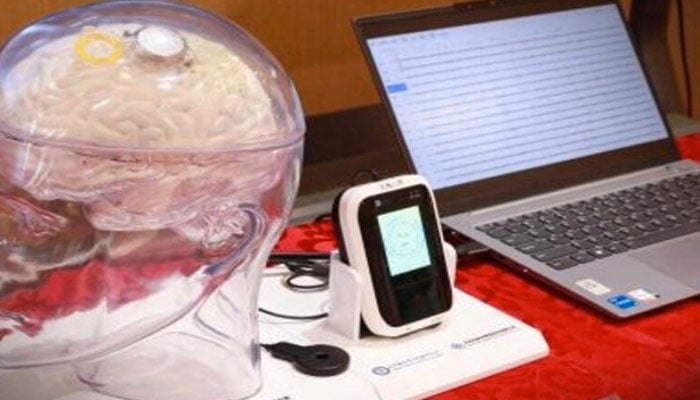
Islamabad:Five years post-spinal injury, a patient is back on his feet. The NeuCyber Matrix BMI System (Beinao-1) made it possible. Through brain-controlled rehabilitation, the patient graduated from total paraplegia to walking with crutches, reports China Economic Net (CEN) on Wednesday.
Once confined to laboratories, BCIs are now entering clinical and commercial pathways.In China, they have also become a clearly defined future industry, embedded in long-term national planning and backed by an expanding ecosystem of hospitals, startups, manufacturers, and regulators.
As a field that integrates advanced materials, semiconductor chips, AI decoding algorithms, and clinical systems, BCIs are now considered vital to future neurotech competitiveness. To secure this competitive edge, the Chinese government has officially designated BCIs as a strategic “future industry.”
This policy push reflects mounting pressure from an ageing population and a healthcare system facing a surge in neurological disease. According to the China Neurological Disorders Report 2024 released in November 2025, neurological disorders—including cerebrovascular disease, epilepsy, traumatic brain injury (TBI), and amyotrophic lateral sclerosis (ALS)—impose a heavy burden on China’s national healthcare system, which are linked to reduced rates of economic involvement and significant costs to society, not to mention it is a challenge intensified by rapid population ageing.
Rising rates of neurological and neurodevelopmental disorders, combined with growing demand from patients and healthcare providers for functional recovery, are expanding the market for brain–computer interface technologies.