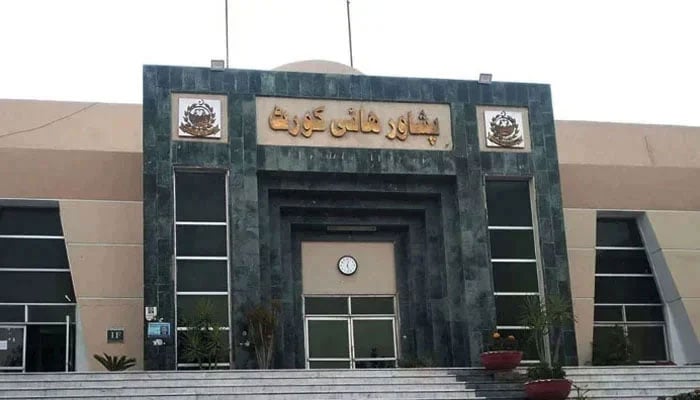
PESHAWAR: The Peshawar High Court (PHC) has dismissed constitutional petitions filed by the chief of the Pashtun Tahaffuz Movement (PTM), Manzoor Pashteen, and others against the ban imposed on the movement, issuing a detailed 62-page judgment in the case.
In its ruling, the court held that the ban on PTM had been approved by the federal cabinet in accordance with the law and prescribed procedure.It observed that filing a writ petition directly before the PHC without first approaching the review committee rendered the petitions non-maintainable at this stage.
The bench, comprising Justice Sahibzada Asadullah and Justice Dr. Khurshid Iqbal, heard the petitions. The detailed judgment was authored by Justice Sahibzada Asadullah.The petitioners contended that the federal government imposed the ban on PTM on October 6, 2024, and that the entire process was approved by the cabinet within a single day in violation of the rules.
They argued that the approval procedure was flawed, claiming that eight out of ten cabinet members did not respond to the summary.
The petitioners maintained that the government had failed to disclose the reasons for declaring PTM a proscribed organization and had leveled allegations of involvement in terrorism without providing evidence.They argued that PTM is a movement, not a political party requiring registration, and that placing their names on the Fourth Schedule was illegal and unconstitutional.
During the proceedings, Additional Attorney General Sanaullah produced the complete record before the court.He argued that PTM leaders had delivered hate speeches against Pakistan during public gatherings and were allegedly involved in terrorist activities.
The additional attorney stated that they had conducted campaigns against the state and its institutions on social media and attempted to create distrust among youth against the Government of Pakistan, which formed the basis of the ban.
In its judgment, the court noted that the ban was approved in a federal cabinet meeting after a summary was prepared, and a notification was subsequently issued.It stated that the organization was declared proscribed under Sections 11B and 11E of the Anti-Terrorism Act, 1997, and that the prescribed legal procedure had been followed.
The court observed that the objective of the action was to maintain law and order in the country, safeguard national security, and prevent terrorism.It held that the petitioners had failed to establish that any unconstitutional or unlawful action had been taken against them.
The court emphasized that it is the responsibility of the state to protect citizens’ lives and ensure the rule of law, and that no one can be allowed to establish a parallel structure in the presence of a functioning government. The state, it added, has the authority to prevent such actions.
Referring to various judgments of superior courts, the bench held that the petitioners have the right to seek review of the decision; however, in this case, bypassing the review committee and directly approaching the high court made the petitions inadmissible.
According to the judgment, the Attorney General’s Office had submitted the reasons for the ban in a sealed envelope, which the court reviewed and later returned. The court ultimately dismissed all the petitions.