A decades-old regulation barring the proper piped supply of water to old rural settlements on the outskirts of Karachi has been denounced as “an institutionalised injustice and a discriminatory act against the city’s indigenous residents”.
The provision, which falls under the jurisdiction of the Karachi Water & Sewerage Corporation (KWSC), was sharply criticised by Sindh Indigenous Rights Alliance President Khuda Dino Shah during his presidential remarks at the conclusion of the 26th Hamza Wahid Memorial Lecture held by the Irtiqa Institute of Social Sciences.
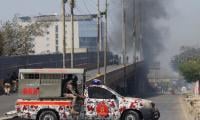
The lecture held at the PMA House on Sunday evening took place despite a tense atmosphere in the city following violent clashes earlier in the day between protesters and law enforcement personnel near the US Consulate General in Karachi.
Addressing the audience, Shah said that the KWSC’s existing rules still contain a “discriminatory” clause dating back decades that prohibits the provision of piped water to rural settlements situated within Karachi’s expanding urban limits.
He pointed out that many of these villages lie alongside bulk supply lines that transport water from the Indus River to the city’s main urban centres, yet remain excluded from the very system that passes through their lands.
Citing examples from the rural belt of District Malir, including Memon Goth, Shah said residents of such settlements are deprived of regular piped water, while urban neighbourhoods located just across the road receive uninterrupted supply. He argued that this disparity amounts to “systemic discrimination” against communities that have lived in these areas for generations.
Shah also claimed that the inhabitants of Karachi’s old rural settlements have faced dispossession of their ancestral lands under “a planned drive to clear space for modern gated housing schemes in the city’s suburbs”.
In addition to the denial of water, he said, these communities have long been deprived of functional health care, quality education, and other essential civic and municipal services. Earlier, the memorial lecture was delivered by Karachi Bachao Tehreek Convenor Khurram Ali, who offered a sweeping overview of Karachi’s social and political history.
He said Karachi has historically been Pakistan’s largest city in terms of its labour force and salaried class, who have demonstrated their strength during landmark movements such as the 1968 student worker uprising against Ayub Khan and the 1972 labour movement.
Ali situated the rise of ethnic politics in Sindh within the context of Karachi’s evolution as a working class hub. During the 1980s, he noted, the city’s population surged due to both internal migration and arrivals from Bangladesh and Afghanistan, placing immense pressure on urban resources.
Rather than easing this strain, state institutions allegedly allowed resource management to devolve into profiteering networks, leading to the emergence of mafias controlling water, land and transport.
These dynamics, Ali argued, fractured Karachi’s working class movement into competing ethnic blocs vying for limited resources, thereby weakening prospects for unified resistance in the country’s largest metropolis.
He maintained that Karachi’s pressing needs, from equitable resource distribution to coherent urban planning, can only be addressed through constitutional institutions grounded in popular participation.
Instead, he contended, the state apparatus has often “prioritised collaboration with entrenched interest groups over meaningful institutional reform”. As a result, he said, the city’s working and salaried classes remain largely unaware of how and by whom Karachi is governed.
Ali also dismissed the ongoing debate over granting Karachi provincial status or placing it under federal control as misplaced. In his view, such proposals would not materially improve the lives of the city’s majority population, nor would they address the structural issues affecting farmers, agricultural labourers or marginalised communities elsewhere in Sindh. The prevailing slogans, he suggested, are symptomatic of deeper governance failures rather than genuine solutions.
Reflecting on his work in Karachi’s working class neighbourhoods, Ali remarked that while progressive discourse often centres on restoring trade and student unions, such demands hold limited relevance for residents of informal settlements struggling to secure legal recognition of their homes.
For these communities, he said, survival frequently depends on collective mobilisation and visible public resistance to forced evictions. He also highlighted the prominent role played by women in organising sit-ins and leading local protests against displacement, underscoring the need for sustained organisational backing to support such grassroots efforts.
Concluding his address, Ali called for the emergence of a new civic culture in Karachi: one that amplifies the voices of the poor and working classes, challenges entrenched elites, and looks towards a progressive future rather than remaining mired in historical divisions. Only through such participatory institutions, he argued, can the city hope to achieve durable and meaningful reform.
On the occasion, the participants also passed a resolution condemning what they described as a joint Israeli-US declaration of war against Iran, terming it a fresh display of American imperialism in the region. The resolution further denounced Israeli military actions against Palestinians and their displacement from their homeland.