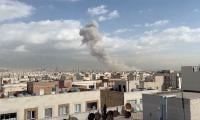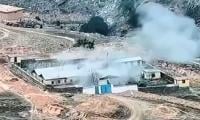
WASHINGTON: The US struck Iran overnight in the latest example of a president bypassing Congress to order military action.
Why it matters: The Constitution says only Congress can declare war — but Democratic and Republican presidents alike have ordered military force without authorisation for more than 75 years.
Here’s what to know about presidential uses
of force: Who can declare war? Only Congress can declare war, per Article 1 of the Constitution. However, Congress has interpreted that language to allow presidents to deploy troops into “hostile circumstances” without a war declaration if the U.S. is attacked or if Congress authorizes the use of force. The U.S. hasn’t officially declared war since World War II.
What military powers do presidents have? Presidents argue they have broad powers as commanders-in-chief of the armed forces, particularly when they deem operations time-sensitive.
Zoom in: “Congress is not quick. It’s slow, it’s deliberative,” Julian Zelizer, a history professor at Princeton University, tells Axios. “Sometimes the president has to be more nimble and send troops when the president believes that troops are necessary.” Between the lines: It’s often politically convenient for lawmakers to let presidents take the heat for military decisions. “There’s a long history of presidents struggling with these situations. Many members of Congress are happy to wash themselves of this responsibility, even if they lose a little credit,” Zelizer said.
Flashback: Former President Obama asked Congress in 2013 to authorize strikes on Syria after the Assad regime deployed chemical weapons, but the bill never received a vote.
The mission had bipartisan support, but Congress could not agree on whether or how to authorise it.
Obama eventually sent troops to Syria to fight ISIS without a new congressional authorisation, relying on the 2001 and 2002 authorizations for use of military force passed after 9/11 as legal justification.
Congress has not passed a new AUMF since 2002, but Presidents Obama, Trump and Biden ordered military actions in at least 10 countries since then.
Critics say presidents have stretched the wide-ranging 2001 Authorization for Use of Military Force (AUMF) far beyond its original goal of fighting 9/11-related terrorism.