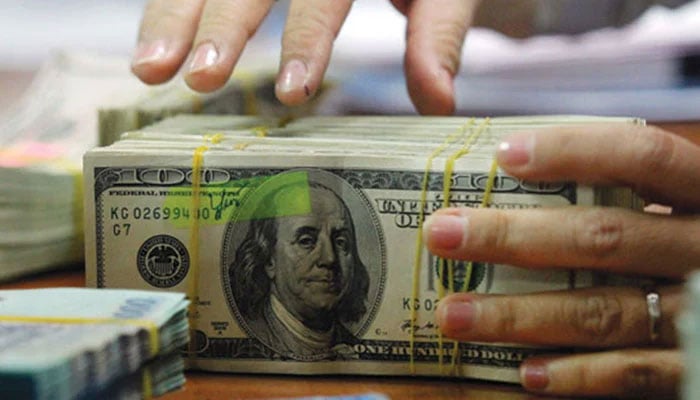
LAHORE: Economic analysts usually highlight ballooning debt, IMF bailouts, low exports and weak tax collection. The issue that receives far less attention but is equally destructive is the steady flight of capital from Pakistan to foreign shores.
Illicit financial flows, offshore wealth and undeclared foreign investments by Pakistanis represent one of the largest structural leaks in the national economy. While no official figure exists, credible international estimates suggest Pakistan loses over $10 billion annually through trade mis-invoicing, tax evasion, smuggling and capital flight. Over the past two decades, this could amount to hundreds of billions of dollars — comparable to Pakistan’s entire GDP.
The economic consequences are severe. Capital flight reduces the domestic pool of investable funds, weakens the currency, and increases dependence on foreign borrowing. Every dollar parked abroad is a dollar not invested in factories, farms, technology, or human capital at home. It worsens inequality as elites secure their wealth offshore while ordinary citizens bear the burden of inflation, taxation, and austerity.
Pakistan’s recurring dependence on IMF programmes is not merely a story of fiscal deficits; it is also a story of elite capital extraction. When domestic elites refuse to invest and pay taxes at home, the state turns to external creditors. This is a political economy problem, not just a technical policy issue.
Global banking transparency initiatives and automatic exchange of information agreements have significantly reduced secrecy in traditional offshore banking centres in Switzerland. Dubai has emerged as the new Switzerland. Investigative journalism projects have identified tens of thousands of properties owned by Pakistanis in Dubai. Some of these are legitimate investments by overseas Pakistanis and residents seeking stable assets and portfolio diversification. But a significant share is suspected to be undeclared wealth generated through corruption, tax evasion and trade manipulation.
Trade mis-invoicing remains the largest channel of illicit flows. Importers over-invoice goods to send money abroad, while exporters under-invoice to retain foreign earnings overseas. High tariffs, complex taxes, and weak customs oversight create incentives for such practices. As a result, Pakistan not only loses foreign exchange but also tax revenue, while domestic industries face unfair competition from under-invoiced imports.
It is an elite ecosystem that is responsible for this capital flight from which all participants benefit. Businessmen use offshore companies and fake invoices; politicians exploit power and legal loopholes to accumulate undeclared assets; bureaucrats facilitate and protect the system through regulatory capture and selective enforcement.
Pakistan’s money laundering laws are not weak on paper. The country has enacted anti-money laundering legislation, established the Financial Monitoring Unit, and implemented FATF-mandated frameworks. Banks and certain non-financial businesses are required to report suspicious transactions. But high-profile convictions for financial crimes are rare. Informal systems such as hawala and hundi remain deeply embedded in the economy. Real estate, gold trading, and wholesale markets still operate largely outside documented channels. The legal architecture exists; the political will does not.
One reason for capital flight is the complex and punitive tax systems that drive wealth into the shadows. Digitalisation of customs, invoicing, and tax administration must be accelerated to reduce human discretion and corruption.
Pakistan needs mandatory public registries of beneficial ownership for companies and properties, similar to reforms in the UK and EU. Anonymous shell companies are the backbone of offshore wealth structures. Enforcement must be depoliticised. We should strengthen international cooperation with jurisdictions such as the UAE, UK, and Switzerland to trace and repatriate illicit assets.
Finally, political reforms are unavoidable. Campaign finance transparency, strict asset declarations, and real penalties for false declarations are necessary. Without tackling the political economy of elite wealth extraction, technical reforms will fail.
Capital flight is often discussed as a moral issue. It is, in fact, a development issue. Pakistan’s tragedy is not the lack of wealth, but the lack of commitment by its elites to invest that wealth in their own country. Until Pakistan confronts this silent drain, the country will continue to chase loans, impose taxes on the documented few, and struggle with recurring balance-of-payments crises.