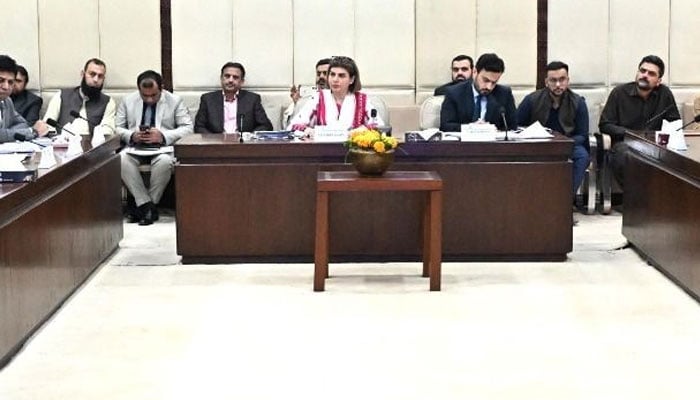
ISLAMABAD: The Senate Functional Committee on Human Rights said that a case should have been registered under terrorism provisions in the Ahmed Javed murder case and formally decided to summon the Punjab prosecutor general and investigation officers in the upcoming meeting.
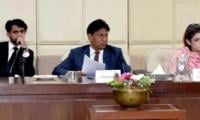
Chaired by Senator Samina Mumtaz Zehri, the committee deliberated on the murder of Ahmed Javed in Lahore, the performance of child protection institutions and the growing threat of narcotics in educational institutions.
Taking up the case, the committee was informed by the representative of Inspector General of Punjab Police that all accused had been arrested and challan submitted to the court.
In response to a query by Senator Mahmoodul Hassan about the recovery, the representative confirmed that all recoveries had been made. Senator Rana Mahmoodul Hassan disclosed that 150 bullets were fired at the child.
Senator Abid Sher Ali described the hardship faced by the victim’s family as extremely cruel and called for scrutiny of police conduct. He said the behavior of police should be discussed and that the force must assess the seriousness of such matters.
He also questioned whether the bystanders, who watched the incident, faced any punishment, adding that some individuals “become beasts by sitting in police uniform”.
The deceased’s father appeared before the committee and told the committee the entire matter escalated due to a television channel’s coverage, claiming that for a week after his son’s murder, it was broadcast that there was a dance party. He stated that his family’s name was repeatedly mentioned in news reports and that his son had no previous meeting with the alleged murderer.
He further alleged that certain police officers had relations and partnerships with the families of the accused. The father said the trial of his son’s murder had not started and only bail proceedings were underway. He informed the committee that his son was married and that he himself was ill. He also alleged that the accused attempted to shift the entire blame onto the guards.
The deceased’s father claimed that he was threatened that if anything happened, hostility would start against them.
Responding to queries, the IG Punjab representative informed the committee that the case was currently under trial in a regular court. Senator Qurat-ul-Ain Marri questioned why terrorism provisions were not invoked despite 150 bullets being fired.
The IG representative stated that unless the perpetrator was associated with a terrorist organisation, the Section 7 of the Anti-Terrorism Act was not imposed, adding that the process of granting bail was judicial and that the police had completed their investigation.
He said the chief minister had directed that the investigation be conducted on merit and that the police had completed their part, leaving the matter to the court. The chairperson of the committee said the focus of the committee had been on supporting the oppressed.
She remarked that this was not merely an individual’s case, but when it came to the children of ordinary citizens, influence and relationships were often used. She questioned what circumstances led to 150 bullets being fired, regardless of whether a dance party had taken place.
She expressed surprise at the grant of bail and sought clarification about the political affiliation of the MPA linked to the accused.
Senator Shahadat Awan stated that the entire committee stood united in its view that the case should have been registered under terrorism provisions and called for summoning the Punjab prosecutor general in the next meeting. The committee formally decided to summon the prosecutor general and investigation officers in the upcoming meeting.
During a briefing by the director general of Child Protection Institute, it was revealed that Rs30 per child per day had been allocated at the institute. Senator Shahadat Awan termed it surprising that only Rs900 per month was being spent on a child.
The DG informed the committee that most children were referred by the Islamabad administration or police and were handed back to their parents after contact was established within a few days. The DG highlighted serious challenges regarding transgender children, stating that parents often refuse to take them back.
He alleged that Chinese nationals were distributing drugs in slums, where drugs were provided and videos were made.
Officials of the Anti-Narcotics Force briefed the committee on nationwide anti-drug efforts. They said Field Marshal Gen Asim Munir and Prime Minister Shehbaz Sharif had issued special instructions to curb drug use in educational institutions.
Preventive measures have been taken in 261 universities and schools, including those in Islamabad. Operations are being conducted in collaboration with relevant authorities including PARA and Federal Directorate of Education. The ANF officials reported that more than 110 individuals had been arrested in various operations and more than four tons of drugs recovered. They confirmed that foreign nationals were also involved in drug trafficking.
According to the officials, Afghanistan remains a major drug-producing and supplying country, with most drugs being smuggled from there to other countries.
The chairperson criticised the briefing, stating that repeated assurances that action will be taken were not enough and demanded timelines and concrete results of the anti-drug action plan.
The committee reiterated its demand for actionable outcomes, enhanced legal provisions in serious criminal cases, improved funding for vulnerable children and an aggressive, result-oriented strategy to eliminate drugs from educational institutions and residential areas.