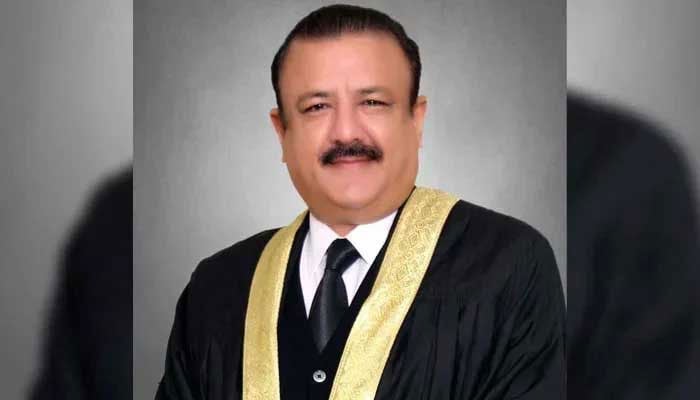
ISLAMABAD: The Islamabad High Court has issued a detailed judgment in the case of the removal of Justice Tariq Mahmood Jahangiri from his position as a judge, declaring his appointment null and void due to the absence of a valid law degree.
The ruling underscores that judicial independence does not equate to immunity from accountability and that no judge is entitled to remain in office on the basis of incompetence, ineligibility, or fraud. The court emphasized that accountability is essential to preserving, not undermining, the independence of the judiciary.
A division bench of the Islamabad High Court, comprising Chief Justice Sardar Muhammad Sarfraz Dogar and Justice Muhammad Azam Khan, issued the 116-page detailed verdict. The judgment was authored by Justice Muhammad Azam Khan and elaborates on the constitutional and legal principles governing judicial appointments and accountability.
The court held that accountability strengthens institutions rather than weakening them. It observed that without an independent, competent, and credible judiciary, the fundamental right of access to justice becomes illusory. The judgment stated that courts exist for the benefit of society, not for the convenience of judges, and that the integrity of the entire judicial structure is compromised when appointments are made in violation of legal requirements.
According to the ruling, transparent and lawful appointment of judges is a cornerstone of protecting the constitutional right to justice. The bench stressed that courts safeguard their independence by strictly enforcing constitutional standards within the judiciary itself. “Administrative approval or later ratification cannot compensate for a fundamental lack of qualification or competence,” it observed.
The court ruled that possession of a valid and recognized LLB degree is an essential prerequisite for enrolment as an advocate and, consequently, for eligibility to be appointed as a High Court judge. It stated that a lawyer’s licence cannot cure the absence of basic educational qualifications. “In the absence of a valid and legally recognized LLB degree, any appointment is void ab initio — meaning invalid from the outset,” it ruled.
The bench declared that a wrongful appointment cannot be legitimized through subsequent administrative actions. The case originated from a petition filed by Advocate Mian Dawood, who challenged the appointment of Justice Tariq Mahmood Jahangiri on the basis of his academic credentials. On December 18, 2025, the division bench accepted the petition, concluding that Justice Jahangiri did not possess a valid and acceptable LLB degree at the time of his appointment as an additional judge, nor at the time of his confirmation as a permanent judge.
The court held that since he was not eligible to be enrolled as a lawyer due to the lack of a valid degree, he was likewise ineligible for appointment as a High Court judge. Consequently, his appointment was declared illegal and void.
The judgment sends a strong message that judicial independence must operate within the framework of constitutional accountability. It reiterates that adherence to legal qualifications is not a mere procedural formality but a substantive requirement essential to maintaining public confidence in the judiciary and upholding the rule of law.