_updates.jpg)
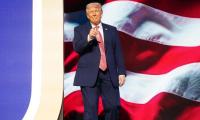
President Donald Trump on Monday threatened nations with punishing hikes on import duties if they choose to "play games" after the US Supreme Court struck down his global tariffs last week.
"Any Country that wants to 'play games' with the ridiculous Supreme Court decision, especially those that have 'Ripped Off' the USA for years, and even decades, will be met with a much higher Tariff, and worse, than that which they just recently agreed to," Trump wrote on social media.
The high court's decision has dealt a sharp blow to Trump's economic agenda, of which tariffs — and his ability to impose them rapidly — have been a key feature.
For now, US Trade Representative Jamieson Greer has said that he expects partners to "stand by" the tariff deals they have struck with Washington.
After Supreme Court ruled against Trump's country-specific tariffs last week, saying he exceeded his authority in tapping emergency economic powers to impose them, the US leader turned to a separate law to announce new 15% duties on imports.
The new levies are grounded in a separate but untested law, known as Section 122, that allows tariffs up to 15% but requires congressional approval to extend them after 150 days.
In a social media post on February 21, Trump said he would use the 150-day period to work on issuing other "legally permissible" tariffs.
"I, as President of the United States of America, will be, effective immediately, raising the 10% Worldwide Tariff on Countries, many of which have been 'ripping' the US off for decades, without retribution (until I came along!), to the fully allowed, and legally tested, 15% level," he wrote in his post.
The Trump administration intends to rely on two other statutes that permit import taxes on specific products or countries based on investigations into national security or unfair trade practices.
Trump insisted in a separate Truth Social post on Monday that "as President, I do not have to go back to Congress to get approval of tariffs."
He also claimed that the court gave him "far more powers and strength" with its ruling, and that he could use "licences to do absolutely 'terrible' things to foreign countries."
The US Supreme Court's annulment of Trump's tariffs and his subsequent move to impose a temporary 15% global tariff have thrown world trade into a new bout of confusion.
For some countries — notably China and Brazil — the new 15% baseline is substantially lower than the US tariffs they had been dealing with.
But for the couple of dozen countries that had sought to avoid the impact of the reciprocal tariffs by clinching bilateral deals with the United States — Britain, the European Union and Japan among them — the question now is whether those deals will stick.