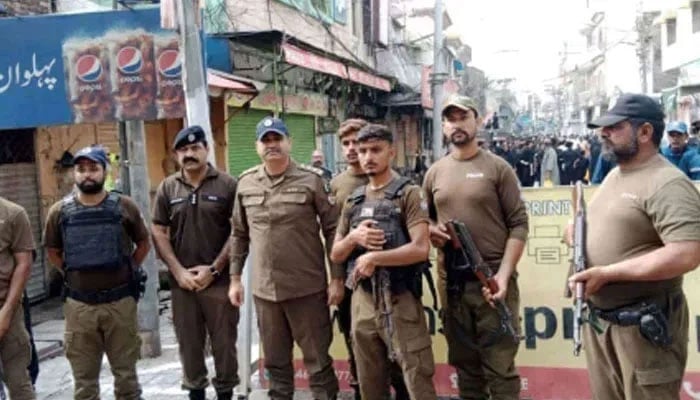
A fact-finding report released by the Human Rights Commission of Pakistan has concluded that the Crime Control Department (CCD) in Punjab has adopted a deliberate policy of staged encounters that fundamentally undermines rule of law and constitutional protections in the province. Based on media reports, the HRCP has documented at least 670 CCD-led encounters over the course of eight months in 2025, resulting in the deaths of 924 suspects. HRCP says that the uniformity of operational patterns across districts indicates an institutionalised practice rather than isolated incidents of misconduct. It has therefore called for an urgent high-level judicial inquiry into these deaths. The CCD, for its part, has rejected the report, terming allegations of fake encounters and extrajudicial actions as baseless. It maintains that it operates under the constitution of Pakistan and the Police Order 2002, and that any use of force is exercised only as a last resort. It has also claimed a significant decline in crime across Punjab during a comparative review from May 2024 to May 2025. But the central question remains: can a claimed reduction in crime justify the erosion of due process?
The numbers over the years tell a grim story. According to data cited by Geo News, during Shehbaz Sharif’s tenure as chief minister from 1997 to 1999, there were 850 extrajudicial killings in Punjab. In 2000, the number dropped to 94. Between 2002 and 2011, the number hovered around 150 almost every year. In 2012, it rose to 360. From 2014 to 2017, the number was 1,318 – 259 in 2014, 450 in 2015, 340 in 2016 and 269 in 2017. From 2018 to 2022, during the PTI’s rule in Punjab, the number was 612. The fact is that crime control cannot mean bypassing courts, evidence, prosecution and defence. Not prosecuting suspects is an admission of the criminal justice system’s failure. It is unfortunate that governments and law-enforcement agencies rely on unlawful methods to address crime rather than strengthening investigation, prosecution and judicial processes. And yet the uncomfortable truth is that parts of society cheer these encounters. This reaction is not necessarily born of blood lust but of deep frustration, of a pervasive lack of trust in law enforcement and in the judicial system’s ability to deliver timely justice. However, public frustration does not give carte blanche to the authorities to commit crimes of their own. On the contrary, it makes reform all the more urgent. If citizens no longer believe that courts will convict the guilty and protect the innocent, then the answer is to fix the system – not to circumvent it.
There is also a political dimension that cannot be ignored. The Punjab government has won praise for initiatives in health, infrastructure, education, women-related issues, action against extremism and even the revival of Basant. This praise is justifiable, given the work being done in Punjab. But governance is judged not only by ribbon-cutting ceremonies but by adherence to the constitution. The CCD’s alleged trigger-happy policy, coupled with the recent controversy over the government’s apparent acquisition of an expensive high-end Gulfstream business jet and the subsequent denial surrounding it, threatens to overshadow these achievements. Transparency and accountability are not optional extras in a democracy; they are its foundation. Punjab does not need shortcuts to justice. It needs credible investigations, empowered prosecutors, protected witnesses and independent courts. If the HRCP’s findings are even partially accurate, a judicial inquiry is advisable. Rule of law cannot survive selective application. And no government, no matter how well-intentioned in other domains, can afford to look away when constitutional protections are at stake.