Every year on February 21, the world marks International Mother Language Day, proclaimed by Unesco in 1999 to promote linguistic and cultural diversity and multilingual education. The day is both a celebration and a warning. Of the roughly 7,000 languages spoken across the globe, nearly 45 per cent are endangered. Around one language disappears every fortnight. Fewer than a hundred are meaningfully present in the digital domain. Behind these statistics lies a quieter tragedy: the erosion of memory, identity and knowledge systems that have evolved over centuries. In Pakistan, this global crisis has a distinctly local resonance. More than 70 languages are spoken across the country, forming a tapestry of cultures and histories stretching from the mountains of Gilgit-Baltistan to the coasts of Balochistan. Yet, according to Unesco, at least 27 of these languages are endangered. In Chitral, Yidgha is now spoken by fewer than 5,000 people. Urmari too teeters on the brink, its decline accelerated by displacement and conflict. For decades, Pakistan has pursued an official policy of promoting Urdu as a national language to foster unity and cohesion. The underlying belief that a common language strengthens national identity is not without logic. But the pursuit of uniformity should not come at the cost of diversity. The insistence on a singular national identity, predominantly defined by Urdu and reinforced by English in elite domains, has contributed to feelings of alienation among many linguistic communities.
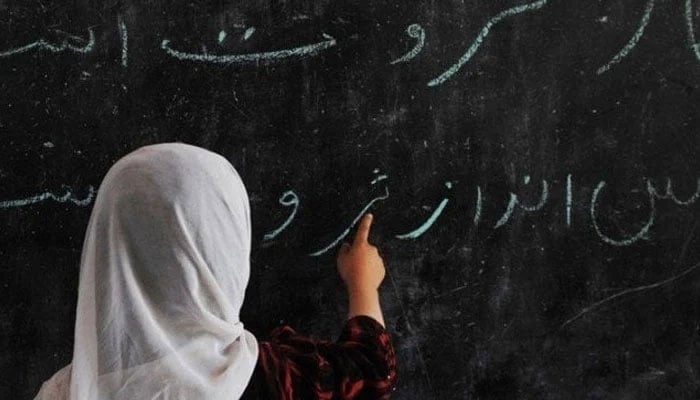
The consequences are both educational and economic. Despite the existence of over 70 languages, only Urdu and English enjoy full official recognition in education, business and law. Research consistently shows that children learn best in their mother tongue, particularly in the early years. Yet millions of Pakistani children begin school in a language they do not speak at home. Early Grade Reading Assessment tests conducted in 2013 found that most students could not fully read a simple 60-word passage in Urdu, let alone demonstrate comprehension. For many, the classroom becomes a site of confusion rather than curiosity. Around 40 per cent of the world’s population lacks access to education in a language they understand well; rising to 90 per cent in some regions. Pakistan is not immune to this inequity. Much of our debate remains trapped in the Urdu-versus-English binary. Critics of the neo-colonial preference for English rightly note that fluency in English has become a gatekeeping device, conferring social prestige and economic mobility. The result is an Anglo-Urdu bubble that is far smaller than it appears.
International Mother Language Day invites us to imagine a different path, one where multilingualism is not feared as a threat to national unity but embraced as a source of strength. Countries that recognise and invest in their linguistic diversity tend to be more inclusive and socially cohesive. Introducing regional languages as mediums of instruction in early education, while teaching Urdu and English as additional languages, would not fragment the federation. Regional languages can also be offered as subjects beyond their home provinces, fostering inter-provincial understanding. In the digital age, efforts must extend to ensuring that local languages find space online – in apps, educational platforms and public services. If fewer than a hundred languages globally have a meaningful digital presence, then the shift towards online education risks deepening existing inequalities unless deliberate action is taken. Ultimately, language policy is about power: whose voice counts, whose stories are told and whose knowledge is deemed worthy of preservation. If Pakistan is to move forward from within, it must first accept itself as it is: multilingual, multicultural and richly layered.