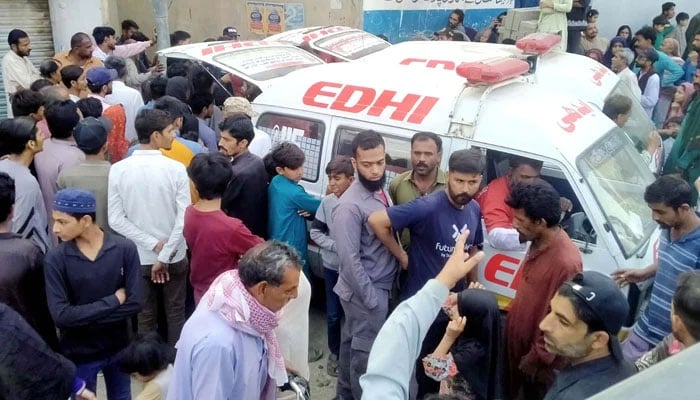
The month of Ramazan has begun on a sombre note in Karachi. In the congested lanes of Gul-e-Rana, a low-cost settlement in Soldier Bazaar where homes rarely exceed 40 square yards, at least 13 people – including children – lost their lives when a gas explosion tore through a multi-storey residential building. What should have been a time of quiet Sehri preparations on Thursday turned into a scene of rubble, grief and sirens. The culprit was invisible. Gas offers no warning before catastrophe. But invisibility does not mean unpredictability. Preliminary findings suggest that the gas pressure in the area was unusually high. Residents, accustomed to days without supply, were not expecting gas that morning. When it did arrive – timed for Sehri – it reportedly surged at extreme pressure. Yet this was not an act of fate alone. The household’s gas connections were unsafe. Plastic pipes with multiple joints and visible leaks snaked through cramped rooms. The setup was, as many have now said, waiting for a disaster. In Gul-e-Rana, as in many low-income neighbourhoods across the city, residents rely on improvised systems to access a basic utility. Gas suction motors, flagged repeatedly by experts as dangerous, are widely used to draw supply at higher pressure. Where these are absent, large gas cylinders sit in confined spaces like ticking bombs.
This culture of workaround is unsustainable, but it is also symptomatic. Pakistan does not have enough gas to meet household cooking needs. It is trapped in a Catch-22: authorities urge citizens to shift to electric stoves, yet electricity remains prohibitively expensive and unreliable for large segments of the population. When the state fails to provide affordable and dependable utilities, people are pushed towards dangerous alternatives. Survival replaces safety. The tragedy inevitably evokes memories of the inferno at Gul Plaza, where a lack of safety protocols turned a bustling commercial centre with over a thousand shops into a charred ruin. Time and again, disasters expose the same pattern: weak regulation, lax enforcement and an almost total absence of preventive inspections. Building authorities rarely conduct rigorous safety checks in residential areas. Hazardous installations go unnoticed – or unaddressed – until lives are lost.
In the aftermath of such tragedies, a familiar narrative emerges. Victims are blamed for their ‘negligence’: for installing suction pumps, for using plastic pipes, for storing cylinders indoors. Certainly, unsafe practices must be discouraged. But it is both unjust and dishonest to isolate these choices from the broader structural failure that compels them. When a basic amenity like gas is unavailable for days, when electricity is unaffordable and when regulatory bodies fail to enforce safety standards, responsibility cannot be shifted entirely onto residents struggling to cook a meal. Who will be held accountable when the next explosion occurs? The question hangs over Karachi. It is on the state, city authorities and town councils to explain why citizens are left to fend for themselves, why safety protocols are reactive rather than preventive and why basic urban governance remains so fragile.