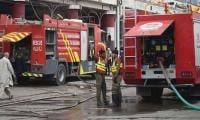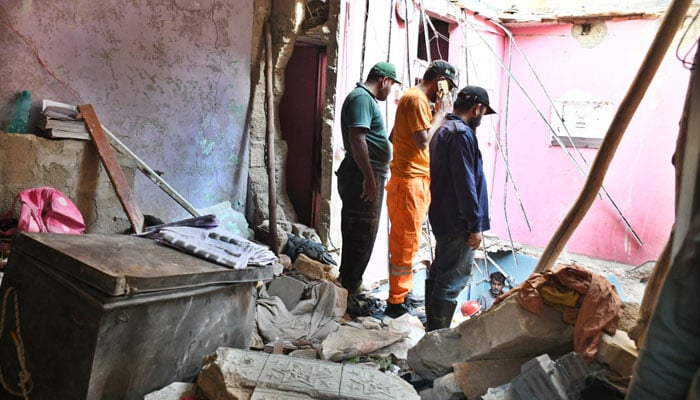
A day after the deadly building collapse in Soldier Bazaar triggered by a suspected gas leak explosion that killed at least 15 people, investigators on Friday placed primary responsibility of the incident on the building’s owner even as broader questions emerge about regulatory oversight and infrastructure failures in the area.
The deceased and injured were pulled from beneath the rubble of their own homes after the building collapse, which also left another 15 injured. Now, with the debris cleared and legal proceedings under way, the entire burden of accountability appears to have been shifted onto the structure’s owner.
Police registered an FIR at the Soldier Bazaar police station and arrested the building owner, Muhammad Irshad, on charges, including manslaughter, property damage, negligence and unsafe construction practices.
According to the FIR No. 51/26, authorities received information in the early hours of February 19 that the Building No 34 located in Gul-e-Rana Colony Street No 5 had collapsed, resulting in multiple deaths and injuries after a portion of the structure caved in.
Investigators said the approximately 40-square-yard building, owned by Irshad, had been constructed as a ground-plus-three structure using TR girders and tiles. The complaint states that Zeenat Nisa, wife of Shahid and a first-floor resident, lit a stove for Sehri when a fire erupted and a powerful explosion occurred.
Police said gas had accumulated inside the room due to leakage from a defective pipeline. The gas ignited when a match was struck, triggering the blast that caused rooms on the three floors to collapse.
A Bomb Disposal Squad report supported these findings, stating that leakage from a faulty gas pipeline led to gas accumulation and ignition caused the explosion. The FIR further alleged that the owner had illegally constructed the building in 2007–08 using substandard materials, while gas connections were installed through improper plastic piping.
The collapse left 15 men, women, and children dead and another 15 injured. Investigators cited negligence, unsafe gas line installation and illegal construction as primary causes of the tragedy.
Meanwhile, CCTV footage captured the moment the building collapsed. The footage shows the blast occurring at 3:47am during Sehri, followed by a massive cloud of dust and debris spreading across the area. Within seconds, residents rushed out of their homes and moved towards the affected building amid panic.
A video statement of the arrested owner has also surfaced. In the recording, Irshad claimed the building was constructed about 18 years ago by a contractor identified as Pappu Bhai and insisted it was properly built, adding that he himself lived there for nearly eight years. He said maintenance work had been carried out and that he spent approximately Rs300,000 to Rs400,000 on upkeep. Irshad also stated that gas and electricity connections were installed at the property.
The suspect suggested a gas leak may have occurred from an unknown point and alleged that first-floor resident Shahid was a smoker. He claimed gas may have accumulated inside due to limited ventilation and that a match struck while lighting a cigarette could have triggered the explosion.
The authorities have not commented on the claims made in the video statement, and investigations remain ongoing. The FIR’s contents have sparked debate among residents and observers, who question whether the collapse reflects a broader systemic failure rather than solely builder negligence.
Critics note that if, as stated in the FIR, the building was illegally constructed nearly two decades ago using substandard materials, it raises concerns over why no inspection, survey or enforcement action was taken earlier by the relevant civic authorities.
Residents say the locality contains numerous similarly constructed buildings that have existed for years in the presence of regulatory institutions, prompting calls for clarity on whether accountability will extend beyond the builder to include those responsible for approvals, inspections and enforcement.
Adding to concerns are longstanding complaints regarding gas supply conditions in the neighbourhood. Locals say supply is inconsistent — often unavailable or delivered with fluctuating pressure — which they believe can strain pipelines and joints and increase leakage risks.
For now, the FIR places responsibility primarily on the builder, with no reference to institutional oversight. When East DIG Zulfiqar Lanjar was asked that the FIR appeared to have been registered in haste and the entire responsibility had been placed solely on the builder with no mention of any other relevant department or its officials, the officer responded that official neglect would be taken into consideration during the investigation and the culprits would be taken to task.