LAHORE: Our policymakers have regularly been ignoring the fact that the cheapest food can be made nutritious through fortification. The most expensive cost is doing nothing. Malnutrition that increases during Ramazan due to expensive food could be addressed
Malnutrition, micronutrient deficiencies and anaemia are crippling the physical and cognitive potential of millions of Pakistanis. Unlike many structural economic problems, this crisis has a cheap, proven and scalable solution: food fortification. Yet Pakistan continues to lag behind its regional peers in implementation and enforcement.
Fortification refers to adding essential vitamins and minerals to widely consumed staple foods such as wheat flour, edible oil and salt. The world has known for decades that fortification is among the most cost-effective public-health interventions. People simply eat the same food -- but with life-saving nutrients embedded.
Pakistan, however, has failed to turn its food fortification policy into practice. Pakistan’s National Nutrition Survey shows that more than half of children and around 40 percent of women of reproductive age suffer from anaemia, a condition linked to iron and other micronutrient deficiencies. Vitamin A, Vitamin D, zinc and folate deficiencies are also widespread, contributing to stunting, weak immunity, maternal mortality and poor learning outcomes.
Malnutrition reduces lifetime productivity, lowers educational attainment and increases healthcare costs. Cheap nutrition can be provided through fortification without expensive diets. One of Pakistan’s biggest misconceptions is that improving nutrition requires expensive foods -- meat, fruits, dairy and imported supplements. In a country where millions struggle to afford basic calories, such advice is impractical.
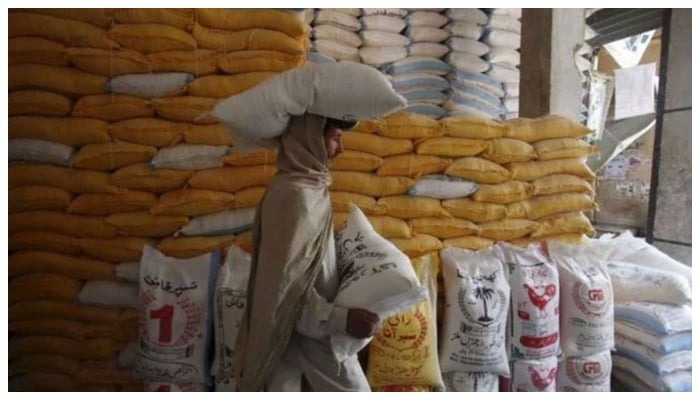
By enriching everyday staples like wheat flour and cooking oil, governments can deliver critical nutrients at a fraction of the cost of dietary diversification. For example, adding iron and folic acid to flour costs only a few rupees per person per year but can significantly reduce anaemia and birth defects. Vitamin A and D fortification in edible oil similarly protects against blindness, infections and bone disorders. For poor households, fortification is the only realistic nutrition strategy.
Pakistan officially recognises fortification as a public-health strategy, and several provinces have passed legislation mandating fortification of flour and edible oil. However, enforcement remains weak and fragmented. Punjab, home to more than half the population, lagged for years in legislation and still struggles with compliance. Small local flour mills -- where many households source flour -- often do not fortify at all.
Fortification is not charity; it is an economic investment. A workforce suffering from chronic anaemia and micronutrient deficiencies is less productive, less innovative and more prone to illness. Cognitive impairments from early childhood malnutrition reduce educational outcomes and long-term earning potential.
Our regulatory agencies lack capacity and political backing. Industry resistance, governance instability and limited monitoring mean that many products labelled as fortified are inconsistently enriched. Pakistan has the laws, donor support and technical expertise -- but lacks political will.
Pakistan’s experience with iodised salt proves that fortification works. Universal salt iodisation dramatically reduced goitre and iodine deficiency disorders, improving cognitive development across generations. It is one of Pakistan’s most successful public-health interventions, largely because it was made mandatory and monitored. This success should have been replicated in flour and oil. Instead, Pakistan allowed inertia and vested interests to stall progress.
India has launched large-scale fortification of rice, wheat flour and edible oil under national programs, supported by strict standards and public distribution systems. In Bangladesh stronger female education, manufacturing-led growth and targeted nutrition programs have reduced stunting and hunger more effectively than Pakistan.
Pakistan, by contrast, has seen slower improvements in stunting, anaemia and child health. The problem is not poverty alone; it is policy execution.
Fortification reduces dependence on expensive healthcare and imported supplements. It is among the highest return-on-investment policies available to developing countries. Fortification must be made nationally mandatory with uniform standards, not fragmented provincial experiments. Regulators must be empowered and insulated from political interference to ensure compliance.
Pakistan’s failure is political. Until fortification is treated as a national priority akin to taxation or energy policy, the country will continue to lose billions in human potential every year.