PESHAWAR: All blocked highways began to reopen in phases on Tuesday in the wake of the order of Peshawar High Court (PHC).
A senior police official said the Mardan commissioner and Regional Police Officer (RPO) reached Swabi after directives by the Inspector General of Police Zulfiqar Hameed to convince the protesters to reopen the motorway. Officials said Rashakai Interchange, Chashma Road in Paharpur, Dera Ismail Khan, Chashma Road at Mianwali (CPEC route) had been reopened. Authorities in Abbottabad reopened the Hazara Motorway and Kohala Road for all types of traffic.
Blockades of major highways by the ruling Pakistan Tehreek-e-Insaf (PTI) in different parts of Khyber Pakhtunkhwa continued since Friday night. The closure of roads made the people suffer. This forced a group of citizens -- MPA Sobia Shahid, social activist Tariq Afghan, Yousaf Ali, Shaoor Wardag and others -- to file multiple constitutional petitions in the Peshawar High Court (PHC).
A two-member bench summoned the Chief Secretary Shahab Ali Shah and KP police chief. The court ordered them to ensure reopening of the motorway, GT Road and other highways and submit a compliance report. Subsequently, the IGP directed all RPOs and DPOs to open the roads as per the PHC directives. The KP remained cut off from other parts of the country on the fifth consecutive day as workers of Pakistan Tehreek-e-Insaf (PTI) continued to block major highways in different places.
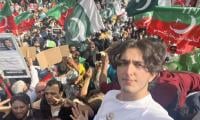
Workers of the PTI, however, refused to end their sit-in to open the roads. The workers at many places said they would continue to protest despite the court orders. “We are not going to end our sit-in even if they fire tear gas shells or torture the workers. Any government that has clashed with its people has been defeated,” said Ahmad Khan Niazi, a nephew of Imran Khan. Niazi said nobody could force them to end their sit-in. He continued that this was not about the numbers but the faith and the cause that has brought the workers to the streets.
Tens of thousands of people remained stranded in different districts of KP and other provinces as well as the federal capital due to the road blockades. Life remained paralysed across the province. Khyber Pakhtunkhwa Governor Faisal Karim Kundi on Monday asked the federal government to take action to reopen the roads.
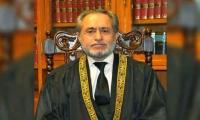
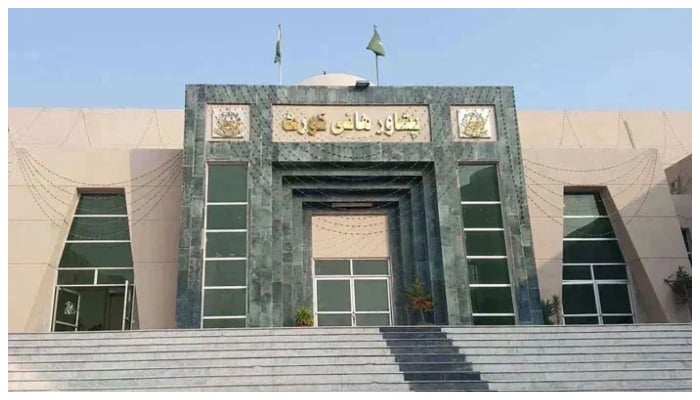
Earlier, expressing indignation at the closure of the motorway and GT Road for several days by the PTI workers, the PHC on Tuesday ordered the Khyber Pakhtunkhwa chief secretary and inspector general of police to ensure immediate reopening of all routes and submit a compliance report the same day. A two-member bench comprising Justice Ijaz Anwar and Justice Farah Jamshed issued the order after hearing multiple constitutional petitions. Issuing a detailed two-page written order, the court warned that no one could be allowed to take the law into their hands. It ordered strict legal action against those responsible for the blockades. The court termed the continued blockade of major highways by the PTI workers a “complete breakdown of governance” that has cut off the province from the rest of the country. It warned that no one could be allowed to take the law into their own hands and ordered strict legal action against those responsible for the blockades.
During the hearing, Justice Ijaz Anwar remarked that the entire province appeared to be “paralysed and disconnected,” questioning the writ of the government. “What has the administration been doing for the last five days? How many people have been booked for this?” he asked. The bench noted with concern that the closure of key arteries had compounded public suffering at a time when the province was already reeling from deteriorating security and recent deadly incidents. “On the one hand, the province is facing terrorism and loss of precious lives, and, on the other hand, roads are blocked. Is this the time for such protests?” the court observed.
Representing the petitioners, Advocate Tariq Afghan, Barrister Huzaifa, Barrister Yaseen Raza, Sajed Khan Afridi, Shahid Ali Yaftali and Abid Ali Shah argued that protesters had blocked the motorway at major interchanges and the GT Road near Attock, bringing inter-provincial movement to a halt and causing severe hardship to citizens. They contended that the right to free movement, guaranteed under Article 15 of the Constitution, was being blatantly violated while the local administration, National Highways Authority and other officials remained silent spectators. The court summoned the chief secretary and IGP in person along with Advocate General Shah Faisal Utmankel. The bench questioned the officials about the duration and scale of the blockades. The IGP informed the court that protests were ongoing at multiple points, though reduced from earlier numbers.
Unsatisfied, Justice Anwar observed that even lawyers were unable to reach courts due to the closures. “Six cases today were affected because counsel could not travel from Islamabad. This is unacceptable,” he said, adding that Peshawar already suffered from one of the worst traffic systems in the country.
The judge remarked that law enforcement agencies act swiftly when they choose to but “inaction in such a grave situation raises serious questions.” He termed it “unfortunate” that the ruling party’s supporters were themselves causing distress to the public. The advocate general, however, argued that the petitions were politically motivated and that the protests were spontaneous, triggered by concerns over the health of the party’s founding leader. He, however, maintained that no unlawful act could be defended.
The bench refused the police request for two days’ time. “Not two days -- the roads must be cleared today. The motorway cannot be allowed to remain closed under any circumstances,” Justice Anwar ordered. The court emphasized that blocking highways leads to public confrontations, disrupts daily life and turns citizens against each other. “The entire country is open, but Khyber Pakhtunkhwa is shut. This is against your own people,” the judge remarked.
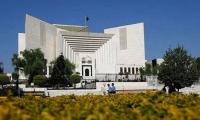
In a related development, the Federal Constitutional Court (FCC) received a petition pleading that the Khyber Pakhtunkhwa government be directed to clear the roads throughout the province, facilitating free public movement guaranteed by the Constitution. Khawaja Azhar Rashid, Advocate, filed the petition under Article 175 E(3) of the Constitution, making chief secretary, chief minister, IGP as well as the Federation of Pakistan through the Ministry of Interior as respondents.
The petitioner submitted that the traffic was being disrupted by the road blockades by PTI workers, causing difficulties to travellers, patients, students, daily wage earners and the public to access courts. “If roads remain closed during the holy month of Ramazan, KP may face shortages of essential goods,” the petitioner pleaded. He further requested that directions be issued under the Constitution to ensure freedom of movement in the province.
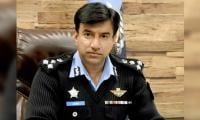
Meanwhile, Khyber Pakhtunkhwa Inspector General of Police Zulfiqar Hameed said that roads across the province would be reopened after court orders, and strict legal action would be taken against those responsible for blocking them. Speaking to the media after appearing in the Peshawar High Court, he said that the court had directed authorities to ensure that all roads were cleared and the police would implement the orders in letter and spirit. When asked whether the roads had been blocked by workers of Pakistan Tehreek-e-Insaf, the IGP responded that action would be taken against anyone who had blocked the roads, in line with the court’s directives.
In his reaction, the KP CM Sohail Afridi wrote on his X handle, “Imran Khan Sahib had only asked to be treated by his personal doctors, which is his constitutional and legal right. The stubbornness of the fake government is causing doubts and suspicions, these actions are worsening the situation.
“Our workers holding peaceful sit-in have only one demand: that Imran Khan Sahib should be given the best treatment by his personal doctors and in presence of family members. I think the honourable judiciary should find out about the issue before giving any order. What do the people want? Why are they holding a sit in? Why their leader is not being denied his constitutional and legal rights? Why jail meetings are being denied? Why courts are not been hearing their cases? Why is the Adiala Jail administration ignoring judicial orders? Why is Imran Khan Sahib not being allowed to meet his personal doctors after October 2024? Whose negligence complicated the eye infection? Are the Constitution and laws only meant for Pakistan Tehreek-e-Insaf? Why all the institutions consider the leadership and workers of Pakistan Tehreek-e-Insaf as second-class citizens? Are we not Pakistani citizens?”
Sohail said: “The reaction of the IG Police Khyber Pakhtunkhwa shows he is acting on someone’s else’s orders; IGP is representative of federation; what are the consequences of confrontation between police chief and the provincial chief executive in a terrorism-hit province; we do not want to politicise the health of Imran Khan Sahib and are displaying tolerance and patience despite distress; Imran is the heart throb of millions who will not sit idly to witness anymore injustice.”