On National Women’s Day in Pakistan, Uks has shared highlights from GMMP 2025 (Global Media Monitoring Project), which is the world’s largest study tracking gender in the news. Uks has been serving as Pakistan’s national partner for the study. The findings provide a snapshot of whose voices are visible in media.
The 2025 GMMP snapshot confirms patterns that have continued to endure in Pakistani news. Women are largely absent from hard-news coverage, their voices are marginal in reporting and decision-making roles, and men are heavily facilitated by newsroom practices. Digital and internet platforms provide small improvements in visibility, yet these spaces remain limited given the scale and reach of traditional media.
The global findings are based on 29,935 news articles containing 58,321 people and 26,560 news personnel in 94 countries on the 7th global monitoring day, May 6, 2025.
Pakistan participated in the Global Media Monitoring Project (GMMP) for the fourth time, coordinated by Uks Research Centre, which has been monitoring media through a gender lens in the country for nearly three decades. The 2025 monitoring captured the news landscape on 6 May, a day marked by severe military and political tensions along the Line of Control with India. Both countries were exchanging fire, the Pakistani government was on high alert, and media coverage was dominated by conflict, national security, and official statements. This extraordinary circumstances shaped the news content and the visibility of women across different platforms.
The monitoring was based on nine print newspapers, six television channels, the state-owned Pakistan Broadcasting Corporation radio channel, and four news-based websites. Thirteen volunteers participated in the monitoring, including Uks staff and students from various universities. The process was supervised by experienced Uks researchers, who provided orientation and mock sessions to familiarise student volunteers with the GMMP methodology. The tools used largely reflected those of the 2020 GMMP, with minor changes, like the separate categorisation of “Genderbased Violence” and “Sports” as news topics.
Across traditional media (print, television, and radio) women constituted only 11 percent of news subjects. This reflects their marginalisation in the coverage of politics, economy, crime, and sports. By contrast, women made up 26 percent of subjects in internet news, highlighting the greater inclusivity of digital platforms, which often cover social, health, and rights-based issues in addition to mainstream politics.
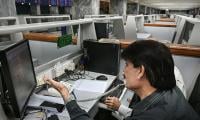
The role of women in news production remained extremely limited. Across all media, men dominated reporting roles. In television, 68 percent of reporters were male. Women accounted for only 32 percent. In print, female bylines comprised 5 percent, while radio showed 100 percent female reporting on this monitoring day, though it is important to state that the small sample size (N=12) limits generalisation. More than 29 percent of news was presented or reported by women, but the majority of these women served as anchors or presenters (96 percent), with only 4 percent functioning as field reporters. Women reporters were largely absent from producing stories about men as subjects. On the other hand, men reported almost all the stories that featured women subjects. The coverage of gender-based violence was extremely limited. Most GBV sub-topics were absent from news content, with only a single story recorded in traditional media, while online outlets addressed sexual harassment and technology-facilitated violence, often also talking about broader gender inequality and rights-based perspectives.
This monitoring exercise highlights the continued structural and institutional barriers that restrain women’s visibility in Pakistan’s media. On a day that was dominated by overwhelming national security coverage, these findings show broader systemic trends. Traditional media continues to be heavily male-dominated, women’s presence is largely confined to cultural, health, or social issues, and their role as newsmakers remains limited. At the same time, the findings point to the potential of digital platforms to create professional opportunities for women in journalism and to frame issues through a gendered and rights-based lens. This will eventually offer opportunities for improvement in the visibility and voice of women in Pakistani news.