“Democracy does die in darkness”, Nancy Pelosi, the former speaker of the US House of Representatives and one of the most powerful figures in modern Democratic politics, warned on February 4.
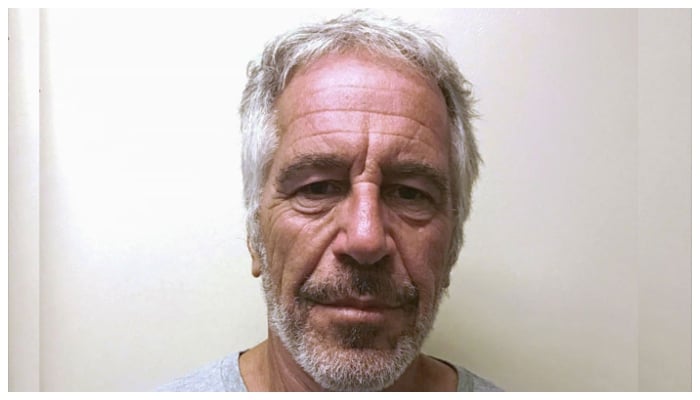
Few cases illustrate that warning more starkly than Jeffrey Epstein. For years, he trafficked minors while cultivating access to presidents, prime ministers, royalty and financiers – all under the gaze of a justice system that repeatedly looked the other way. His death in 2019 closed the criminal chapter but opened a far more troubling story: a sprawling, transnational network in which sex, wealth and power collided and in which impunity became the rule, not the exception.
For those who have not followed the saga closely, the outline is now well established. Epstein was a wealthy financier who cultivated extraordinary access to political leaders, royalty and corporate elites on both sides of the Atlantic. In 2008, he pleaded guilty in Florida to soliciting sex from a minor under a controversial deal that spared him federal prosecution and allowed him to serve little more than a year in a private wing of a county jail.
A decade later, federal prosecutors in New York charged him with sex trafficking of minors. He was arrested in July 2019 and died a month later in federal custody, his death ruled a suicide. That outcome ended the criminal case and ensured that the full scope of his activities and his relationships would never be tested in court.
Epstein was not an outlier operating on the fringes of elite society. Even after his conviction, he retained access to the highest levels of political, financial and social power. He flew politicians, financiers and royalty on his private jet, hosted them in Manhattan and the Caribbean, and continued to present himself as a broker of introductions and influence. His continued acceptance, rather than his secrecy, is what now demands explanation.
The release of vast tranches of Epstein-related documents has brought that proximity into sharper focus. Last week, US Senator Chris Murphy stated publicly that the president of the US is referenced tens of thousands of times in the Epstein files. Whether or not that figure withstands forensic scrutiny, the scale of documented contact between Epstein and centres of power is no longer marginal. Proximity itself has become the question – not because association proves guilt, but because it has gone so long unexplained.
The political consequences are now immediate. In Washington, Bill and Hillary Clinton are scheduled to testify before Congress as part of an expanding investigation into Epstein’s network and the institutional failures that allowed it to persist. Bill Clinton has acknowledged multiple flights on Epstein’s jet while denying any knowledge of criminal conduct. The significance of the testimony lies not in pre-judging guilt, but in the fact that a former president and a former secretary of state are being compelled to account publicly for their interactions with a convicted sex offender.
Across the Atlantic, the scandal has detonated within the British establishment. Documents now in the public domain show that Lord Peter Mandelson, a former UK cabinet minister and ambassador to Washington, received substantial payments from Epstein and maintained extensive correspondence with him years after Epstein’s conviction. Emails reveal discussions that went beyond social exchange, touching on political strategy, business positioning and pressure on government over financial regulation.
British police are investigating allegations that confidential government material may have been shared with Epstein while Mandelson was in office. Mandelson has denied wrongdoing, but the episode has already forced his resignation from the House of Lords and triggered a broader reckoning over elite accountability.
The scandal has already triggered major political fallout: Mandelson resigned from the House of Lords and from the Labour Party amid the furore and Prime Minister Keir Starmer’s chief of staff, Morgan McSweeney, stepped down after acknowledging his role in advocating Mandelson’s appointment as the UK ambassador to Washington despite known concerns.
The Epstein files have also illuminated relationships in unexpected quarters. Newly released correspondence shows former Israeli prime minister Ehud Barak soliciting Epstein’s help in arranging a high–profile interview with then–US political figures, and recorded visits to Epstein’s New York residence well after Epstein’s 2008 conviction.
These interactions have prompted public debate in Israel: Prime Minister Benjamin Netanyahu has taken to social media to argue that Epstein’s ties to Barak do not imply interference or intelligence activity, while critics point to the unusually sustained contact as further evidence of how elite networks accommodate figures long after their criminal conduct is exposed. Barak himself has denied that Epstein worked for Israeli intelligence, framing such claims as unfounded and politically motivated.
The reach of Epstein’s network extended beyond politics into the architecture of modern power. Attention has now turned to the role of technology and data firms embedded in government decision-making. Mandelson’s facilitation of meetings between senior UK officials and executives of Palantir – a company with deep ties to intelligence, defence and data surveillance – has raised uncomfortable questions about how access is brokered, by whom, and with what safeguards. Epstein’s milieu was not merely social; it intersected with finance, lobbying, intelligence and technology – precisely the domains where transparency is weakest and discretion most abused.
What emerges is not a conspiracy but something more corrosive: normalisation. After his conviction, Epstein was not shunned; he was accommodated. He continued to operate as a connector and fixer, a man whose presence in elite spaces was treated as inconvenient but tolerable. That tolerance is the real scandal. It reveals how reputational risk is managed – and often neutralised – when wealth, influence and institutional prestige converge.
For victims, the cost of this failure has been profound. Lawyers describe years of delay, heavy redaction and selective disclosure that exposed survivors while shielding the influential. Investigations have been fragmented, oversight cautious, accountability partial. Epstein’s death foreclosed the possibility of a comprehensive judicial reckoning, leaving mistrust to fill the vacuum where legal clarity should have been.
This is not a partisan story, nor is it confined to the US. It is structural. It exposes how systems designed to deliver justice bend under the weight of privilege, and how proximity to power can function as a form of protection. Epstein did not exploit a broken system so much as operate comfortably within one that already privileged discretion over transparency.
Pelosi’s warning now reads less like rhetoric than diagnosis. Democracies do not fail only through overt repression; they corrode through selective transparency – through sealed files, unexplained relationships and investigations that stop just short of the powerful.
Epstein’s legacy is not only one of personal depravity, but of institutional failure. Until elite immunity itself is confronted, darkness will continue to shield power, and justice will remain unevenly applied.
The writer is former head of Citigroup’s emerging markets investments and author of ‘The Gathering Storm’.