The visits of the presidents of Kazakhstan and Uzbekistan to Pakistan mark a pivotal moment in South and Central Asian diplomacy. These high-level visits are beyond routine bilateralism; they reflect a realignment shaped by the evolving dynamics of the Shanghai Cooperation Organisation (SCO) and rapidly changing global order.
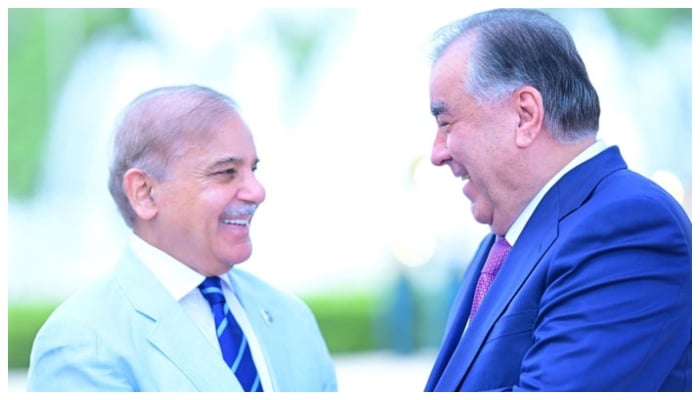
This was the first visit by Kazakhstan’s current president to Pakistan and the second visit by Shavkat Mirziyoyev to Pakistan, reflecting the upward trajectory of Pakistan’s bilateral relations with these two states and confirming the shared aspirations of these leaders for peace and prosperity in Central and South Asia.
The Uzbek president’s visit immediately after the Kazakh president’s underscores Central Asian leaders’ desire to strengthen relations with Pakistan. Tokayev and Mirziyoyev’s visits stand out for their timing and purpose. The visits come at a moment when Russia’s war in Ukraine has disrupted traditional Eurasian supply routes. This has intensified competition over alternative transit corridors and pushed middle powers to prioritise economic resilience over political symbolism
For Pakistan, hosting the presidents of two Central Asian States in quick succession shows Islamabad’s growing relevance as a regional connector. Islamabad is reviewing the full spectrum of bilateral relations with Kazakhstan and Uzbekistan and reaffirming its commitment to increase trade volumes, operationalise transit corridors and identify new avenues to further deepen cooperation in regional connectivity, energy, defence, education and people-to-people exchange.
For Kazakhstan and Uzbekistan, Pakistan offers access to the Gwadar Port, new markets and connections to South Asian states and beyond. Both of these states, along with other Central Asian States, have long grappled with the constraints of geography – their landlocked feature – and now they want to overcome this constraint over their progress. This convergence is further strengthened by China, which is a key driver of closer integration among these states, through the China-Pakistan Economic Corridor (CPEC) in Pakistan and the Silk Road Economic Belt (SREB) in Central Asia, thereby linking Central Asia to the Arabian Sea under a shared connectivity vision.
These visits thus represent mutual recognition of their interdependence and signal a coordinated regional shift towards diversifying trade routes by gaining access to the open sea and thereby strengthening connectivity. Thus, engaging Pakistan as a key geo-economic partner rather than a symbolic one has become a strategic necessity of Astana and Tashkent.
During their visits to Islamabad, both states have expressed interest in increasing trade volumes. The prime minister of Pakistan, after the Kazakh president’s visit, stated via X that he is confident the visit will open avenues for shared prosperity, as the leadership “agreed to elevate relations to a strategic partnership, enhance bilateral trade to $1 billion”. Uzbekistan and Pakistan aim to boost bilateral trade to $2 billion within the next five years.
The timing of these visits is also critical, as the international system is undergoing structural shifts: multipolarity is increasing, supply chains are being reconfigured and geopolitical blocs are hardening. In this milieu, regional cooperation is no longer optional; it is a necessity. First, the economic upside is significant. Historically, Pakistan’s trade with Kazakhstan and Uzbekistan had been lower than expected. Efforts to enhance connectivity through road, rail, air and digital corridors can unlock new markets, reduce transaction costs, and integrate value chains across South and Central Asia. Energy cooperation, particularly in gas, electricity and renewables, offers another high-impact opportunity.
Second, knowledge diplomacy and human capital are emerging as crucial assets for the states. Thus, educational exchanges, research collaboration, and digital partnerships can build long-term trust while fostering an innovation ecosystem across the region. This soft-power dimension complements hard infrastructure, thereby creating a more resilient form of integration. Third, from a geopolitical perspective, these visits enhance Pakistan’s leverage within multilateral forums. Strong bilateral ties with the Central Asian States strengthen Islamabad’s negotiating position within the SCO and enable it shape agendas on security, connectivity and development.
Taken together, the visits reflect a convergence of interests driven by geography, economics and multilateral alignment. More importantly, they demonstrate how regional actors are recalibrating their strategies in response to global complexities. The diplomatic momentum should be translated into operational outcomes, including the establishment of joint ventures and operational corridors, to make it a cornerstone of an integrated Eurasian order. It will also validate the evolving role of the SCO and position South and Central Asia as proactive stakeholders in shaping a more balanced, interconnected and resilient regional architecture.
In a world defined by uncertainty, these visits signal a clear strategic intent to replace fragmentation with connectivity, rivalry with partnership and potential with performance. That, ultimately, is the true measure of the SCO’s success and the region’s readiness to navigate the challenges and opportunities of the twenty-first century.
Yet, Pakistan should navigate the changing dynamics and the emerging complex situation in its surroundings carefully. Islamabad needs to ensure that its deepening ties with Astana and Tashkent complement, rather than complicate, its broader strategic relationship. Institutionally, it needs ambitious projects and robust governance mechanisms. Without successful engagement with Afghanistan, harmonised customs regimes, dispute resolution frameworks and security guarantees, connectivity visions risk stalling at the implementation stage. Furthermore, global volatility, ranging from energy market fluctuations to currency instability, poses risks. Therefore, realistic policy reforms, private-sector engagement and sustained political will are urgently needed.
The writer is an associate professor of international relations and head of the departments of international relations and peace and conflict studies at the National University of Modern Languages (NUML), Islamabad.