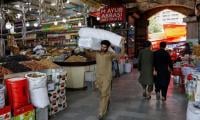
Historically, Pakistan served as Afghanistan’s central trade artery, its main trading partner, the largest importer of Afghan products, a top five export destination, its largest transit corridor, and the easiest, cost-effective and quickest route to the sea via the Karachi port.
Some studies anticipated that the full operationalisation and utilisation of the Gwadar port could substantially increase trade volume in the medium to long term. Despite this historic role, Islamabad’s position in Kabul’s market is now eroding rapidly; bilateral trade has declined sharply since 2011, Afghanistan’s transit trade through Pakistan continues to fall and the key gateways are frequently closed.
Meanwhile, the presence of other neighbouring and regional countries in Afghanistan’s market is expanding and the transit trade corridors are being rerouted. These shifts reflect a deliberate strategy by the Afghan Taliban regime to reduce Kabul’s economic dependence on Pakistan, reshaping the country’s economic landscape on the one hand, and Islamabad’s border management policies to curb the terrorist outfits, primarily the banned TTP, on the other.
Our recent study at PIDE reveals that the total volume of Pak-Afghan trade declined from $2.6 billion in 2010–11 to $1.3 billion in 2019–20. Interestingly, the study also shows that Pakistan’s exports to Afghanistan have persistently decreased over the past decade. In 2010–11, Afghanistan was the second-largest destination for Pakistani exports (next to the US), accounting for almost 9.4 per cent of Pakistan's total exports. Since then, Pakistan’s exports to Afghanistan have continued to decline. By 2019–20, Pakistan’s exports had fallen to $855 million, and Afghanistan’s ranking as an export market had dropped to seventh.
On the other hand, imports from Afghanistan have increased over the last decade. In 2023–24, bilateral trade declined by 12 per cent. More recent statistics indicate that Pakistan-Afghanistan bilateral trade fell by 54 per cent year on year, from $247 million in October (FY2024–25) to $114 million. This month, Pakistan closed all trade hotspots and suspended all trade with Afghanistan.
Meanwhile, the footprint of neighbouring economies in Afghanistan’s market is expanding, primarily those of Iran, Uzbekistan and Tajikistan. Afghanistan has also attracted other regional trade partners, despite the lack of formal diplomatic recognition of the Taliban regime and despite Pakistan and Afghanistan’s natural advantages in terms of proximity, market access and similarities in needs, language and culture.
The decline in bilateral trade is mainly attributed to political tensions, subsequent border closures between the two countries, the Taliban regime’s strategy to reduce economic dependency on Pakistan and Islamabad’s claims regarding the Afghan regime’s support for Fitna al-Khawarij and Fitna al-Hindustan.
Likewise, Kabul’s transit trade through Islamabad has declined significantly, from $7.095 billion to $2.887 billion, primarily due to Islamabad’s border management policies and import restrictions. The decline is also influenced by Afghanistan’s strategic shift towards Iran’s Chabahar port to reduce dependence on Pakistan. Our study also reports that the fall in transit trade was further exacerbated by the expiration and non-renewal of the Afghanistan-Pakistan Transit Trade Agreement (APTTA).
The ongoing deadlock between the two countries will further deteriorate the trade and presence of Pakistan in Afghanistan’s market. Just recently, Afghanistan’s Deputy Prime Minister for Economic Affairs, Mulla Abdul Ghani Baradar instructed Afghan traders to settle their contracts within three months as the Taliban regime seeks to explore new markets and alternative trading gateways. Contrary to Pakistan’s position, Kabul insists that trade must not be closed under any circumstances.
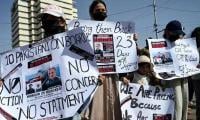
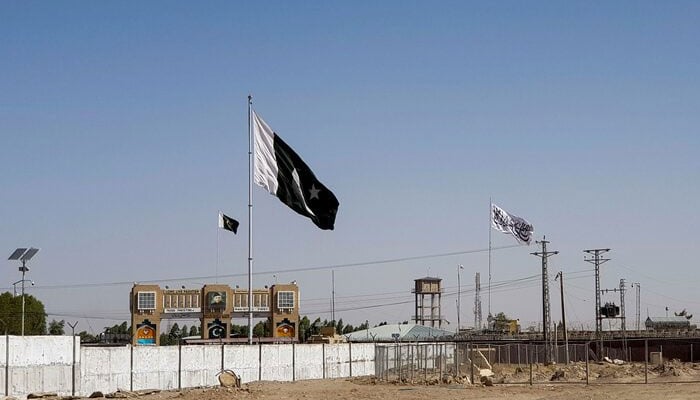
Meanwhile, Islamabad has taken a firm stance, keeping all border crossings with Afghanistan closed indefinitely until the Afghan Taliban take “verifiable and irreversible” action against terrorist groups, particularly the TTP. These gateways have now been shut for over a month, further complicating bilateral and transit trade.
Indeed, these developments are likely to have adverse repercussions on both economic growth and the long-term relationship of the two neighbouring countries at the macro level. At the micro level, such policies have already had, and will continue to have, adverse impacts on residents of bordering settlements on both sides. We can reasonably infer the broader economic fallout of border closures by looking at the Chaman crossing alone. Our estimates show that the financial loss borne by daily wage workers over the past nine years was Rs13.3 billion.
More recently, the Khyber Pakhtunkhwa government reported that border closure led to a 53.02 per cent decline in revenue. But this is only one part of the overall damage. With multiple crossings now closed, the economic cost this time will be several times higher, affecting not just daily wagers but the entire regional economy.
To sum up, the lives of the public are worth more than the cost of trade between the two nations and will remain so in the future. Therefore, the Afghan regime must take against terrorist groups. Meanwhile, Islamabad needs to ensure the continuity of trade with Afghanistan. In this context, our study recommends several actionable policy proposals and confidence-building measures.
These include engaging with the Taliban government to establish, notify and operationalise new trade hotspots in major bordering districts of Balochistan and Khyber Pakhtunkhwa; working with the Afghan regime to establish Pak-Afghan joint border markets in major bordering towns of these provinces; signing a Preferential Trade Agreement to improve market access and bilateral trade; and revising the Afghanistan Pakistan Transit Trade Agreement so that both nations commit to facilitating Pakistan’s export transit through Afghanistan to Central Asia and Afghanistan’s import transit from India and other trade partners.
The writer is a research economist at PIDE. He can be reached at: [email protected]