The May 2025 India-Pakistan war played a pivotal role in eroding India’s long-standing notion of conventional superiority. Seven months ahead, the echoes of the conflict continue to shape military choices.
The post-crisis environment exhibits predictable trends, marked by sabre-rattling through hawkish statements by the civilian and military leadership, followed by military procurement. Most recently, India has signalled a mega aircraft deal, with the announcement of the induction of 114 Rafales.
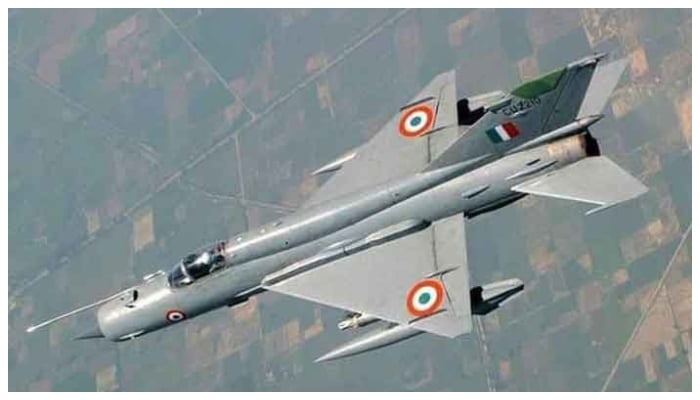
In the brief yet intense conflict, the downing of seven aircraft, including four Rafales, by the Pakistan Air Force (PAF) was one of the most prominent features of the conflict. This operational fiasco has created a glaring gap that India seeks to fill. The Rafale aircraft were touted as a game-changing technology following the controversial induction of the first batch in 2020. However, battlefield outcomes have undermined this perception, giving rise to new insecurities. These insecurities are visible at both global and domestic levels.
On the global stage, India consistently frames its defence policies around a two-front war. This involves clubbing Pakistan and China together as a pretext for arms buildup. In this context, it is also important to note that the former aims for fifth-generation aircraft, whereas the latter seeks sixth-generation aircraft.
In such a scenario, the procurement of a 4.5-generation aircraft raises questions about the operational value of the deal, particularly in light of the aircraft’s performance in May 2025. Hence, it remains to be seen whether the deal is an interim measure to overshadow existing challenges. To meet its future requirements, India will need to induct additional fighter squadrons. So, there is a possibility that the move might be a signalling moment for the US and Russia vis-a-vis the F-35 or Su-57 aircraft, enabling India to negotiate a better deal via reaching out to a third party.
Likewise, India seeks to project itself as a rising military power to global actors to downplay its prior losses. It wants to reassure its external partners, particularly those who view India as a counterweight, and project strength in the region.
On the domestic front, the initiative is underpinned by post-conflict insecurity, given Pakistan’s measured response. The insecurity stems from India’s inability to attain air superiority and escalation dominance once a confrontation unfolds with Pakistan, which enjoys a qualitative edge against a much larger foe. The event exposed operational and credibility gaps in the Indian airpower structure.
Similarly, the loss of high-end aircraft during an engagement initiated by India exposed the inherent weaknesses of the Indian Air Force (IAF). Consequently, there is a sense of urgency to restore the credibility of airpower and to manage internal debates. The deal is also framed to enhance local production and industrial participation. The deal incorporates 25-30 per cent local manufacturing, potential engine assembly, and long-term sustainment support within the country, making it part of the ‘Make in India’ initiative. Valued at approximately around $39 billion, the deal is one of the largest single-fighter acquisitions in India’s history.
The scale of the inductions aims to capture reassuring headlines and rush to visible fixes following the setbacks. In addition, persistent challenges in India’s indigenous fighter programmes, characterised by slow progress and engine-related issues in the Tejas Mk II and the Advanced Medium Combat Aircraft (AMCA) programme, have placed additional pressure on the leadership. Hence, the deal provides a face-saving story for both political and military leadership.
In the current context, military procurement for fleet expansion is a convenient option with high-profile optics. As a result, this appears to be a temporary measure rather than an approach that addresses the existing shortcomings or a doctrinal reset regarding command and control and cross-domain synchronisation.
The detailed framework of the deal will be finalised during French President Emanuel Macron’s upcoming visit to India, scheduled for February 2026. This recent deal follows India’s previous purchase, in which it also ordered 26 Rafale Marine carrier-based aircraft to enhance range and make a concentrated bet across different domains. Overall, it remains unclear which capability India is seeking through this deal.
In the regional context, the Indian approach is aligned with a risk-tolerant policy rather than restraint. The trends suggest that India is less inclined towards diplomatic engagement. This is a concerning development, particularly in situations where India reads numerical superiority as a leverage for escalation, leading to miscalculations.
Ultimately, the current Indian leadership prioritises immediate optics rather than foresight. There is a disregard for the fact that a larger defence fleet does not automatically translate into victory or dominance in escalation. As seen in the May episode, it is the ecosystem comprising doctrine, seamless employment, integration, training, use of electronic warfare and decision-making, all synced into a coherent kill chain that defines outcomes in aerial engagements and offsets numerical superiority.
Despite these inductions, the PAF retains first-shot capability, a vital factor contributing to the IAF’s unprecedented losses in the May 2025 war. Accordingly, the air advantage remains with Pakistan’s forces, thereby forestalling any future adventurous moves by Indian forces.
The writer is a senior research associate at the Centre for Aerospace & Security Studies (CASS), Islamabad. She can be reached at: [email protected]