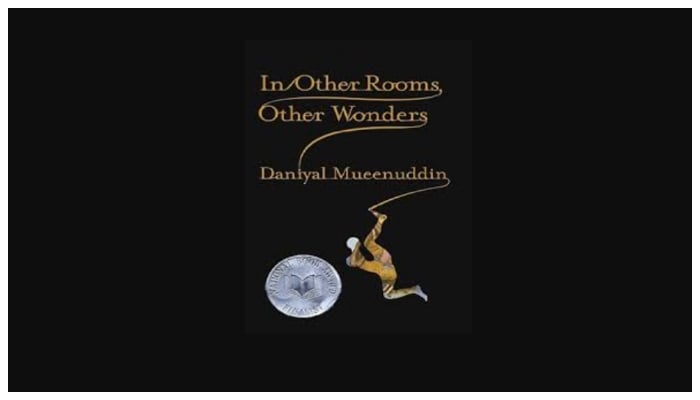
Daniyal Mueenuddin, the acclaimed Pakistani American short story writer who was the finalist for the Pulitzer Prize for his book ‘In Other Rooms, Other Wonders’, has written a sweeping novel published in January 2026 titled ‘This is Where the Serpent Lives’. This work traces the 70-year history of Pakistan’s rural feudal Punjab, with Lahore as its urban centre. It is a story of the haves and the have-nots, constructed around four novellas that connect with each other to form an organic whole.
Some readers have asked whether the serpent in the novel’s title is the biblical serpent. I think not, at least not in any direct or allegorical way. The title inevitably carries an echo of Eden, but Daniyal Mueenuddin does not use the serpent as a religious emblem. In this novel, the ‘serpent’ feels less like a creature than like a moral climate. It is something that moves quietly through the structures of life: power, inheritance, fear, corruption, desire. It does its work without spectacle, often through omission, through what is not said, through the slow turning of loyalty into transaction. If the biblical serpent stands for a fall into knowledge, this serpent is closer to a fall into realism. Mueenuddin has described himself as “an incorrigible realist", and his characters are born into a world already compromised. No one bites an apple. The system itself is the garden, and the serpent is already inside it.
That system is most visible in the novel’s Punjab, where feudal authority persists not as a relic but as an organising principle of daily life. Land is not merely property but power made physical. It determines who belongs, who depends, who commands, who endures. The estate is not a backdrop but a structure of relationships: landlords and tenants, patrons and clients, servants and proteges, policemen and intermediaries. Modernity enters in the form of foreign education, factories, smartphones and new money, yet the underlying grammar remains stubbornly intact. Influence still travels through the right family name, the right phone call, the right man who can make something happen.
Mueenuddin’s realism lies in showing how such hierarchies reproduce themselves without needing to announce their brutality. Violence is present, but it is often implicit, held in reserve. More common is the quiet coercion of dependence: the servant who cannot afford disloyalty, the ambitious young man whose rise is permitted only within assigned limits, the elite household that absorbs infidelity and compromise as part of its normal weather. Feudalism here is not simply an economic arrangement but an emotional and moral one, shaping what people imagine to be possible.
The serpent beneath the surface is this enduring order, ancient in its logic, modern in its instruments, and still capable of deciding, with a calm that feels almost natural, who will be found and who will be left behind. In other words, the serpent beneath the surface is feudalism, though it is not a historical novel about feudalism in the textbook sense.
Mueenuddin is writing about the persistence of feudal structures in contemporary Pakistan: land, patronage, hereditary authority, the dependence of the poor on the protection of the powerful. The estate is a system. People live inside it the way people once lived inside a manor or a princely state, with obligations that are personal as much as economic. But the novel is also careful to show that this is not feudalism sealed in the past. It has modernised. There are factories, foreign education, smartphones and global money. The old order survives by adapting. Feudal power does not vanish. It changes its clothing.
The book’s sharpest insight is that modernisation does not necessarily dismantle hierarchy. It often gives it new tools. The landlord becomes an industrialist. The patron becomes a politician. The servant’s son learns English and remains a servant, only with a different title. So yes, the serpent beneath the surface is deeply about feudalism, but more precisely it is about a feudal logic that continues inside modern life, shaping ambition, loyalty, violence and the limits of freedom.
In short, at the basic level, the novel is a study of power. The novel is built around a small constellation of figures whose lives intersect across class and time. Mueenuddin does not treat them as heroes in the conventional sense. They are nodes in a social order, each revealing something about how power is lived in Pakistan.
Yazid (Bayazid) is the book’s moral centre and its first image: a barefoot boy alone in a Rawalpindi bazaar in the 1950s, holding cheap plastic shoes, unable to explain how he came to be abandoned. Taken in by a tea-stall owner, he grows up learning how to watch people, how to read rooms and how to survive by discretion. Yazid is indispensable yet never equal. He embodies the servant class at its most skilled: loyal, adaptive, capable of force when required, respected but never secure.
Rustom, a young landowner educated in America, returns in the 1980s to revive an estate neglected by his father. He arrives with the language of reform and legality, believing modern management can tame the countryside. But he quickly learns that the estate is governed by older logics: theft is assumed, disputes are settled through hereditary enforcers, violence is always near. His story shows how Western education can change one’s aspirations without dismantling the structures that distribute power.
Hisham Atar a member of the elite, owner of farms and factories, at home in Lahore and abroad. Hisham represents a polished, worldly ruling class that carries privilege as a birthright. He is not monstrous, but his infidelities and appetites are absorbed by the household as part of the order of things. Shahnaz Atar Hisham’s wife, intelligent and widely regarded as the real strategist of the household. She chose Hisham over his gentler brother, choosing Pakistan and proximity to power. Shahnaz manages servants, social arrangements and the emotional weather of her marriage. Her authority is real but confined, exercised within the walls of privilege rather than beyond them. She is one of the novel’s sharpest portraits of female intelligence constrained by patriarchal inheritance.
Saqib, the servant’s son, is the focus of the novel’s longest final section. Raised on the Atars’ estate and mentored by Yazid, Saqib is ambitious, quick, eager to please. He is taken into the household almost as a project, learning the manners of power and rising through competence. Given responsibility for farmland, he experiments with modern agriculture and succeeds. But Saqib wants more than success within servitude. He wants independence. His attempt to step beyond his assigned boundaries leads to his undoing. His arc is the novel’s bleakest reckoning with ambition and miscalculation.
Mueenuddin populates the book with a wide social range, from bazaars to drawing rooms, from rural Punjab to urban Lahore. These figures reinforce the sense that the novel is less a single story than a social map. Taken together, these characters form a portrait of a society where power is inherited, loyalty is transactional and modernisation alters surfaces more than foundations. Each life is individual, yet each is shaped by the same enduring grammar of hierarchy, in which power rests within a feudal social structure.
The writer is a retired diplomat and former Washington Bureau chief of The Frontier Post.