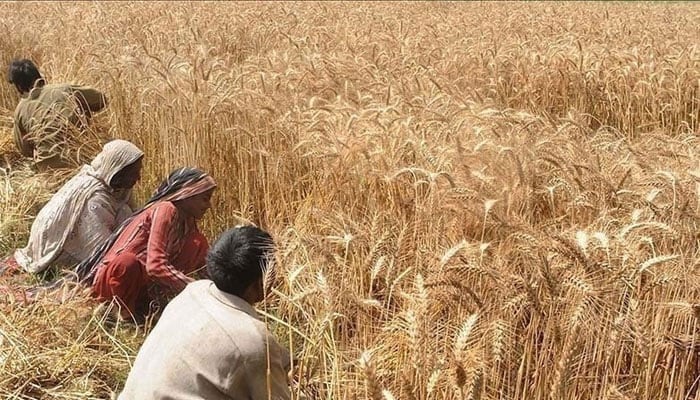
HYDERABAD: The Sindh Abadgar Board (SAB) has expressed serious concern over the continued government neglect of the agriculture sector, and the failure to announce a clear wheat policy, warning that this uncertainty is causing heavy losses to farmers and the agricultural economy.
The concerns were voiced during a meeting chaired by SAB Senior Vice President Syed Nadeem Shah. The meeting was attended by Dr Zulfiqar Yousfani, Syed Zain Shah, Dr Muhammad Bashir Nizamani, Muhammad Malook Nizamani, Aslam Marri, Imran Buzdar, Taha Memon, Malik Muhammad Nizamani, Ameer Ali Thebo, Shahnawaz Burmani, Murad Ali Shah Bakirrai, Hussain Shah and farmers from various districts of Sindh.
The SAB said that despite the passage of two wheat seasons, the government has neither procured wheat nor announced a clear policy, leaving growers in a state of confusion. It said that in the open market, wheat is purchased from farmers at extremely low prices at the time of harvest, only to be sold later at much higher rates, causing losses to farmers while making flour unaffordable for the general public.
The SAB said that at times the government talks about fixing the wheat price at Rs3,500 per 40kg, while at other times it discusses procurement through the private sector, but no final decision has been made yet. Growers demanded that both federal and provincial governments clearly announce their wheat policy without further delay.
The SAB also expressed concern over the adverse impact of the suspension of trade with Afghanistan on Sindh’s agricultural economy. They lamented that banana prices have dropped by almost 50 per cent, vegetable prices have sharply declined, and with the mango season approaching, mango exports are also likely to be severely affected.
Growers urged the government to find alternative solutions or adopt a better strategy to prevent further damage to the agricultural sector. The meeting also voiced concerns over considering the controversial canal projects at non-relevant government forums, saying that such actions are unconstitutional because these matters should only be discussed at the appropriate constitutional forums.
The SAB said that raising such issues outside constitutional bodies amounts to interference in the mandate of forums like the Council of Common Interests, and undermines national unity and trust.
It urged the government to instead focus on strategies aimed at achieving higher agricultural output with reduced water usage, noting that Pakistan currently consumes nearly double the amount of water compared to India to produce similar crop yields.
It warned that excessive use of water in agriculture would further aggravate the country’s water scarcity and drinking water shortages. It also expressed concern over reduced water carrying capacity of the Dadu Canal, saying that the issue has persisted for several years.
It pointed out that the canal neither carries the required volume of water nor has it been desilted, resulting in inadequate water supply to tail-end farmers. It demanded immediate desilting of the Dadu Canal so that farmers can receive sufficient water in March.
The meeting also highlighted the unavailability of quality cotton seeds, criticising the Sindh Agriculture Research Institute for failing to make meaningful progress or adequately inform farmers. The SAB demanded special attention to ensure the provision of disease-resistant, high-yield cotton seeds in line with modern agricultural requirements.