At the end of 2025, the National Electric Power Regulatory Authority (Nepra) proposed replacing net metering with the Prosumer Regulation 2025, citing concerns about financial losses to distribution companies and alleged cross-subsidies borne by non-solar consumers.
The proposal has triggered strong opposition from industry groups, chambers of commerce, solar vendors, environmental organisations and consumers. Critics warn it will further strain an already fragile economy, hurt small industries and middle-class households and deepen environmental challenges in urban areas.
Electricity prices in Pakistan have risen by nearly 150 per cent due to take-or-pay contracts and worsening macroeconomic conditions, pushing consumers towards alternative energy. Affordable solar solutions have allowed households to hedge against inflation, stabilise energy supply and contribute to climate goals. Net metering offered empowerment and fairness in an inefficient power system.
Rather than adopting a systematic, economy-wide approach, the Power Division and the regulator appear to be taking a myopic approach, seeking to curb rooftop solar through amendments to the prosumer regulations, treating a structural transition challenge as merely a regulatory inconvenience.
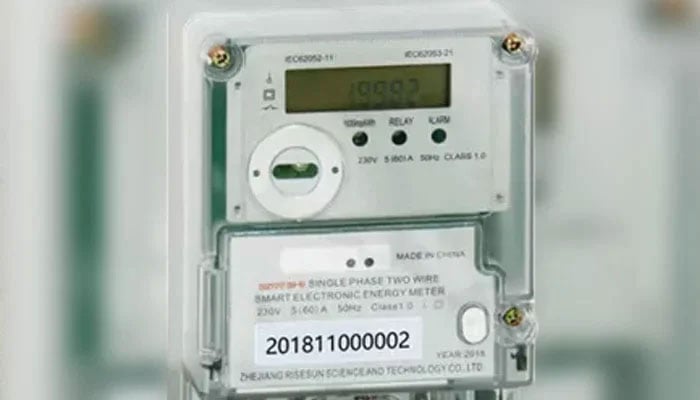
The net metering system was introduced in 2015 by Nepra. Under the net metering system, households, commercial and small and medium-sized enterprises (SMEs), and farm owners were able to offset imported units with exported units, resulting in negative or minimal monthly bills for the wider system.
Under the new Nepra-proposed net billing system, exported units are treated as a distinct commercial activity with a distinct valuation framework. Under the proposed net-billing regime, a prosumer would pay full retail tariffs, approximately Rs35-47 per kWh, depending on the slab, as imported electricity, while exporting to the grid at only Rs13 per kWh (average fuel cost).
In effect, the government purchases electricity from the prosumer at Rs13 per unit and resells it back at nearly three times the price. This pricing asymmetry is clearly disincentivising for prosumers, undermining investment signals for rooftop solar and penalising those who contribute distributed generation to the grid. This will cause self-consumption. More worryingly, this approach risks accelerating defections from the grid, pushing consumers toward deeper self-sufficiency and further eroding grid demand, thereby intensifying the very death spiral that threatens the grid’s financial viability and long-term reliability.
Under the old net metering system, the solar boom created thousands of jobs in installation, maintenance and manufacturing. It helps SMEs benefit from reduced energy costs and enhanced competitiveness. Rural households and farms experiencing the worst outages resort to solar energy and begin contributing clean energy to the grid, resulting in a significant improvement in their agricultural output. Solar installations, driven by net metering, help DISCOs reduce reliance on fossil fuels and lower the trade deficit.
Pakistan’s current variable renewable (solar and wind) energy mix share is 6-7 per cent. Under the United Nations Framework Convention on Climate Change (UNFCCC), Pakistan pledged to reduce carbon emissions and increase the share of renewable energy by 30 per cent. The government has proudly acknowledged the solar boom in many international fora and showcased it as a success story to halve emissions to meet the climate target
The exuberant increase in electricity prices imposed a significant burden on consumers. Net metering ensures that consumers are fairly compensated by selling surplus renewable energy to the grid. Therefore, the middle-income group invested heavily in rooftop solar systems. Net metering not only reduces bills, give protection from inflation to achieve long term savings.
Under the new billing system, buyback rates would fall from approximately Rs27 to Rs11–13 per unit, representing a nearly 50 per cent reduction. According to solarpanelinfo.pk, this change extends the investment payback period from 4–5 years to an estimated 7–9 years, assuming 75 per cent self-consumption and 25 per cent grid export.
Net metering allowed households to protect themselves from an unreliable and expensive power system. The proposed shift will force families back onto costly grid electricity, exposing them once again to high tariffs and load shedding.
Rising agricultural input costs, particularly diesel prices and erratic power supply, had already prompted farmers to adopt solar-powered tube wells and pumps. This transition cut agricultural electricity demand from the grid by nearly 45 per cent in recent years. The policy shift threatens to reverse these gains, particularly in Sindh and Punjab, where expensive electricity is no longer viable for profitable farming.
SMEs, which contribute 25 per cent of Pakistan’s exports, adopted solar to avoid labour shedding and stabilise costs. Shifting to net billing could raise their energy costs by 20-40 per cent, hurting competitiveness in textiles, agro products and leather. Critics emphasise that DISCOs’ main losses stem primarily from theft and inefficiency. Excessive workforce, poor revenue collection and poor services are the main reasons for not implementing net metering
Consumers are key stakeholders in utility governance; they should be treated as partners. They should not be threatened or deprived of a viable net metering system on the pretext of revenue loss to DISCOs. Nepra should take steps to protect consumer rights by ensuring affordable energy, a green environment and good health, and by helping Pakistan achieve the clean energy target committed to at the UNFCCC. Nepra should encourage the dispatch companies to cut their losses, improve revenue collection and rationalise the workforce.
The solution to the aforementioned ‘death spiral’ is not to administratively suppress rooftop solar, but to correct the structural distortions that make grid defection rational in the first place. That requires a systemic package:
Restructuring capacity payments and take-or-pay obligations through renegotiation, refinancing, re-profiling and, where feasible, competitive buyouts; redesigning tariffs so fixed network costs are recovered transparently while energy charges reflect efficient marginal cost; and creating a grid value proposition through better reliability, time-of-use pricing and incentives for flexibility so prosumers are rewarded for services that reduce system cost rather than penalised for generating. In parallel, enabling aggregation, treating distributed solar and batteries as a ‘virtual power plant’ that can be dispatched and compensated, keeps prosumers inside the system and turns decentralisation into an asset.
Pakistan’s future depends on a clean energy policy that integrates the economy, energy and environment within a single planning framework.
The writer is a campaign coordinator at the Sustainable Development Policy Institute (SDPI).