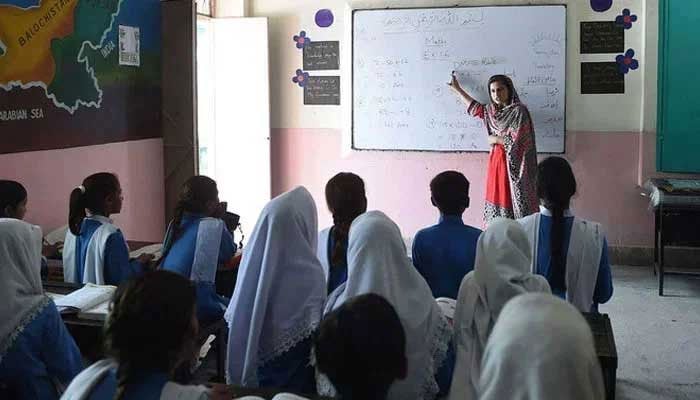
Islamabad:Teachers of the schools and the Federal Directorate of Education (FDE) have expressed serious concerns over the academic loss of students due to their engagement in mandatory training programs at a critical stage of the academic session, warning that such initiatives may adversely affect the students’ academic progress and examination preparation.
According to the teachers, a training programme for around 500 elementary-level teachers has been underway for the past several weeks under the "NIETE Project". Participation in the programme has been made mandatory by the FDE.
Teachers argue that the timing of the training is highly inappropriate, as the academic session is nearing its end and students are preparing for upcoming examinations. They claim that withdrawing teachers from regular teaching duties at this crucial stage has caused significant disruption in classroom activities and resulted in a substantial loss of instructional time.
“The academic session is in its final phase and teachers are expected to revise courses and guide students for examinations. Instead, they are compelled to attend training sessions, leaving students without proper academic support,” said a teacher. He added that while professional development was important, such programmes should not come at the cost of the students’ learning time and academic performance, especially when the quality of training itself is questionable.
Teachers also expressed reservations about the effectiveness and quality of the training programme. They questioned the rationale behind launching a large-scale training initiative without presenting evidence that existing teacher training mechanisms were inadequate.
According to them, instead of strengthening the education system, such programmes conducted during the academic session are consuming valuable time and resources while undermining the continuity of academic activities.
Another major concern raised by teachers is the increasing involvement of non-governmental organisations in the federal education system. Teachers described the growing role of NGOs in public educational institutions as an unjustified intrusion into the public education sector.
They emphasised that policies affecting teachers and students should be formulated through meaningful consultation with stakeholders rather than imposed through administrative directives.
Teachers also criticised the policy of declaring the training mandatory without considering the academic calendar, calling it a one-sided decision that ignores the practical realities of schools and colleges.
They stressed that training programs should be scheduled during vacations or non-teaching periods to avoid disruption in classroom teaching. The teachers demanded that authorities review the policy of mandatory NGO-led training programmes, ensure proper consultation with educators, and prioritize uninterrupted classroom teaching. They warned that if such policies continue without reconsideration, the students’ academic performance and educational future may be seriously affected.