ISLAMABAD/ PESHAWAR: Defence Minister Khawaja Asif on Tuesday dismissed reports of a military operation in Tirah Valley, saying that no such operation has taken place in the area for several years and that recent displacement is a routine, seasonal process linked to harsh winter conditions.
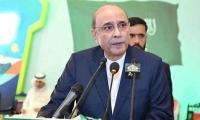
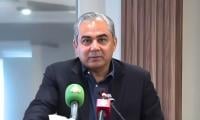
“There has been no operation in Tirah Valley for many years. These are all assumptions,” said Asif while addressing a press conference in Islamabad, flanked by Information Minister Attaullah Tarar and Prime Minister Shehbaz Sharif’s Coordinator for Khyber Pakhtunkhwa Ikhtiar Wali Khan.
Coming down hard on the KP government, Khawaja Asif said the provincial government was trying to pass its failure to others, including the Army. He said there was a complete absence of civilian law enforcement agencies and public service institutions in Tirah, adding that the area lacked police stations, schools and hospitals.
The minister said it had been agreed between the provincial government and the local jirga that hospitals, police stations and girls’ schools would be established in Tirah Valley.
Asif said the jirga in Tirah held meetings on December 11, 21 and 31 last year on the matter. “This jirga was constituted many years ago and all 24 of its members are on board. Now, in the presence of the jirga and notification issued by the KP government, where does the military come into this?” he questioned. He said hemp was being cultivated over more than 12,000 acres in Tirah, adding that each acre generated profits ranging from Rs3 million to Rs3.5 million.
He said hemp had multiple uses, including in medicines, construction material and bricks.
The minister said, “Hemp is cultivated there and the proceeds either go to politically connected individuals or TTP. We have initiated measures to stop this so that local people benefit and schools and hospitals can be built.”
He said the federal government was ready to provide full assistance to the provincial government for the welfare and development of the people.
Replying to a question, the minister said the intensity of terrorism had increased in recent years following Taliban’s return to power in Afghanistan. He said many armed forces personnel had been martyred, while many terrorists had also been eliminated.
He said that Pakistan had made five sincere attempts, but the Taliban government was not willing to give guarantees to stop the infiltration of terrorists into Pakistan.
The defence minister said efforts were being made to present the situation as a crisis. “This migration is being turned into a crisis, even though it is a normal, seasonal movement,” he added.
Asif said the provincial government had allocated funds to support displaced families. “The Khyber Pakhtunkhwa govt has set aside Rs4 billion for those who are migrating,” he said.
He went on to say that a notification regarding the relocation was issued after consultations between the provincial government and a local jirga. “The notification was issued after consultation between the provincial government and the jirga,” Asif said.
The defence czar said that members of the jirga had met representatives of the outlawed Tehreek-e-Taliban Pakistan (TTP). “Jirga members went to meet the proscribed TTP members on December 11... after that, they met the chief minister of KP,” he said.
“Around 400 to 500 TTP members, along with their families, are present in Tirah. However, intelligence-based operations against terrorism continue,” he said. He stressed that the area was not being evacuated for any operation. “The armed forces deployed in that area have nothing to do with it,” he added.
Asif said the government was willing to take journalists to the Tirah Valley to show the situation on the ground.
Federal Minister for Information and Broadcasting Attaullah Tarar said the migration of tribes from District Khyber during the winter is a historical norm, rejecting the “baseless narrative” peddled by the KP government spokesperson. He emphasized that the Afridi and Aka Khel tribes have a unique lifestyle, migrating from Tirah in winter and returning in summer.
Tarar noted that history bears witness to this seasonal migration, citing Edward A Murphy’s 1899 book, The Khyber, which references an official gazetteer from 1880. He pointed out that this historical record explicitly documents the tribes’ habitual winter migration, describing it as an established reality recognised in international literature.
Responding to questions about the timing of the current movement, the minister explained that while winter traditionally began in October, climate change has significantly shifted seasonal cycles. He remarked that snowfall, which historically occurred in November, is now delayed until late January, representing a total seasonal shift.
He also referred to a notification issued by the KP government itself, which stated that the tribes are moving voluntarily. The minister urged provincial officials to avoid politicising a centuries-old traditional practice.
Meanwhile, KP Chief Minister Sohail Afridi issued a video message on the situation in Tirah Valley, condemning, what he called, the renewed military operation and warning that decisions taken behind closed doors had once again pushed the region toward instability, displacement and distrust. According to the handout, he stated that harsh conditions have once again been imposed on Tirah Valley, recalling that after the regime-change operation that removed the elected government of Imran Khan, warnings were repeatedly issued across Khyber, Hazara, Malakand, Dera Ismail Khan and Waziristan that terrorism and instability would be reimposed on the Pakhtun belt. The chief minister alleged that the operation was launched to malign him and destabilise his government, but said the people continued to show him respect and support.
He condemned a recent press release claiming that Tirah residents were voluntarily migrating, calling it dangerous and an attempt to create conflict between the province, the federal government and institutions, and to erode public trust in leadership and state institutions.
Afridi said peace jirgas and public mobilisation campaigns were organised to alert the people that their future was being traded without their consent. He announced that a grand jirga of all tribes residing in Khyber would be convened on Sunday at 2pm at Jamrud Football Stadium, where displaced people would be asked whether they left voluntarily or were forced to vacate their homes.
The CM said the world would be shown that injustice was being done and stressed that the KP people are not experimental subjects, their blood is not cheap and their dignity must be respected.
He disclosed that his government had released Rs4 billion for the care of displaced families, noting that previous operations destroyed homes and compensation promises were never fulfilled. He said the provincial government was determined not to abandon its people in the face of secret decisions.
Reaffirming his stance, the chief minister declared that he stands with the Pakhtun people and would defend their rights to the last drop of blood, warning that if people fail to stand up today, they will continue to carry coffins for generations to come. He criticised the then Pakistan Democratic Movement government for dismissing these warnings as propaganda and noted that the Pakhtun people came out in large numbers to reject decisions made behind closed doors. Afridi said districts where people resisted such decisions continue to enjoy peace, while those where warnings were ignored are again facing terrorism. He added that decisions made behind closed doors not only toppled a democratic government but also triggered the return of terrorism and economic collapse, forcing investors and young people to search for opportunities abroad.
Referring specifically to Tirah, he said he raised his voice against imposing decisions without public consent and questioned the logic of launching another operation when 22 major and more than 14,000 intelligence-based operations had failed to eliminate terrorism. He recalled that under the roof of the KP Assembly, a grand jirga of all schools of thought and political parties finalised a 15-point agenda, unanimously agreeing that military operations are not a solution and that sustainable peace can only be achieved through dialogue and consensus.
Despite this, he said, another operation was imposed and a 24-member committee headed by the corps commander and inspector general of Frontier Corps was formed. The chief minister stated that Afridi elders were instructed to vacate their homes on the pretext that militants were operating from residential areas, despite their objections, and that people were forced to leave their homes during harsh winter snowfall. He warned that the world was now witnessing elderly people, women and children displaced in freezing conditions while even the operation itself cannot proceed due to snow, raising serious questions about the purpose and wisdom of such decisions.
Meanwhile, speaking to the media in Rawalpindi, Pakistan Tehreek-e-Insaf Chairman Barrister Gohar Ali Khan stated that there should be neither politics nor leniency on terrorism, adding that “terrorists will win in our internal conflicts”. “We don’t talk about negotiations with those who are killing us. We should form a unified narrative, bring the provincial assembly on board. The federal government issued a press release saying we did not order an evacuation. There was no need for a press release on this issue, they could have just called. Whoever is responsible for the evacuation should sit together and resolve it.”
Meanwhile, heavy snowfall disrupted life in Tirah Valley on Tuesday, leaving residents facing acute shortage of food and other essential items, sources said. The second spell of snowfall in Tirah Valley brought life to a standstill, with 7-8 inches of fresh snow recorded, while some areas received up to three feet of snowfall.
Talking to this correspondent via cellphone, Sher Ali Afridi, a resident of the Bar Bagh area, said that people who had not left their homes were facing shortages of food and other essential items. He added that members of the local community brought food items and distributed them among the affected people. In response to a question, he said that a small population had been stranded in the valley due to heavy snowfall, while most residents had already left their homes.
Meanwhile, the local administration advised residents to stay indoors due to blocked roads and shortages of essential supplies. An official said the local administration, along with Rescue 1122, was actively involved in relief operations, providing food, shelter and medical aid to stranded families. He said the administration had rescued over 25 vehicles carrying 65 people so far. The district administration has registered 11,000 displaced families from Tirah Valley, while biometric verification and SIM issuance are under way.